Parque de María Luisa: Seville Travel Guide (4.8★)
✓ Facts verified via Google Places · Aug 4, 2026
At a glance
Opening hours
- Monday: 8:00 AM – 12:00 AM
- Tuesday: 8:00 AM – 12:00 AM
- Wednesday: 8:00 AM – 12:00 AM
- Thursday: 8:00 AM – 12:00 AM
- Friday: 8:00 AM – 12:00 AM
- Saturday: 8:00 AM – 12:00 AM
- Sunday: 8:00 AM – 12:00 AM
Live foot-traffic data via BestTime.app
How this guide is made
Produced with AI assistance and reviewed against live data sources. Facts such as hours, ratings, and location come from Google Places; images are licensed or public domain. Details can change — please verify before visiting. Editorial policy
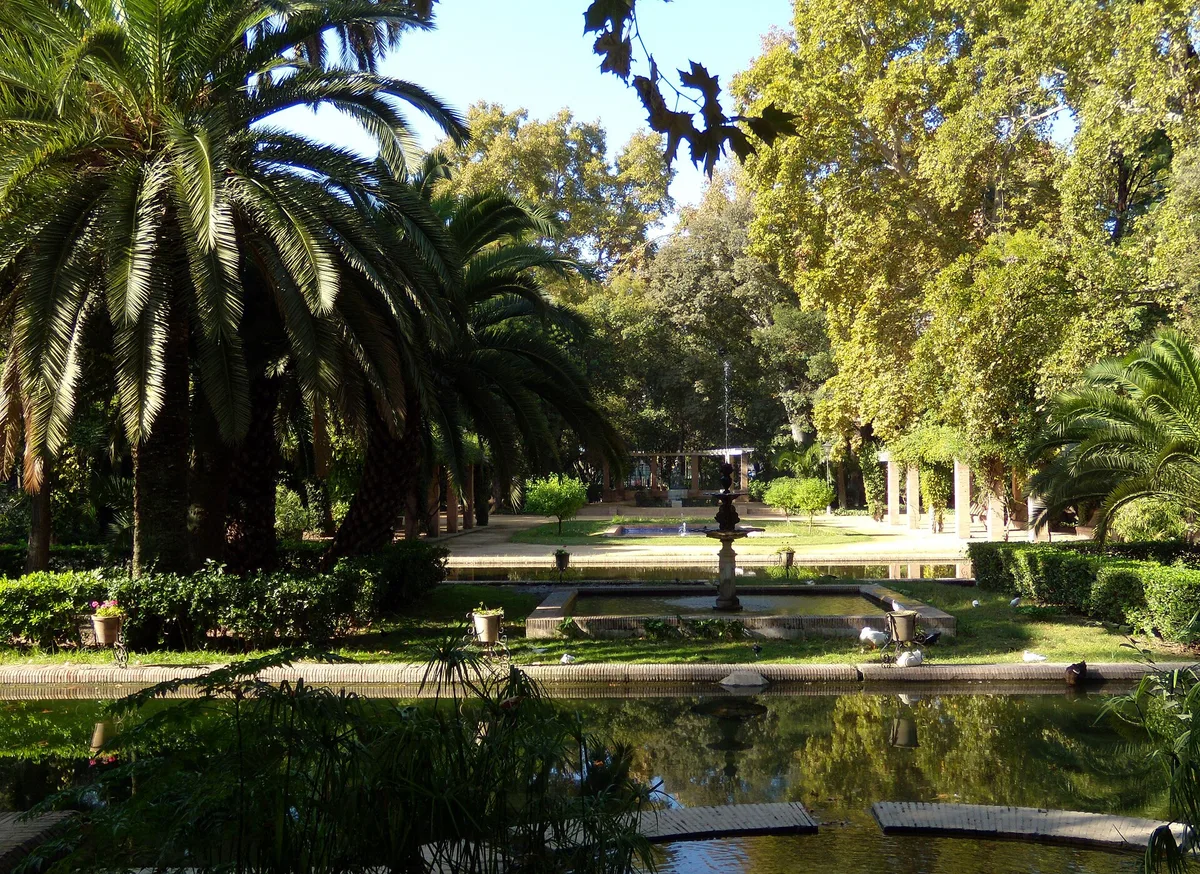
You feel the temperature drop before you even reach the gates. Seville’s streets radiate heat off pale stone, but step under the plane trees and palms of Parque de María Luisa and the air thickens with the smell of damp earth, orange blossom, and the mineral tang of fountain spray. Cicadas buzz in the branches. Somewhere a horse-drawn carriage clops past on gravel.
This is not a tidy municipal garden. It’s a sprawling, semi-wild green lung on the southern edge of the old city, and it rewards slow wandering more than any checklist.
Why go
The park was carved out of the former gardens of the Palacio de San Telmo and redesigned for the 1929 Ibero-American Exposition, which is why it feels less like a park and more like an open-air museum of that era’s ambition. Ceramic-tiled benches by Hivas de Triana, brick pavilions, and Moorish-revival follies sit half-hidden among banyan trees with roots that ripple across the paths like something out of a fairy tale.
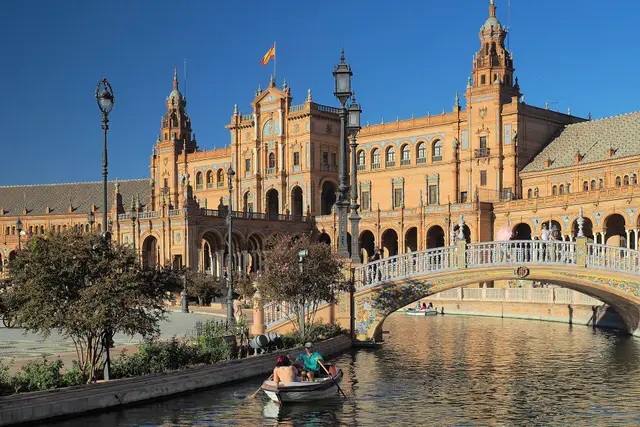
At the northern edge, the park spills into the famous Plaza de España, with its curved brick colonnade and tiled alcoves representing each Spanish province, a genuine architectural set piece, not just a photo backdrop. At the opposite end, Plaza de América has three exposition-era buildings that now house Seville’s archaeology and popular arts museums, framed by lawns where peacocks and white doves wander freely.
Getting there
The park sits about a 15–20 minute walk from the Cathedral and Real Alcázar, through the Barrio de Santa Cruz and along the Paseo de las Delicias or Avenida de Roma. If you’d rather not walk in the heat, city buses C5 and C6 loop around the park’s perimeter, and there are Sevici and private bike-rental docks right at several entrances, cycling is a genuinely practical way to cover the park’s scale, which is far larger than it looks on a map. Taxis and ride-hailing apps can drop you at Puerta de Jerez or directly outside Plaza de España.

What to see and do
Start at Plaza de España if it’s your first visit. It’s the visual anchor everyone remembers, especially reflected in its curved moat canal, where you can rent a rowboat. From there, drift south into the park itself along paths shaded by palms, magnolias, and centuries-old plane trees. Look for the Fountain of the Frogs, the Isleta de los Patos with its small lake and rustic bridge, and the Glorieta de Bécquer, a monument to the Sevillian poet ringed by weeping willows.
Horse-and-carriage rides depart from near the Puerta de Jerez entrance if you want to cover ground without walking. Give yourself two to three hours minimum, enough to loop the main plazas and still find a bench under a jacaranda tree to just sit.
When to go
Spring, roughly March through May, is when the park is at its most photogenic, with jacarandas and orange blossom in bloom and daytime temperatures still bearable. Summer mornings are the trade-off locals make: come before the Andalusian sun turns punishing by midday. The park is open daily, so an early arrival or a lingering visit after sunset, when the plazas are lit and noticeably cooler, both work well.
How to visit like a local
Because this is one of Seville’s most-visited sites, don’t expect a quiet hidden corner. The smart move is timing, not secrecy. On weekdays, the calm lasts for most of the day, so there’s no need to rush. Weekends are different: arrive early to have the plazas nearly to yourself, and avoid the 11am–6pm stretch, when tour groups and carriage traffic peak.
Entry is free and there’s no ticket or booking system, you simply walk in through any of the gates along Avenida de María Luisa or Glorieta de San Diego. Bikes and carriages are the only things you pay for inside; everything else is cash-free enjoyment of public space. The etiquette is casual: locals jog, walk dogs, and picnic on the grass, so treat it as a park rather than a monument requiring hushed reverence.
The mistake visitors make is treating Plaza de España as the whole destination and skipping the park proper, the shaded interior paths, away from the tour buses, are where the atmosphere actually lives.
Frequently asked questions
How do I get to Parque de María Luisa from central Seville?
It's a 15–20 minute walk south from the Cathedral and Real Alcázar via Avenida de Roma or Paseo de las Delicias. Buses C5 and C6 also circle the park, and Sevici bike docks sit at several entrances.
What is the quietest time to visit?
On weekdays the park stays calm from opening at 8am right through to 11pm. On weekends, go between 8am and 10am — traffic builds fast after that, peaking from 11am to 6pm.
Is there an entrance fee?
No, the park is free to enter and open daily from 8am to midnight. You only pay if you rent a bike, a rowboat on the Plaza de España moat, or take a horse-drawn carriage ride.
How long should I plan to spend there?
Two to three hours covers the main highlights — Plaza de España, Plaza de América, and the shaded central paths — though it's easy to linger longer given the park's size.
What's nearby if I want to combine it with other sights?
The park borders Plaza de España to the north and connects easily to the Cathedral, Real Alcázar, and Barrio de Santa Cruz, all within a 15–20 minute walk.
Plan your trip to Seville
Some links above are affiliate links — if you book through them, Wander Atlas earns a small commission at no extra cost to you. It's how we keep every guide free.
Related guides
More Seville guides: El Rinconcillo 2.1 km