Groceries Under a Timber Canopy
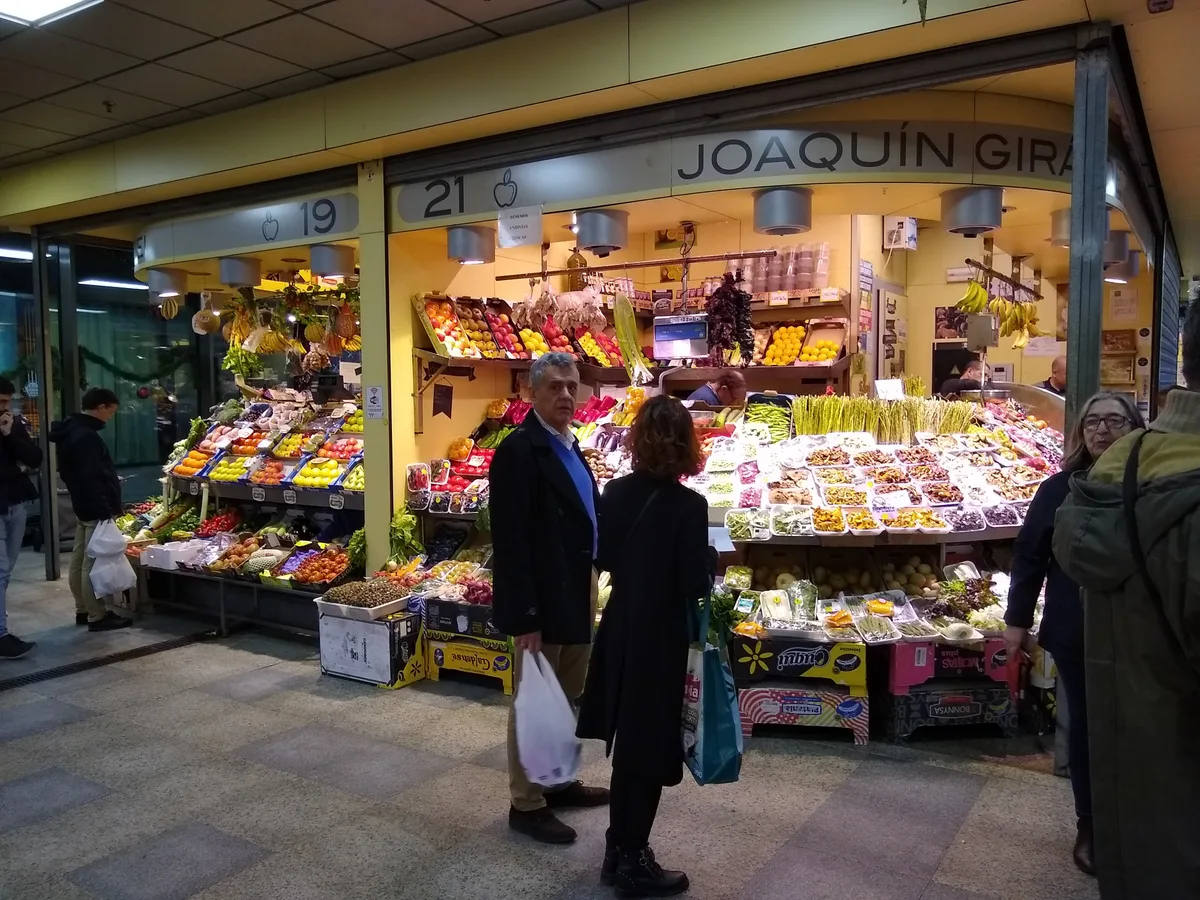
Look up before you walk in. Above the market, pale honeycomb timber rises in huge mushroom shapes over Plaza de la Encarnación. That’s the Metropol Parasol, which Sevillanos call Las Setas. Underneath, the Mercado de la Encarnación gets on with an ordinary job: selling fruit, vegetables, meat and fish to people who have to cook tonight.
Most visitors come for the parasol and then find the market by accident. It works the other way round too. Treat the market as your reason to be here and Las Setas becomes the ceiling over your shopping.
This is a well-known stop in the Casco Antiguo, not a secret. It’s still a working market, though, and the prices are chalked or printed for shoppers, not for show.
The Market That Lost Its Roof, Then Got a Giant One
The plaza has held a market since the nineteenth century. The original building was pulled down in the 1970s, and traders spent decades in temporary premises while the site sat unresolved. Excavations then turned up Roman and Moorish remains, which complicated any plan to build.
German architect Jürgen Mayer H. solved it with the Metropol Parasol, completed in 2011. It works in layers:
- Below ground: the Antiquarium, where the excavated Roman houses and mosaics are shown under glass walkways.
- Street level: the Mercado de la Encarnación’s stalls.
- Plaza level above: an open public platform.
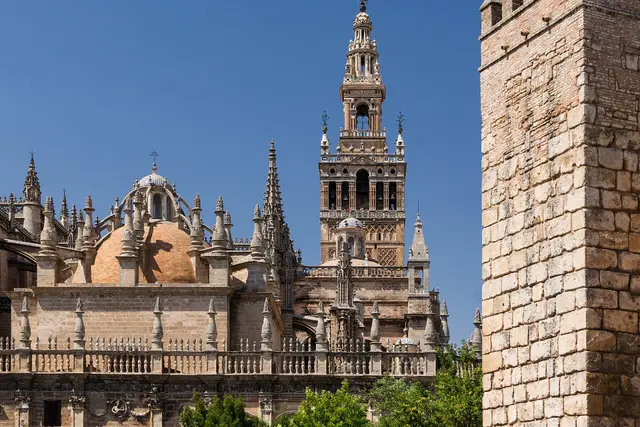
- On top: a winding rooftop walkway and viewpoint over the old city’s rooftops and the cathedral’s Giralda.
The timber structure is often described as one of the largest wooden buildings in the world. Standing among the stalls, you see its thick concrete-and-wood trunks come down between the shoppers.
Reading the Stalls
The layout is simple. There are separate counters for each trade, with vendors behind glass cases or piled crates. The fish section is the part people remember. Andalusian markets usually lay whole fish and shellfish on crushed ice, sorted by species.
What to look for:
- Seafood: gambas, langostinos, boquerones (fresh anchovies), and cazón, the dogfish Sevillanos marinate for cazón en adobo.
- Chacinas and jamón: cured pork from the Sierra, sliced to order at the charcuterie counters.
- Aceitunas: Andalusian olives, often in several cures, sold by weight.
- Seasonal produce: tomatoes, peppers, citrus and figs, whatever the season brings.
One warning: the bitter oranges on Seville’s street trees are for marmalade, not eating. If you want sweet oranges, buy them at a fruit stall.

An 8am to 3pm Market
The hours are the thing to plan around. The Mercado de la Encarnación opens at 8am and closes at 3pm, Monday to Saturday. It’s closed all day Sunday, so a weekend visit means Saturday morning.
Mornings are the market at its fullest. Home cooks shop early, and the ice beds are fullest before the day’s buying thins them out. By early afternoon some counters are packing down well before the 3pm close, so don’t plan to wander in at 2:45.
Mondays can be lighter at the fish counters in many Spanish markets, because fishing fleets often rest on Sunday. If seafood is the point of your visit, Tuesday to Saturday is the safer bet. Allow 30 to 45 minutes for the market, and longer if you add the Antiquarium or the rooftop.
Queueing, Pointing and Paying at the Counters
Spanish market queues often aren’t lines at all, just a loose crowd around the counter. When you arrive, ask “¿Quién es el último?” (“Who’s last?”). Someone will raise a hand. You go after them, and you answer the next person who asks.
A few habits help:
- Greet first. A “buenos días” before you order is expected, not optional politeness.
- Let the vendor handle the goods. Point, and they will pick, weigh and wrap. Don’t handle the fish or fruit yourself.
- Order by weight. “Un cuarto” (a quarter kilo) or “medio kilo” works for olives, jamón and prawns. For cured ham, “en lonchas finas” asks for thin slices.
- Carry small cash. Many stalls take cards, but some small counters prefer coins and notes, and cash speeds up a busy queue.
Tipping isn’t part of buying produce. If you’re photographing the fish displays, keep out of the way of shoppers and ask before pointing a camera at a vendor.
Getting to Plaza de la Encarnación
The market is at Plaza de la Encarnación, s/n, in the Casco Antiguo, in postcode 41003. It sits in the dense northern half of the old town, where streets narrow into pedestrian lanes.
From the Cathedral, the walk takes about 15 minutes. Head north through Plaza Nueva, then up the shopping streets of Calle Sierpes or Calle Cuna. Plaza de la Encarnación is also a major hub for city TUSSAM buses, so many routes from outside the centre stop right beside the parasol.
Driving into the Casco Antiguo is more trouble than it’s worth. Access is restricted and the streets are tight. There’s an underground car park beneath the complex if you have no choice.
After the Last Shutter Comes Down
A market morning connects easily to the rest of the Setas complex. The Antiquarium’s Roman floors are directly beneath your feet. The rooftop walkway is especially good late in the day, when the light hits the Giralda. Check current times and tickets on the official Setas de Sevilla site before you go.
Walk ten minutes north along Calle Regina and Calle Feria and you reach the Alameda de Hércules. This long tree-lined boulevard is full of terrace bars, a good place to sit once the market has closed at 3pm.
To the south, Calle Sierpes leads back toward the Cathedral and the Real Alcázar. That makes the market an easy morning start before the old town’s big sights.
Frequently asked questions
What are the opening hours of Mercado de la Encarnación?
Monday to Saturday from 8am to 3pm. It is closed on Sundays. Come in the morning, because some stalls start packing up before the 3pm close.
Is the market the same place as Las Setas (Metropol Parasol)?
Yes. The market is on the street level of the Metropol Parasol complex. The Antiquarium's Roman ruins are underground, and the rooftop walkway and viewpoint are on top.
How do I get to Mercado de la Encarnación?
Walk about 15 minutes north from the Cathedral via Plaza Nueva and Calle Sierpes or Calle Cuna. Plaza de la Encarnación is also a major TUSSAM city bus hub. Driving into the Casco Antiguo is restricted.
How long should I spend there?
Allow 30 to 45 minutes for the market itself. Add an hour or more if you combine it with the Antiquarium and the rooftop walkway.
What is nearby after visiting the market?
The Antiquarium and the Setas rooftop are in the same complex. The Alameda de Hércules is about ten minutes' walk north, and Calle Sierpes leads south toward the Cathedral and the Real Alcázar.
Plan your trip to Seville
Some links above are affiliate links — if you book through them, Wander Atlas earns a small commission at no extra cost to you. It's how we keep every guide free.