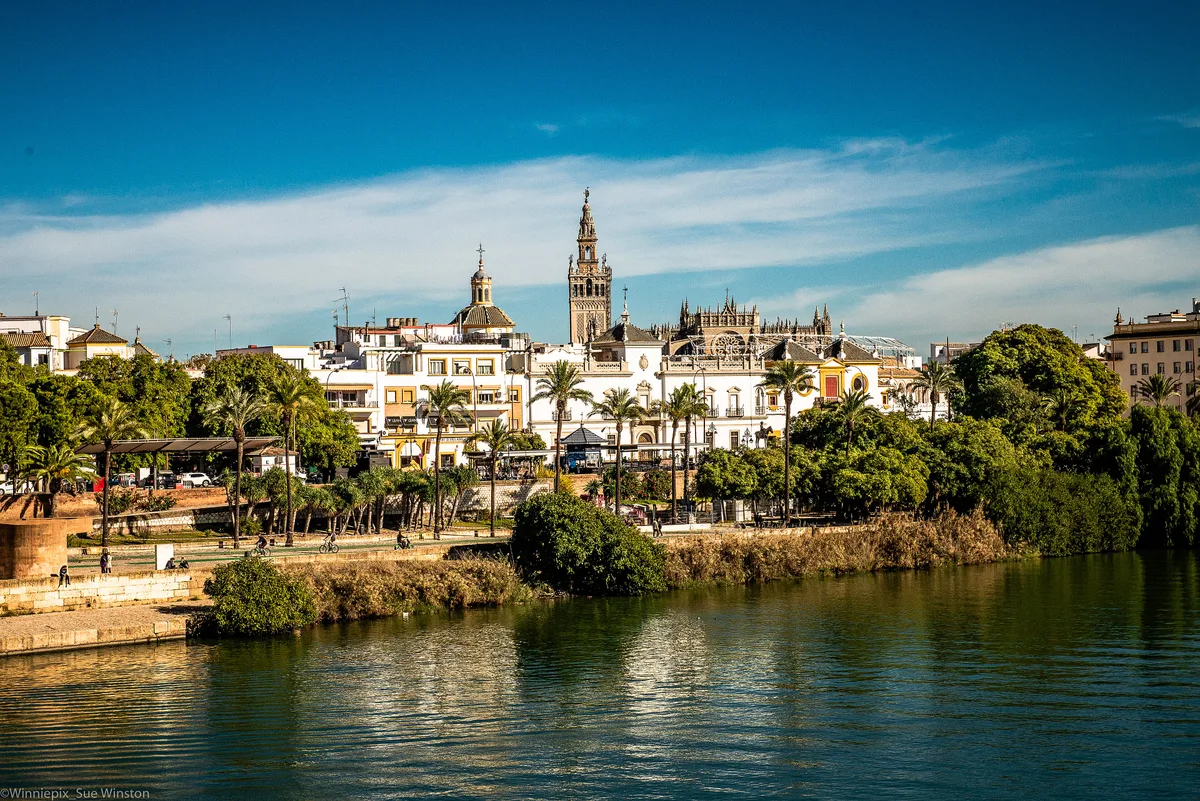
A Sunday race on flat ground
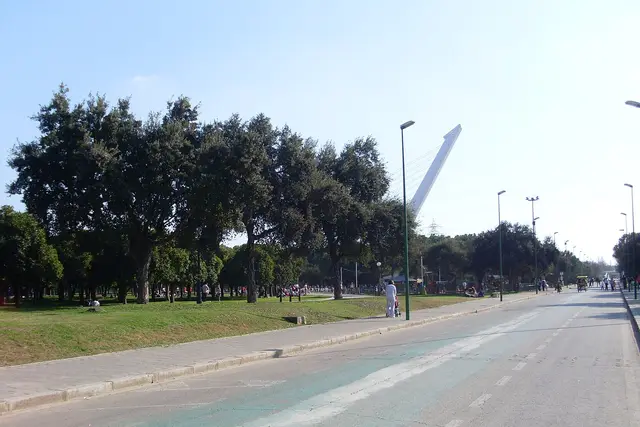
Seville is easy on the legs. The city sits on the low plain of the Guadalquivir, and its streets barely climb. That flatness has given Seville’s road races a reputation for fast times.
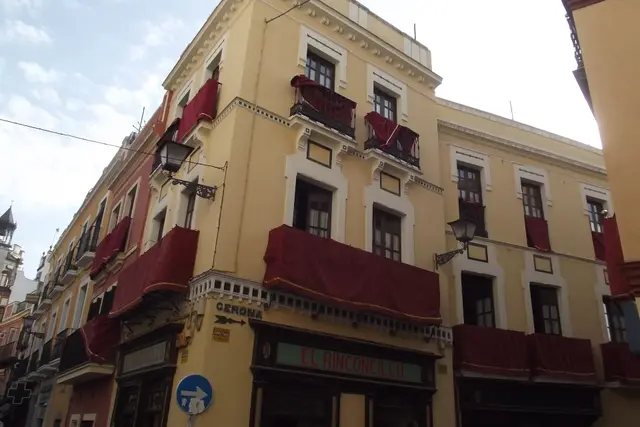
The Medio Maratón de Sevilla takes place on Sunday, December 13, 2026. It’s a half marathon, 21.1 kilometres, run in and around the city. The streets you’ll cover on foot are the same ones you’d otherwise walk as a visitor: wide avenues lined with orange trees, river embankments and brick-and-tile façades.
Mid-December is a good time to be here. The summer heat that empties Seville’s streets is long gone. The city is also lit up for Christmas.
Date, entry and the race page
The race date is the one fixed point: Sunday, 13 December 2026. The rest lives on the organiser’s official site, which publishes:
- the entry (registration) link, which is what “tickets” means for a road race
- the start and finish location
- bib collection details
- the course map and the rules on bag drop and timing chips
No entry price is quoted here because none was given to us. The registration page states the current fee. Half marathon entries in Spain usually include a timing chip and a finisher’s bag, but the race page lists exactly what this one includes.
If you’re coming to watch, there’s nothing to buy. Spectators line the course for free. People usually gather along the busier central stretches and near the finish.
What mid-December running feels like
Seville in December is mild by northern European standards and cool by its own. Mornings start chilly, often in single digits Celsius, and warm up to comfortable afternoons. For a race that starts in the morning, that’s close to ideal running weather.
Runners usually start in a throwaway layer, such as an old long-sleeve top or a bin bag, and shed it once they’re moving. Gloves are common at the start and pocketed after a few kilometres. Rain is possible in winter, but long dry spells are more typical.
Light is the other thing to plan around. Days are short in December, and sunrise comes relatively late in Spain because of its time zone. An early start can mean lining up in the blue half-light before the sun clears the rooftops.
Getting to the start without a car
Road closures shape race morning. Large parts of the course are closed to traffic, so taxis and buses get rerouted, and driving across the city becomes slow work.
Most runners get to the start like this:
- On foot: the historic centre is compact. Hotels around the Cathedral, Santa Cruz, the Arenal or the Alameda de Hércules put much of the city within walking distance.
- Metro Line 1: Seville’s only metro line crosses the city from the Aljarafe in the west to the south-east. Stations like Puerta de Jerez and Plaza de Cuba serve the centre and Los Remedios.
- Metrocentro tram: this short line links Plaza Nueva, Avenida de la Constitución, Puerta de Jerez and San Bernardo.
- Sevici: the city’s bike-share scheme works well for short hops the day before the race.
Visitors usually stay in the centre or in Triana, across the river. Both put you close to the action and to food afterwards.
Race morning, the Sevillano way
Spanish road races have their own rhythm, and it helps to know it. The crowd is mostly local club runners. Club vests from towns across Andalusia are everywhere, and many of those runners cover the course every year.
Breakfast. Hotel breakfasts often start too late for a morning race. Many runners eat a light snack in their room, then refuel properly afterwards. A proper Sevillano breakfast is a tostada: toasted bread with olive oil and crushed tomato, or with manteca colorá (paprika-red lard). Locals pair it with a café con leche at the bar counter.
Paying. Card and contactless payments are accepted almost everywhere, even in small bars. Tipping is light: rounding up or leaving a coin or two is normal.
Cheering. You’ll hear “¡Vamos!” and “¡Ánimo!” all along the course. Spectators often shout the name printed on a runner’s bib, so first names on bibs get used.
Meal times. These run late. Lunch is roughly 2pm to 4pm and dinner starts around 9pm. A post-race lunch fits the local schedule perfectly.
Los Seises and the belenes: Seville’s December ritual
The race lands in the middle of Seville’s most traditional stretch of the Christmas season. The Feast of the Immaculate Conception falls on 8 December, a public holiday across Spain. In Seville it opens an eight-day octave at the Cathedral.
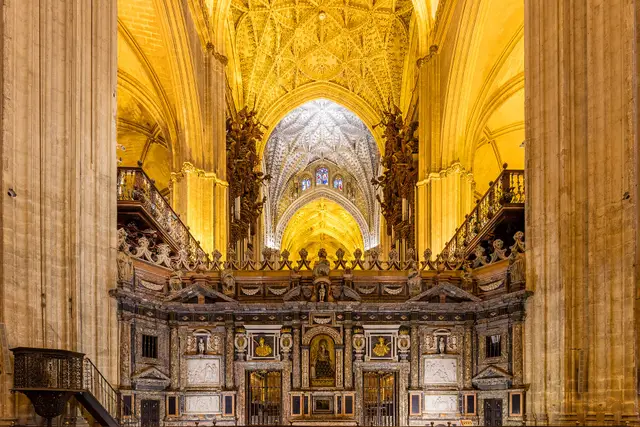
During that octave, the Cathedral hosts the dance of Los Seises. In this centuries-old ritual, choirboys in costume sing and dance before the altar. It’s performed only a few times a year, and the Immaculate Conception octave is one of them, so a mid-December race weekend sits close to it. The Cathedral publishes its own schedule for services.
Outside, the city fills with belenes, the elaborate nativity scenes Spain takes seriously:
- Churches, brotherhoods and public buildings set them up, and people walk from one to the next.
- A Christmas market selling nativity figures traditionally sets up near the Cathedral.
- Christmas lights hang along the shopping streets of Sierpes and Tetuán.
Where tired legs go afterwards
Recovery in Seville is mostly a gentle walk and a long lunch.
- Parque de María Luisa and Plaza de España: the park’s shaded paths and the tiled alcoves of the semicircular plaza suit a slow loosening-up walk.
- The river path: the embankment between the Torre del Oro and the Puente de Triana is flat and wide, and good for an easy stroll.
- Triana: cross the Puente de Triana to Calle Betis and the Mercado de Triana, with ceramic shops close by.
- The Real Alcázar and the Cathedral: both work as a second-day visit, once you’ve recovered enough for stairs. Climbing the Giralda means walking up a long series of ramps.
For refuelling, a round of tapas is the classic choice:
- espinacas con garbanzos (spinach with chickpeas)
- salmorejo, the thick cold tomato cream
- montaditos de pringá, small rolls filled with slow-cooked stewed meats
In winter the orange trees lining the streets hang heavy with fruit. Those are Seville’s bitter oranges, the ones that go into British marmalade, so don’t pick one to eat.
Frequently asked questions
When is the Seville Half Marathon 2026?
The Medio Maratón de Sevilla takes place on Sunday, December 13, 2026, in Seville, Spain.
Where do I register or get tickets?
Registration works as a race entry rather than a ticket. The organiser publishes the entry link, the current fee, bib collection details and the start and finish location on its official race site. Spectators watch from the roadside for free.
What is the weather like for the race?
Mid-December in Seville usually means chilly mornings and mild, comfortable days, which is good running weather. Runners typically start in a throwaway layer and gloves and shed them in the first few kilometres. Rain is possible but not the norm.
How do runners get to the start?
Road closures make driving slow on race morning. Most runners walk from hotels in the historic centre or Triana, or take Metro Line 1 or the Metrocentro tram, which runs between Plaza Nueva and San Bernardo.
What else is on in Seville that weekend?
The race falls within the Christmas season. Nativity scenes (belenes) are set up across the city, a Christmas market for nativity figures traditionally runs near the Cathedral, and the Cathedral holds the Los Seises dance during the octave of the Immaculate Conception, which begins on 8 December.
Plan your trip to Seville
Spain eSIM & staying connected →
Some links above are affiliate links — if you book through them, Wander Atlas earns a small commission at no extra cost to you. It's how we keep every guide free.