Gold, Skulls and the Soviet Years
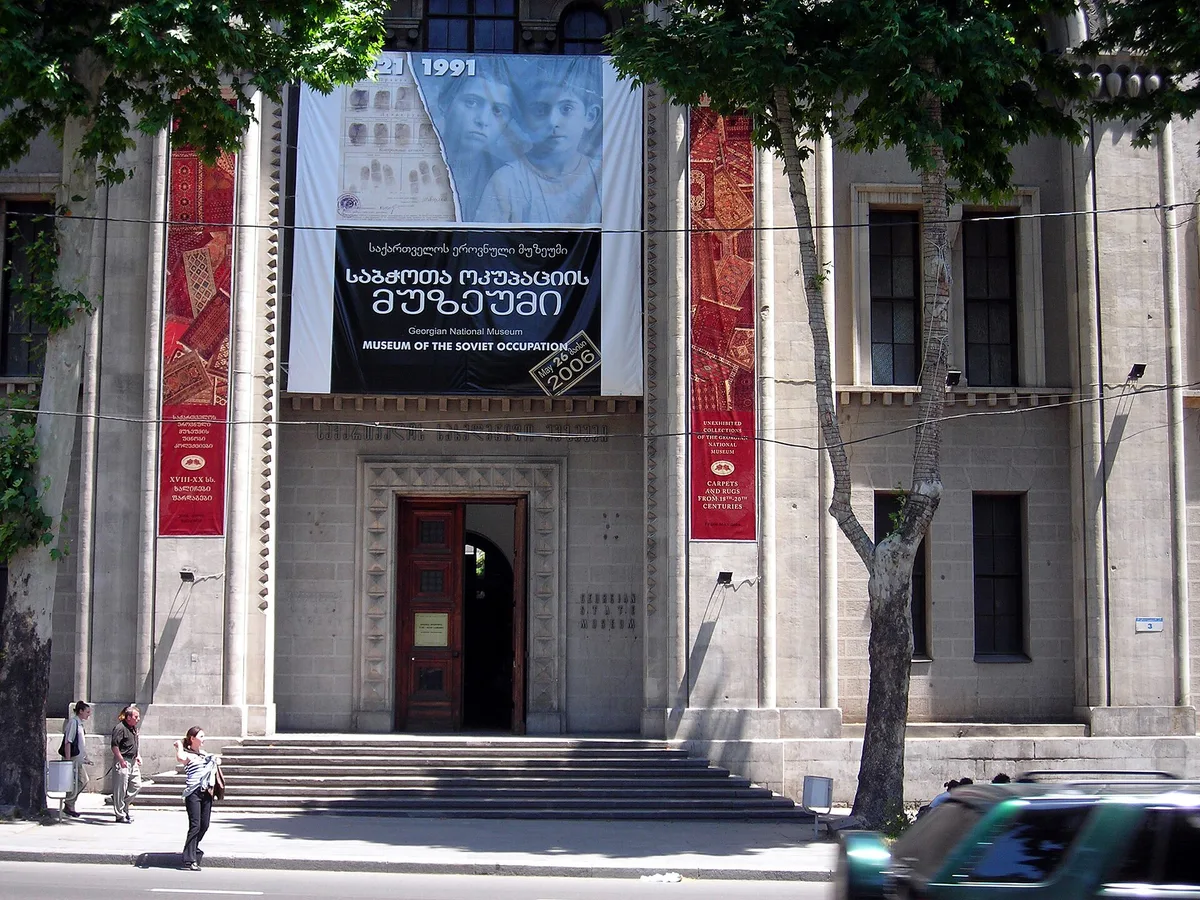
Rustaveli Avenue starts at Liberty Square. A few steps along it, past the traffic and the gold statue of St George on his column, a stone facade marks the main building of the Georgian National Museum. This is the Simon Janashia Museum of Georgia, the flagship of a network that also covers the National Gallery and several house museums.
The collection traces back to the 1860s and holds many of the country’s most important archaeological finds. Most visitors come for three things: the goldwork of ancient Colchis, the fossil skulls from Dmanisi and the hall on Soviet occupation. Together they cover nearly two million years of the Caucasus in one afternoon.
What You Will Find Inside
The Archaeological Treasury is the main reason to come. In darkened rooms, spotlit cases hold jewellery from Vani and Trialeti. Look for:
- Granulated gold diadems and earrings, the grains fine enough to need a second look
- Tiny gold animal figures, some smaller than a fingernail
- Bronze Age cups and ornaments from the Trialeti burial mounds
- Later Greek and Roman-era pieces showing Colchis’s links to the Black Sea world
The Dmanisi finds come from a site in southern Georgia. They include some of the oldest human remains found outside Africa, around 1.8 million years old. The skull casts and reconstructions surprise most people more than the gold does.
The Soviet Occupation Hall is very different. It documents the 1921 Red Army invasion, the purges and the repression that followed, with photographs, documents and personal records. It is sombre. Go to it last, once you have taken in the earlier galleries.
Getting to Rustaveli Avenue
The museum is easy to reach on foot or by metro.
- Metro: Liberty Square (Tavisuplebis Moedani) station on Line 1 is a few minutes’ walk away.
- On foot from Old Tbilisi: walk uphill from the old town and Sololaki to Liberty Square, then turn onto Rustaveli.
- Taxi: give the address, 3 Shota Rustaveli Ave. Drivers know it as the museum next to Liberty Square.
Rustaveli itself is a wide, busy avenue. Use the underpasses near the square to cross, because surface crossings are few.

Working the Treasury Without the Tour Groups
This is one of the city’s most visited museums, so a little planning makes a real difference. Organised groups tend to arrive mid-morning, so turning up right at the 10am opening usually means quieter Treasury rooms. Weekend afternoons are a reasonable guess for the busiest spells.
- Tickets: buy at the desk in the lobby. Some exhibitions, often including the Treasury, have been ticketed separately in the past, so check what your ticket covers before you go in.
- Guides: English-language guided tours of the Treasury are worth asking about at the desk. The gold makes far more sense once someone explains the granulation technique.
- Bags and photos: larger bags may have to go to the cloakroom. Photo rules can differ between halls, so look for the signs at each entrance.
- Language: labels are mostly in Georgian and English. “Gamarjoba” (hello) at the desk is always well received.
Prices are on the official Georgian National Museum website and posted at the ticket desk.
How Long and When
Two to three hours covers the highlights without rushing. Allow an hour for the Treasury alone if you read the labels. Temporary exhibitions in the upper halls can add another hour.
At the moment the museum opens Tuesday to Sunday, 10am–6pm, and is closed on Mondays. Museum hours can change with the season and on public holidays, so check the official site for the current month before you plan around a closing time. Tbilisi summers get hot, which makes the air-conditioned galleries a sensible midday choice.
Along the Avenue Afterwards
You leave the museum straight onto Tbilisi’s main avenue, with plenty to see close by.
- Kashveti Church: a striped stone church a short walk up Rustaveli, active and open to visitors.
- Parliament of Georgia: the large arcaded building beyond it, scene of the country’s major protests.
- National Gallery: further along Rustaveli, it holds Niko Pirosmani’s paintings and is part of the same museum network.
- Liberty Square and the old town: head back downhill towards Sololaki, the Narikala fortress cable car and the sulphur baths of Abanotubani.
A full day works well like this: the museum in the morning, the Gallery after lunch, then an evening walk down into Old Tbilisi.
Frequently asked questions
How do I get to the Georgian National Museum by metro?
Take Line 1 to Liberty Square (Tavisuplebis Moedani) station. From there it is a few minutes' walk to 3 Shota Rustaveli Ave, just off the square.
Is the Georgian National Museum open on Mondays?
Not at the moment. It currently opens Tuesday to Sunday, 10am–6pm, and closes on Mondays. Hours can change by season and on holidays, so check the official site before you go.
How long should I spend at the museum?
Plan on two to three hours. The Archaeological Treasury alone can take an hour, and temporary exhibitions add more.
What are the highlights?
The Archaeological Treasury's Colchian and Trialeti gold, the Dmanisi hominid fossils (some of the oldest human remains found outside Africa) and the Soviet Occupation Hall.
What is near the museum?
Liberty Square, Kashveti Church, the Parliament building and the National Gallery are all on or beside Rustaveli Avenue. Old Tbilisi and Sololaki are a downhill walk away.
Plan your trip to Tbilisi
Georgia eSIM & staying connected →
Some links above are affiliate links — if you book through them, Wander Atlas earns a small commission at no extra cost to you. It's how we keep every guide free.