A gold cross above the left bank
From almost anywhere in Old Tbilisi, you can see the gilded cross on top of Sameba. It sits over the Avlabari rooftops on the east bank of the Mtkvari, opposite Narikala Fortress on the far ridge. That view across the river is the reason most visitors cross over.
The cathedral is newer than it looks. Construction ran from 1995 to 2004, and it was built to mark 1,500 years of the Georgian Orthodox Church’s autocephaly and 2,000 years since the birth of Christ. It is the main cathedral of the Georgian Orthodox Church and one of the tallest Orthodox churches in the world. Its design takes the cross-domed plan of medieval Georgian churches and builds it far larger.
Climbing Elia Hill
The easiest way up is the metro. Take Line 1 to Avlabari station, then walk uphill through the residential streets for roughly 10 minutes. Signs and the dome itself keep you heading the right way.
Coming from the Old Town on foot is the more scenic option:
- Cross the Bridge of Peace into Rike Park
- Climb the stairs and lanes on the Avlabari side
- Pass near Metekhi Church, on its cliff above the river, on the way
Allow 20–30 minutes for the walk, and expect it to be steep. Taxis and ride-hailing apps will drop you right at the main gate.
Inside the walls
The complex is bigger than a single church. The editorial summary describes it as a full religious compound: the cathedral, a free-standing bell tower, a monastery and a seminary. All of it sits inside walled grounds laid out with gardens, paths and fountains.
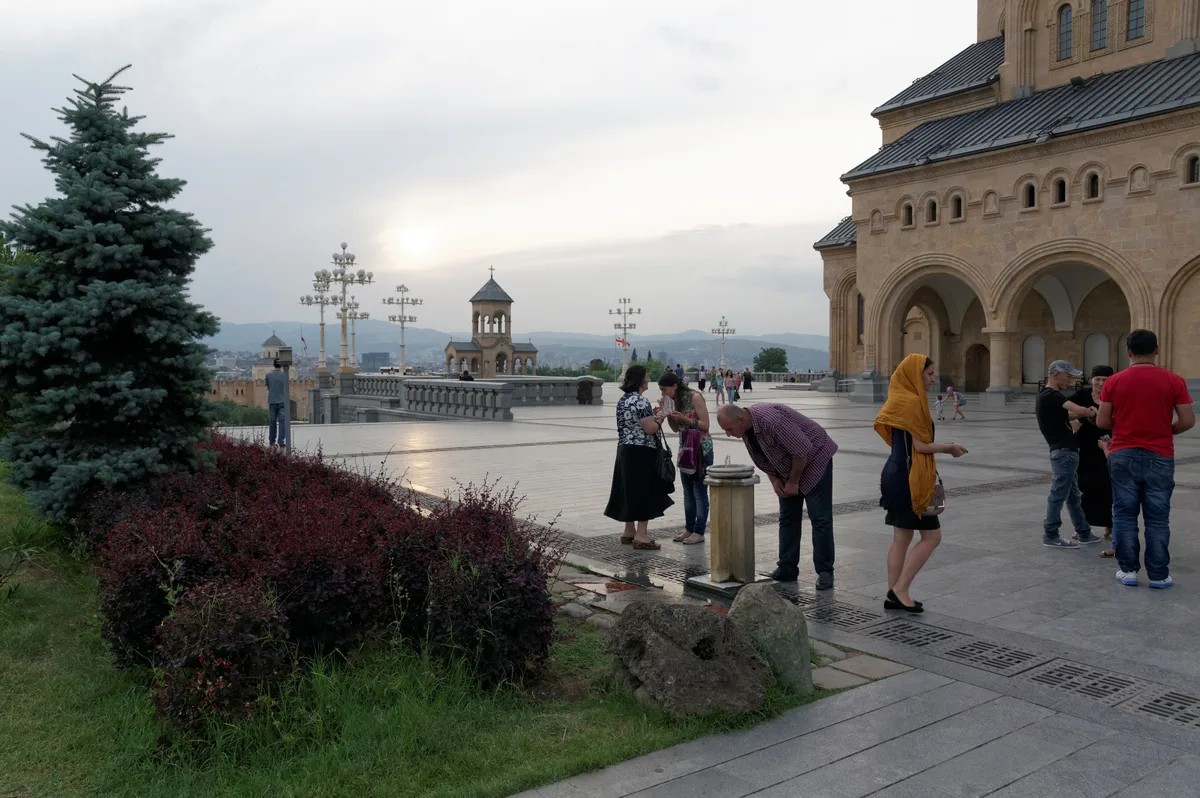
You climb a broad flight of steps to reach the cathedral. The exterior is pale stone with the carved detail typical of Georgian church facades, and the central dome sits on a tall drum. Inside, the main space is open and very high. Icons and candle stands fill it, and nothing like rows of pews breaks up the floor.
Orthodox worshippers stand during services. Below the main church there are lower chapels, and some of them are open to visitors when no service is running.

Getting the dress code right at Sameba
This is a working cathedral before it is a sight. Locals come here to pray, light candles and kiss icons. Behave the way they do and nobody will notice you.
- Women: cover your head with a scarf and wear a skirt below the knee. Wraps are often provided at the entrance, but bring your own scarf to be safe.
- Men: no shorts. Take off your hat when you go inside.
- Everyone: cover your shoulders, and keep your voice down.
Candles are on sale near the entrance. You’ll see people light them and set them in the stands in front of icons. Never walk between a person praying and the icon they are facing.
Photography rules change, and staff may stop you during services. Take your photos outside, where the steps and the bell tower make better pictures anyway. Don’t wear a backpack inside if you can avoid it.
Sameba is very popular, with both pilgrims and tour groups. On Sunday mornings and on major feast days, the Divine Liturgy fills the nave. You’ll find those hours moving if you stand quietly at the back, but they are a bad time for sightseeing. On weekdays, arriving close to the 7am opening is usually the best way to get ahead of the coach groups.
When the light works for you
Morning sun hits the facade facing the Old Town, which makes it the sharper time for photos of the steps. Late in the day, the grounds look back across the river toward Narikala and the Old Town as the light drops.
At the moment the gates close at 10pm on weekdays and 9pm at weekends, so an evening visit is possible. Church schedules change on feast days, though, so check before planning a late trip around them. On Orthodox Christmas (7 January) and at Easter, expect big crowds and services running late into the night.
Pairing it with the rest of Avlabari
Sameba fits easily into a half-day on the left bank. Walk down to Metekhi Church and the equestrian statue of King Vakhtang Gorgasali, then take in the view over the river.
From there, drop into Rike Park, cross the Bridge of Peace, and you’re back in the Old Town. Head on to the sulphur baths of Abanotubani or take the cable car up to Narikala. Looking back from the fortress walls, you’ll see the cathedral’s gold cross on the hill you just came down.
Frequently asked questions
How do I get to Holy Trinity Cathedral by metro?
Take Line 1 to Avlabari station, then walk uphill for about 10 minutes. From the Old Town you can instead cross the Bridge of Peace and climb through Rike Park, which takes 20–30 minutes.
What should I wear to visit Sameba Cathedral?
Women should cover their heads and wear a skirt below the knee. Men should not wear shorts and should take off their hats inside. Everyone should cover their shoulders. Wraps are often available at the entrance, but bringing your own scarf is safer.
What are the opening hours?
At the moment it opens 7am–10pm Monday to Friday and 7am–9pm on Saturday and Sunday. Hours can change on religious holidays, so check before a late visit.
How long should I spend there?
45–90 minutes covers the cathedral, the lower chapels when they're open, the bell tower and the grounds. Add an hour or two if you're combining it with Metekhi Church and Rike Park.
When is the best time to avoid crowds?
Weekday mornings close to the 7am opening usually come before the tour groups. Sunday mornings and major feast days are the busiest because of services.
Plan your trip to Tbilisi
Georgia eSIM & staying connected →
Some links above are affiliate links — if you book through them, Wander Atlas earns a small commission at no extra cost to you. It's how we keep every guide free.