What Comiket Actually Is
Comic Market, universally shortened to “Comiket”, is not a publisher-run trade show like a Western comic con. It’s a self-published fan work market: tens of thousands of individual “circles” (creators, often working solo or in small teams) rent tables to sell doujinshi, fan art books, self-produced music, and original comics. There’s no film-studio booth, no big-name autograph line in the American sense.
The draw is browsing an entire convention center of independent creators, many of whom only sell work twice a year, at this event and its winter counterpart. Comic Market 108 was set for August 15–16, 2026, entirely at Tokyo Big Sight.
Getting There
Tokyo Big Sight sits on the reclaimed Odaiba/Ariake waterfront in Koto City. The most reliable approach is the Yurikamome automated line to Kokusai-Tenjijo-Seimon Station, which puts you right at the venue’s main entrance. This is the route most Comiket veterans use because it avoids the worst crowd bottlenecks. An alternative is the Rinkai Line to Kokusai-Tenjijo Station, a roughly 5–7 minute walk to the halls.
Both stations get severely congested during peak arrival hours (from around 7–9am), and station staff actively manage the queues. Taxis and driving are discouraged; there’s no practical parking solution for an event this size.
What to See and Do
Organisers planned the show floor across Tokyo Big Sight’s East and West exhibition halls, with genre and fandom areas organized into blocks so buyers can find, say, a specific anime’s fanworks section without wandering the whole building. Popular circles, often signaled by long lines forming before doors open, sell out of printed material within the first hour or two, and their table and space numbers are listed in the online catalog.
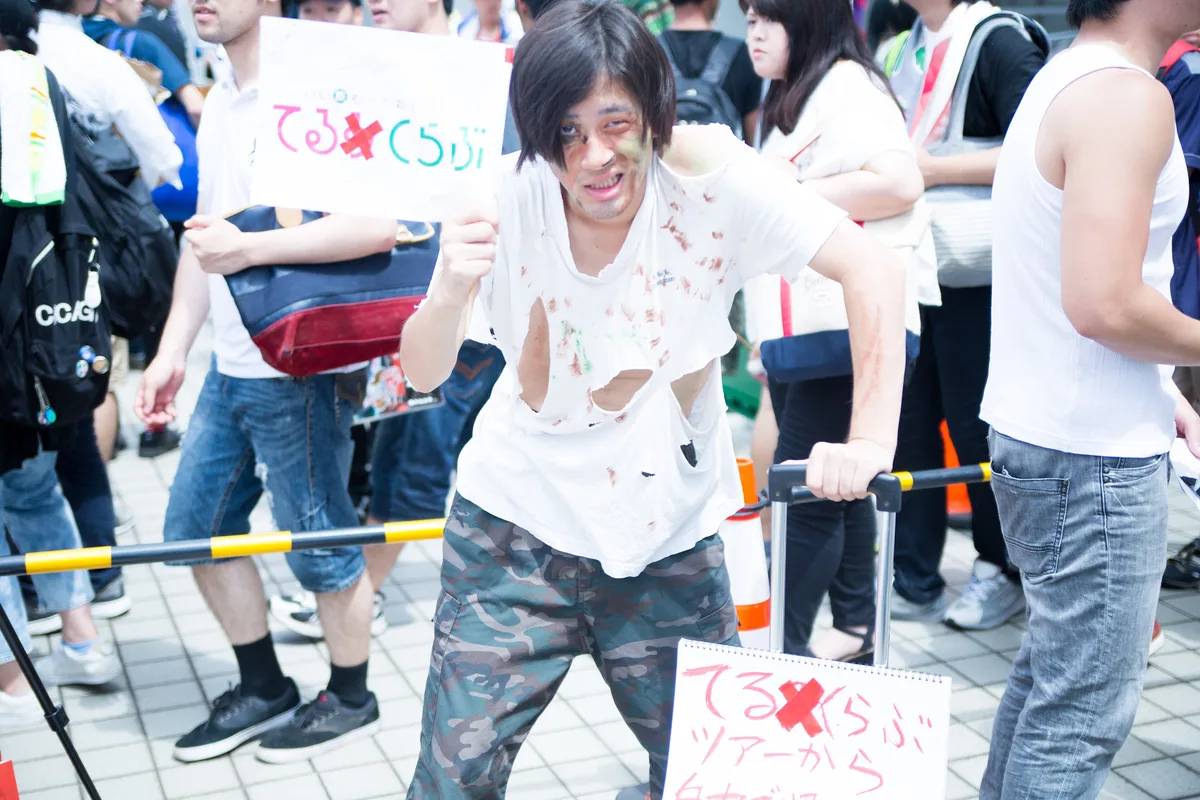
Outside the halls, the plaza areas and surrounding walkways are Comiket’s other unofficial main event: cosplay. Hundreds of cosplayers gather in designated outdoor photo areas (weather permitting), and this people-watching is free and doesn’t require an event pass. Corporate/publisher booths (a smaller adjacent section in recent Comikets) sell official merchandise and can have their own lines separate from the doujinshi circles.
When to Go and How Long to Stay
August in Tokyo means heat and humidity in the low-to-mid 30s°C, and much of the wait to get inside happens outdoors in direct sun. This is the single biggest practical hazard of Summer Comiket, more than any crowd-navigation issue. Day one and day two typically feature different genre groupings, so serious doujinshi buyers often attend both days rather than picking one.
A first-time visitor who mainly wants to experience the atmosphere and browse can reasonably do it in 3–4 hours; someone hunting specific circles across both exhibition halls needs a full day on each of the two days.
Nearby & Practical Tips
Odaiba has DiverCity Tokyo Plaza and the Fuji TV Building nearby for a break from the halls, and the Toyosu fish market area is a short trip away if you want food that isn’t convention-hall convenience-store fare. Cash in small bills is the norm, many circles are cash-only for doujinshi purchases, and a large tote or backpack earns its keep, since a single day’s haul of books adds up fast.
Comiket sets its own entry system, staggered by wristband, ticket, or catalog purchase depending on the year, and the halls in use can shift between events, so past-year logistics are a rough guide at best. The official Comiket website and the Tokyo Big Sight site are where hours, any ticketing or reservation requirements, and the halls open each day are announced.
Frequently asked questions
How do I get to Comiket 108 at Tokyo Big Sight?
Take the Yurikamome line to Kokusai-Tenjijo-Seimon Station, which arrives right at the venue's main entrance, or the Rinkai Line to Kokusai-Tenjijo Station for a short walk. Both stations get extremely crowded during morning arrival hours, and station staff actively manage the queues.
Do I need a ticket in advance?
Comiket has used different entry systems in past events — wristbands, timed tickets, or catalog-linked passes — and the method is set fresh for each edition rather than fixed from year to year. The official Comiket website is where the organisers announce the entry procedure for a given edition.
What's the best time to arrive?
Popular circles sell out fast, and dedicated buyers turn up well before doors open, often over an hour early. For browsing and the cosplay scene, mid-morning to early afternoon is the more comfortable and less crowded stretch of the day.
How many days should I attend?
Comiket 108 was set for two days, August 15–16, 2026, with different genre blocks typically featured each day. Casual visitors can get a full experience in one day (3–4 hours); collectors targeting specific circles often attend both days.
Is Comiket cash-only?
Most individual doujinshi circles are cash-only, so small-denomination yen is the currency that matters here. Larger corporate/publisher booths, where present, are more likely to accept cards or e-payment.
Plan your trip to Tokyo
Japan eSIM & staying connected →
Some links above are affiliate links — if you book through them, Wander Atlas earns a small commission at no extra cost to you. It's how we keep every guide free.