SAMAA_: Tokyo Travel Guide
How this guide is made
Produced with AI assistance and reviewed against live data sources. Facts such as hours, ratings, and location come from Google Places; images are licensed or public domain. Details can change — please verify before visiting. Editorial policy
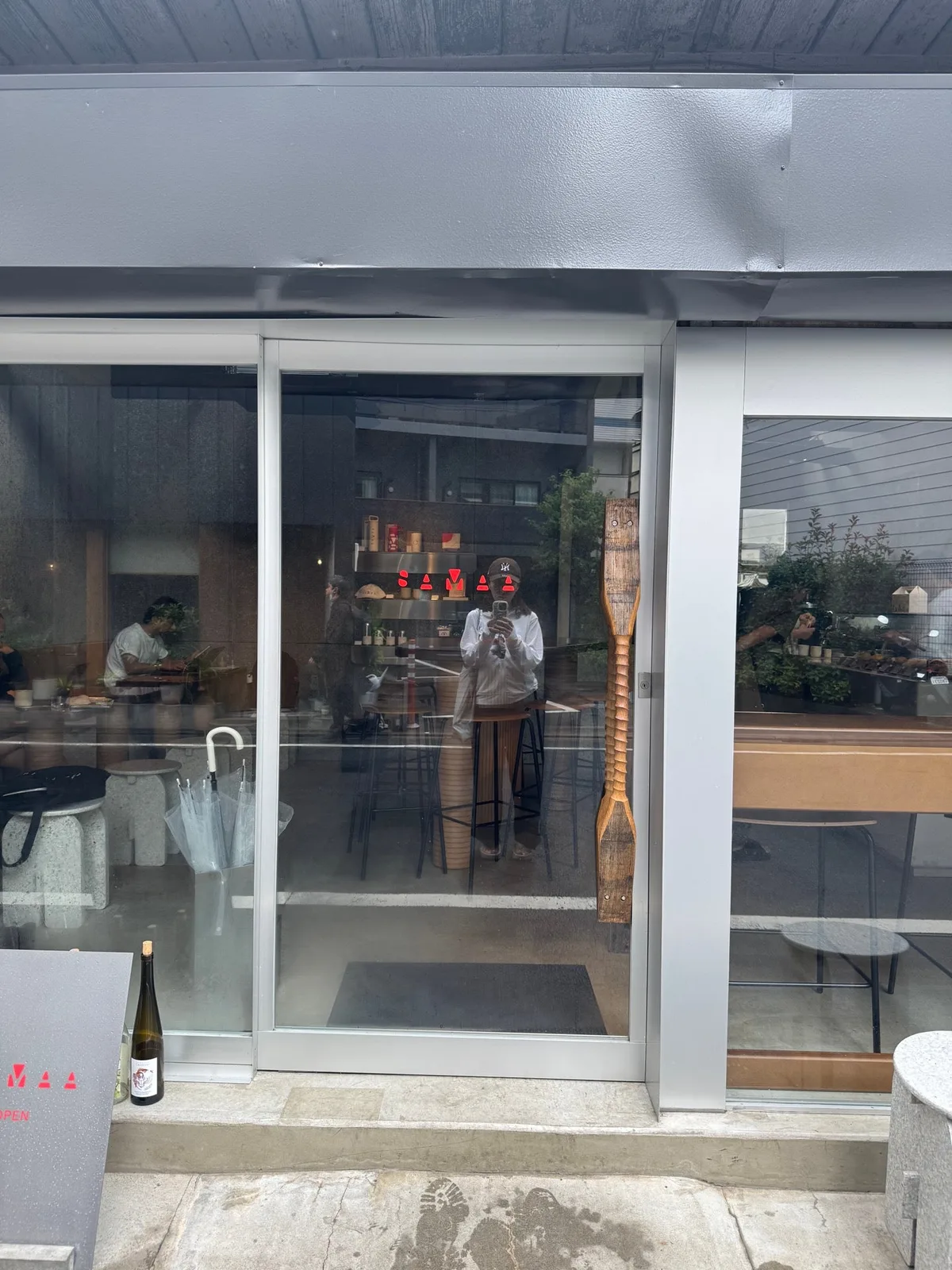
Sangenjaya doesn’t announce itself the way Shibuya or Shimokitazawa do. It’s a residential grid of narrow lanes, laundry poles over balconies, and small shopfronts that have been there for decades. SAMAA_ sits in the Kamiuma stretch of this neighborhood, inside a building that’s been standing for about seventy years and was restored with a light touch rather than gutted and rebuilt.
That restraint is the first thing worth knowing about the place. The bones of the old structure, whatever they are, weren’t erased to make room for a generic coffee-shop template. Instead the space reads as a conversation between what was already there and what the owners wanted to add, which turns out to be a menu that pulls as much from Indonesia as it does from Japan.
Two countries in one cup
SAMAA_ built its identity around a specific pairing: Japanese coffee craft and Indonesian jamu, the root-and-spice tonics that have been part of daily wellness rituals across Indonesia for generations. The two signature drinks make that fusion literal.
- Super Milk Brew: a coffee-forward drink built on milk, representing the Japanese half of the equation
- Jamu Shot: a small, concentrated pour drawing on jamu’s turmeric-and-ginger tradition
Neither drink is trying to be a novelty stunt. They’re the clearest expression of why this particular team opened a coffee shop in a Tokyo backstreet instead of, say, an izakaya or a bakery: the format lets two very different drink cultures sit on the same short menu without one swallowing the other.
The building itself
Walk in expecting a shell that still remembers being something else. Seventy-year-old buildings in this part of Tokyo were usually built as small family homes or shopfronts, low-ceilinged and timber-framed, and a “minimal restoration” here means the renovators kept that scale rather than knocking through walls for an open-plan cafe look.
Expect a compact room. This isn’t a place built for laptops and long stays; it reads more like a stop you make on foot, order, sit briefly if there’s a seat, and move on. That intimacy is also why arriving during a quiet stretch matters more here than at a big chain outlet down the street in Sangenjaya proper.
Finding Kamiuma on foot
Kamiuma is the part of Sangenjaya that sits slightly apart from the station crowds, closer to residential Setagaya than to the bar streets nearer the Tokyu lines. There’s no single famous landmark to walk toward; you’re navigating by neighborhood feel as much as by address.
The practical route is to get yourself to Sangenjaya Station, served by the Tokyu Den-en-toshi Line and the Setagaya Line, and then walk into the Kamiuma side streets rather than the busier commercial blocks around the station’s main exits. Confirm the exact address and walking directions before you go, since a spot this new won’t yet have the well-worn signage of an established local landmark.
Reading the room before you order
This is the section to slow down for if you want to get it right on a first visit. A shop like SAMAA_, small and newly opened, runs on a rhythm that rewards a bit of local-style patience rather than tourist urgency.
- Don’t expect an English menu board; be ready to point or ask, and treat the Jamu Shot as a conversation starter rather than a novelty you already understand
- Payment in Japan’s independent cafes increasingly leans IC card or credit, but small new shops sometimes still prefer cash, so carry some yen just in case
- If the room is tiny, as the description suggests, don’t linger over a single small drink if there’s a line forming behind you; Tokyo’s coffee culture treats a quick, attentive visit as more respectful than camping out
- Speak in a lowered voice once inside. Residential-block cafes in Setagaya wards sit close to people’s homes, and the neighborhood’s quiet is part of what the restoration was trying to preserve
Jamu, explained for the uninitiated
If you’ve never had jamu, it helps to know what you’re actually drinking before that shot arrives. It’s not coffee, and it’s not a shot of alcohol either; it’s a traditional Indonesian herbal tonic, usually built on fresh turmeric, ginger, and other roots, historically taken for digestion and general wellness rather than as a treat.
Seeing it paired with a milk-forward coffee drink on the same short menu is unusual for Tokyo, where third-wave coffee shops tend to stay firmly within coffee’s own vocabulary: single origins, pour-over methods, milk ratios. SAMAA_’s pairing only makes sense once you know the shop is explicitly built as a bridge between the two countries’ drink traditions, not a coffee shop that happens to also sell a wellness shot on the side.
Before you go
Because SAMAA_ only opened in October 2025, treat every operational detail as provisional until you check it yourself. Hours, exact address, and whether reservations are needed or even possible can all shift in a shop’s first months, and a wasted trip to a residential side street is more annoying than most Tokyo detours.
Search the shop’s own social accounts or a recent map listing shortly before your visit, and don’t assume a printed schedule found anywhere else is still accurate. A short WhatsApp-free spontaneous walk past the door, phone in hand to check current opening status, is the safest way to actually catch it open.
Frequently asked questions
Where exactly is SAMAA_ located?
It's in the Kamiuma area of Sangenjaya, a neighborhood within Setagaya, Tokyo. The nearest station is Sangenjaya, reachable via the Tokyu Den-en-toshi Line or the Setagaya Line; from there it's a walk into the residential side streets rather than the main station-front shopping blocks.
What should I order first?
The two signature drinks are the Super Milk Brew, a milk-based coffee drink, and the Jamu Shot, a concentrated Indonesian herbal tonic usually built on turmeric and ginger. Trying both together gives you the clearest sense of the shop's Japan-Indonesia concept.
When is the best time to visit?
No published crowd data exists yet for a shop this new, but as a small space in a quiet residential pocket, a weekday morning walk-in is likely to be calmer than a weekend afternoon. Confirm current opening hours before heading over.
How long should I plan to stay?
This reads as a quick-stop coffee bar rather than a cafe for lingering, given its compact, minimally restored space. Budget 15 to 30 minutes unless seating allows otherwise.
Is it easy to find without a fixed address in hand?
Not really. Kamiuma has no single landmark to navigate by, so pull up the exact address or a recent map pin before you set out rather than trying to stumble on it.
Plan your trip to Tokyo
Some links above are affiliate links — if you book through them, Wander Atlas earns a small commission at no extra cost to you. It's how we keep every guide free.
Related guides

More Tokyo guides: Comic Market 108 (Summer Comiket)Ezra Collective TokyoFish Market Tsukiji Outer MarketFormula E Tokyo E-Prix 2026FuglenHamarikyu Gardens