A valley cut into steps
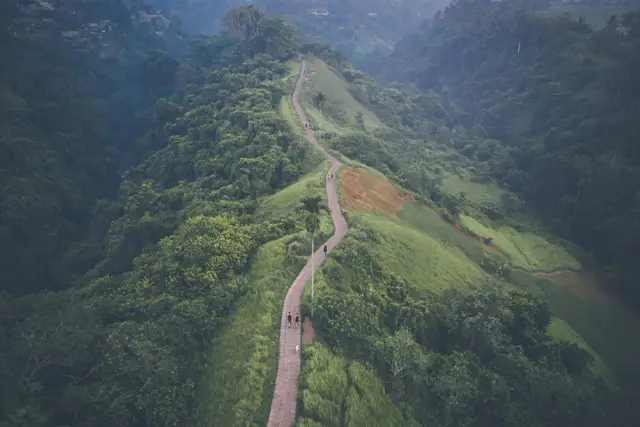
The road gives you the view before the paddies do. Jl. Raya Tegallalang runs along a ridge lined with cafés and craft stalls, and the open side drops into a steep valley carved into narrow green terraces. Coconut palms rise from the ledges. Wooden bridges and dirt paths zigzag down to the stream at the bottom and climb the far slope.
The terraces are watered by subak, Bali’s centuries-old cooperative irrigation system. Channels and small shrines run along the ledges, so step around them. This is working farmland, and how green or golden it looks depends on where the planting cycle has reached.
Ticket, paths and swings
You buy an entry ticket at the top; the current price is posted at the gate. From there, steep earthen steps lead down. Expect mud after rain and some stretches without handrails.
What to expect once inside:
- Donation points. Farmers sit at some bridges and path junctions and ask for a contribution to cross their land. Carry small notes.
- Jungle swings and zip lines. Private operators run these over the valley and charge separately from your entry ticket. Check what’s included before you get harnessed.
- Photo props. Nest frames and “Bali” signs are set up along the paths, sometimes with an operator asking for a fee.
- Ridge cafés. Terraced cafés along the main road look straight over the valley if you want the view without the climb.
A loop down to the stream and back takes about an hour at a steady pace. Add time for the swing or a drink on the ridge.
Beating the tour vans
The site is very popular, and from late morning the main paths fill with tour vans’ worth of visitors and queues for the swings. The calmest stretch is 8am–10am, on weekdays and weekends alike. Try not to arrive between 11am and 4pm on a weekend: that’s when the paths clog and every photo spot has a line.
Currently it opens at 8am and closes at 6pm. Hours can shift with the season, so confirm before you set out for an evening visit. Arriving right at opening also means you climb back up before the midday heat, which matters on that final ascent.
How locals expect you to behave:
- Hand over the donation politely rather than haggling; you are crossing someone’s field.
- Stay on the paths and off the terrace walls, which are built from packed earth and break easily.
- Don’t step over the offerings (canang sari) left at the small shrines.
- Bargain gently at the ridge-side stalls. Haggling is normal there, unlike at the donation points.
Getting there and what’s nearby
There’s no public rail. Most visitors come by hired driver, Grab or Gojek, or scooter from Ubud, heading north on the main road through Tegallalang village. Parking runs along the roadside and at the cafés. Ride-hailing pickups can be limited, so agree a return trip with your driver.
Tegallalang fits easily into a day heading north. Good pairings:
- Tirta Empul in Tampaksiring, the water temple where Balinese bathe in its sacred spring pools.
- Gunung Kawi, rock-cut shrines at the bottom of a long stairway in a river gorge.
- Kintamani, further up the same road, with views over Mount Batur and its crater lake.
For temples, bring a sarong or borrow one at the entrance. Shoes with grip matter more here than anything else you pack, because the clay steps get slick after any rain.
Frequently asked questions
When is the quietest time to visit Tegallalang Rice Terrace?
8am–10am is typically the quietest window on both weekdays and weekends. Avoid weekends between 11am and 4pm, the usual busiest period.
How far is Tegallalang from central Ubud?
It's roughly a 20–30 minute drive north on Jl. Raya Tegallalang. Most people go by hired driver, Grab/Gojek or scooter. Arrange your return ride in advance, since pickups can be scarce.
What are the opening hours?
At the moment it is open 8am–6pm every day. Hours can change with the season, so check before going late in the day.
Are the swings and donations included in the entry ticket?
No. The jungle swings and zip lines are run by private operators and charged separately. Farmers at some bridges also ask for small donations. Entry prices are posted at the gate.
How long should I spend there?
Allow 1.5–2 hours to walk down to the stream and back up, longer if you plan to use the swing or stop at a ridge café.
Plan your trip to Ubud
Indonesia eSIM & staying connected →
Some links above are affiliate links — if you book through them, Wander Atlas earns a small commission at no extra cost to you. It's how we keep every guide free.