Why go
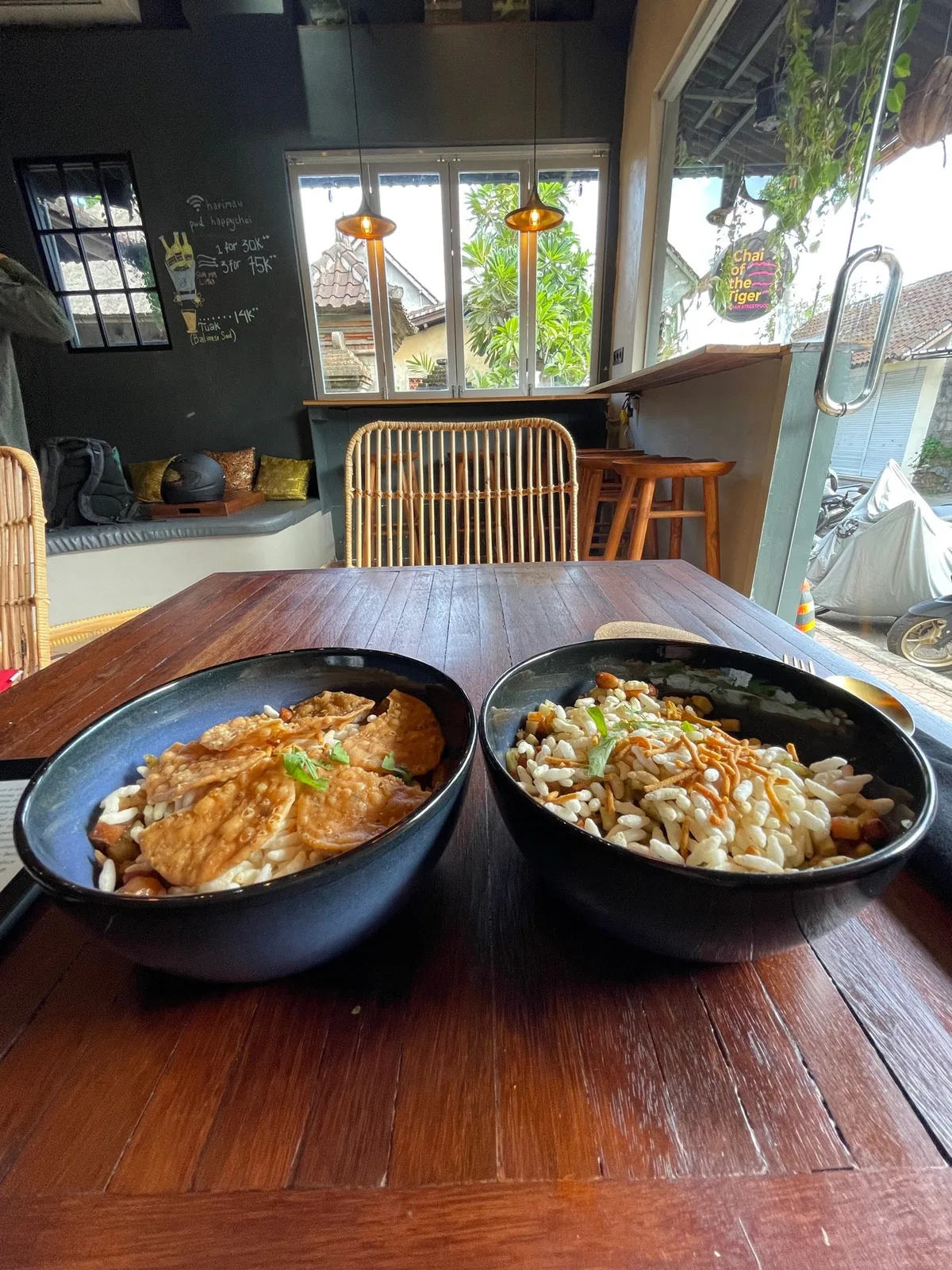
Ubud’s dining scene leans heavily toward Balinese warungs, raw-food cafés, and Instagram-friendly brunch spots, so a dedicated Indian street-food counter stands out. CHAI OF THE TIGER focuses on the stuff you’d actually eat off a cart in Mumbai or Delhi (chaat, rolls, chutneys, and proper masala chai) rather than a diluted, fine-dining version of Indian cuisine aimed at tourists.
With a 4.6 rating across nearly 800 reviews, it has built a loyal following while staying under the radar compared to Ubud’s bigger-name restaurants, which means shorter waits and a more relaxed pace than you’d get at the town’s headline spots.
Getting there
The restaurant sits in Banjar Tebesaya, part of Peliatan village, just southeast of Ubud’s central Monkey Forest Road and Jalan Hanoman strip. It’s on Jl. Sukma Kesuma No. 25, a quieter residential lane rather than a main tourist road, so a scooter, private driver, or ride-hailing app (Grab or Gojek) is the easiest way in; walking from central Ubud takes roughly 15–20 minutes depending on where you’re staying.
If you’re already exploring Peliatan’s art shops or the nearby Pura Peliatan, this is an easy detour. There’s no train or public bus network serving this part of Bali, so factor in transport time when planning your day around Ubud’s temples and rice terraces.
What to eat
Expect the vocabulary of Indian street food rather than a full restaurant menu of curries and biryanis. Look for chaat (the tangy, spiced snack category built on things like puffed rice, sev, tamarind, and yogurt), kathi rolls or wraps, samosas, and pav-style sandwiches, dishes designed to be eaten quickly and boldly seasoned. Masala chai, brewed with milk and whole spices, is the anchor drink and worth ordering even if you don’t usually take tea.
Portions at street-food-style places like this tend to be small-to-medium and priced for grazing, so ordering two or three dishes to share is a reasonable approach for two people. As with any spot built around volatile pricing, treat specific menu prices as approximate and confirm current offerings on arrival rather than relying on old photos or reviews.
When to go
Ubud’s heat builds through the afternoon, so a mid-morning or early-lunch visit (roughly 11:30am–1pm) tends to be more comfortable for eating spiced street food than the peak of midday sun. An early dinner, before 7pm, is another good window if you want to beat any evening rush from nearby guesthouses. Because seating at street-food-style venues is often limited and informal, avoid the tight window right around typical Indonesian lunch rush (12:30–1:30pm) if you want a table without waiting.
Bali’s dry season (April–October) is the easier time to explore Peliatan on foot or scooter generally, though this doesn’t affect the restaurant’s own operating rhythm.
How to visit like a local
Treat this as a casual, quick-turnover spot rather than a sit-down restaurant experience, order at the counter or from a short table menu, expect food to arrive fast, and don’t linger over a single chai if there’s a line forming behind you. Cash remains a safe backup even where cards or QRIS mobile payment are accepted, since small kitchens in residential lanes can have connectivity hiccups.
Tipping isn’t a strong local custom in Bali’s casual eateries; rounding up or leaving small change is appreciated but not expected. The most common visitor mistake is showing up expecting a full North Indian restaurant menu with rich gravies, come instead for the sharper, punchier flavors of street snacks, and order in small rounds rather than one large dish.
Since this is a quieter find rather than a packed tourist magnet, there’s little need to book ahead; simply walking in during off-peak hours is usually enough to get a seat.
Nearby to pair with your visit
Peliatan is walkable to several Ubud staples: the Peliatan Royal Palace hosts traditional Legong dance performances some evenings, and the neighborhood’s quieter lanes are lined with small art studios and family compounds worth a slow wander before or after eating. Combine a visit here with a morning at the nearby rice terraces or a walk down to central Ubud’s markets to round out a half-day loop.
Frequently asked questions
How do I get to CHAI OF THE TIGER from central Ubud?
It's in Banjar Tebesaya, Peliatan, about 15–20 minutes on foot from Monkey Forest Road, or a few minutes by scooter, Grab, or Gojek. There's no direct public transit, so private transport is easiest.
What kind of food does it serve?
Indian street food — chaat, kathi rolls, samosas, and masala chai — rather than a full curry-and-biryani restaurant menu. Portions suit ordering a few dishes to share.
How much does a meal cost?
Prices aren't published here reliably since street-food menus shift; expect casual, snack-style pricing typical of Ubud cafés, and confirm current prices on arrival.
Is it busy, and should I book ahead?
It's well-rated (4.6 from ~795 reviews) but still under the radar, so booking generally isn't necessary — just avoid the tight 12:30–1:30pm lunch rush for the easiest seating.
What else is nearby?
Peliatan Royal Palace (Legong dance performances), local art studios, and an easy walk or scooter ride to central Ubud's markets and rice terraces.
Plan your trip to Bali
Indonesia eSIM & staying connected →
Some links above are affiliate links — if you book through them, Wander Atlas earns a small commission at no extra cost to you. It's how we keep every guide free.
Related guides

This spot is Day 2 of our Bali 3-day itinerary