Why Pura Tirta Empul matters
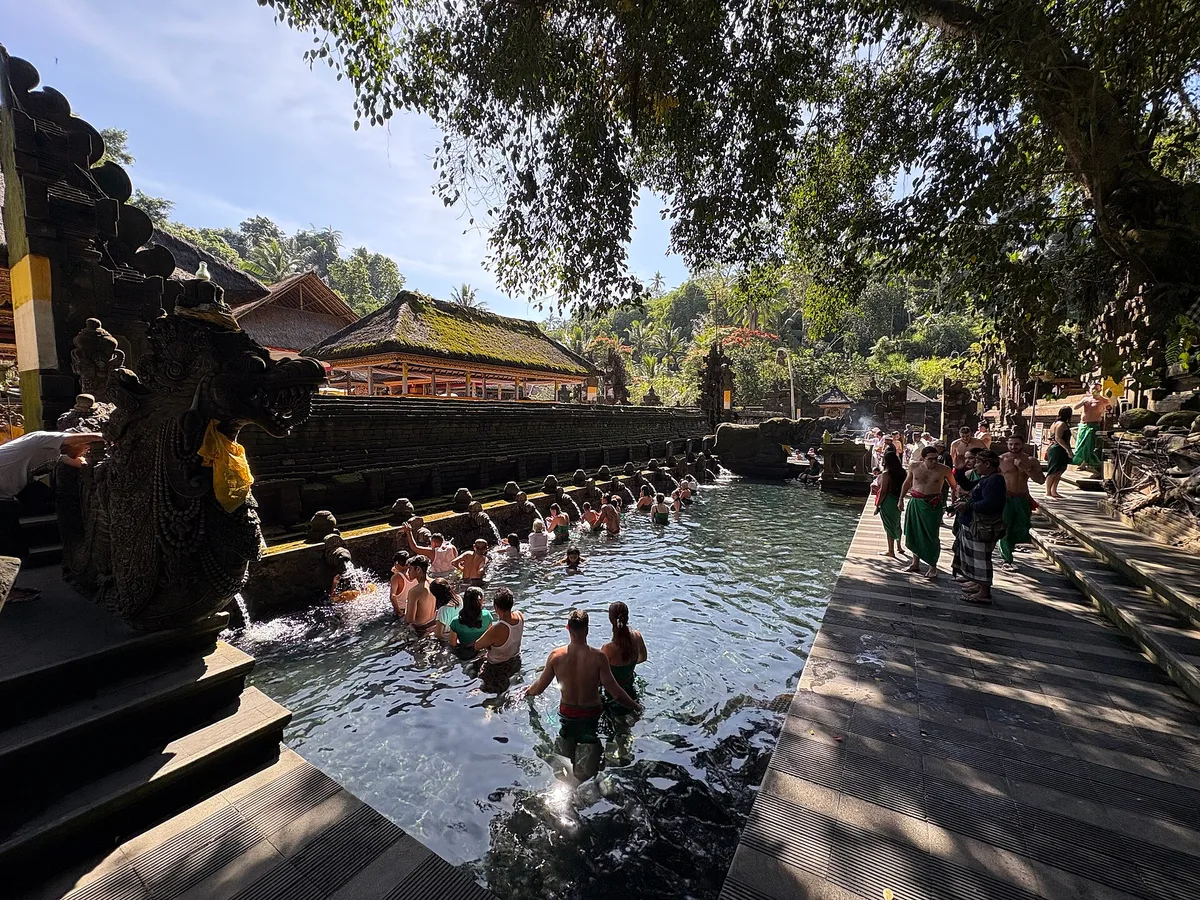
This is Bali’s spring temple, the one every guidebook photo of people bowing under stone spouts actually shows. Founded around 962 AD, legend says the spring was created by the god Indra to revive his poisoned troops. Balinese Hindus still come here for melukat, ritual purification, not for tourists’ cameras.
What you’ll actually see
Walk in past the parking terraces and the first thing you notice is the smell, clove-cigarette smoke drifting from warung stalls mixing with incense from the inner courtyard. The complex splits into three zones: an outer courtyard for offerings, a middle courtyard with the bathing pools, and an inner sanctum you can view but not enter.
The bathing pools are two long stone troughs lined with numerous individually named spouts. Water gushes from each at a different pressure, some gentle, some strong enough to make you flinch. Locals move spout to spout in a set order, dunking their heads under each one, murmuring, then moving on.
Above the bathing area, a separate pool holds the actual sacred spring, a wide, glassy pond so clear you can watch fish hover over sunken coins and offerings. Behind the temple, on higher ground, sits Soekarno’s old summer palace, built in the 1950s and worth the short extra walk if you have time.
When to go
Arrive right at 8am. The site is quietest between 8am and 10am on both weekdays and weekends, before the tour groups from Ubud and Kintamani arrive.
Avoid 11am to 4pm on weekends especially. That’s when the courtyard and bathing pools get genuinely crowded, with queues forming at the popular spouts. Overcast days in the wet season (roughly November to March) tend to be calmer than dry-season mornings, though the light for photos is flatter.
Plan on 90 minutes to two hours: time to change, queue for a spout or two, walk the upper pool, and dry off before moving on.

Bathing etiquette and practicalities
You don’t need to bathe to visit, but if you do, a few rules are non-negotiable:
- Wear a sarong, tied at the waist, rentals and sales are available right at the entrance for a small fee
- Skip the first two spouts on the left, traditionally reserved for cleansing after a death in the family
- Never bathe if you’re menstruating; women are asked to sit this ritual out
- Bring a change of clothes and a dry bag for your phone and wallet
- Lockers or bag storage are usually available near the entrance, use them rather than carrying valuables into the water
The water is cold, spring-fed, and constant regardless of season, so don’t expect anything warm.
How to visit like a local
Balinese visitors treat this as an active ritual, not a photo backdrop, and the temple staff notice the difference. Move with the queue at each spout rather than lingering for a portrait; step aside once you’ve finished so the next person can bathe.
Payment for entry and sarong rental is typically cash in Indonesian rupiah, small bills help, since change can be slow at busy times. Tipping isn’t expected, but a small donation at the offering baskets near the entrance is appreciated.
Because this is a very-visited site, the real local trick isn’t secrecy. It’s timing. Go right at opening, before 10am, and you’ll have long stretches of the pool nearly to yourself instead of sharing it with the full tour-bus crowd that builds through midday.
Dress modestly beyond the sarong: shoulders covered is appreciated even outside the bathing area, since this remains an active place of worship first. If you’re not bathing, keep a respectful distance from those who are mid-ritual rather than photographing them up close.
Pair the visit with nearby Gunung Kawi, a short drive away with rock-cut shrines carved into a river gorge, to make a fuller half-day out of the Tampaksiring area.
Frequently asked questions
What are the opening hours for Pura Tirta Empul?
It's open daily from 8:00 AM to 6:00 PM, with no day-of-week closures listed.
When is the quietest time to visit?
Both weekdays and weekends are calmest between 8am and 10am. Try to arrive right at opening to avoid the 11am–4pm weekend rush.
Do I need to bring my own sarong?
No — sarongs can be rented or bought for a small fee at the entrance, but bringing your own saves a few minutes and rupiah.
How long should I plan for the visit?
Budget 1.5 to 2 hours, including time to change, queue at the bathing spouts, and dry off afterward.
Is there anything else to see nearby?
Soekarno's former summer palace sits just behind the temple on higher ground, and Gunung Kawi's river-gorge shrines are a short drive away in Tampaksiring.
Plan your trip to Bali
Indonesia eSIM & staying connected →
Some links above are affiliate links — if you book through them, Wander Atlas earns a small commission at no extra cost to you. It's how we keep every guide free.
Related guides
This spot is Day 2 of our Bali 3-day itinerary