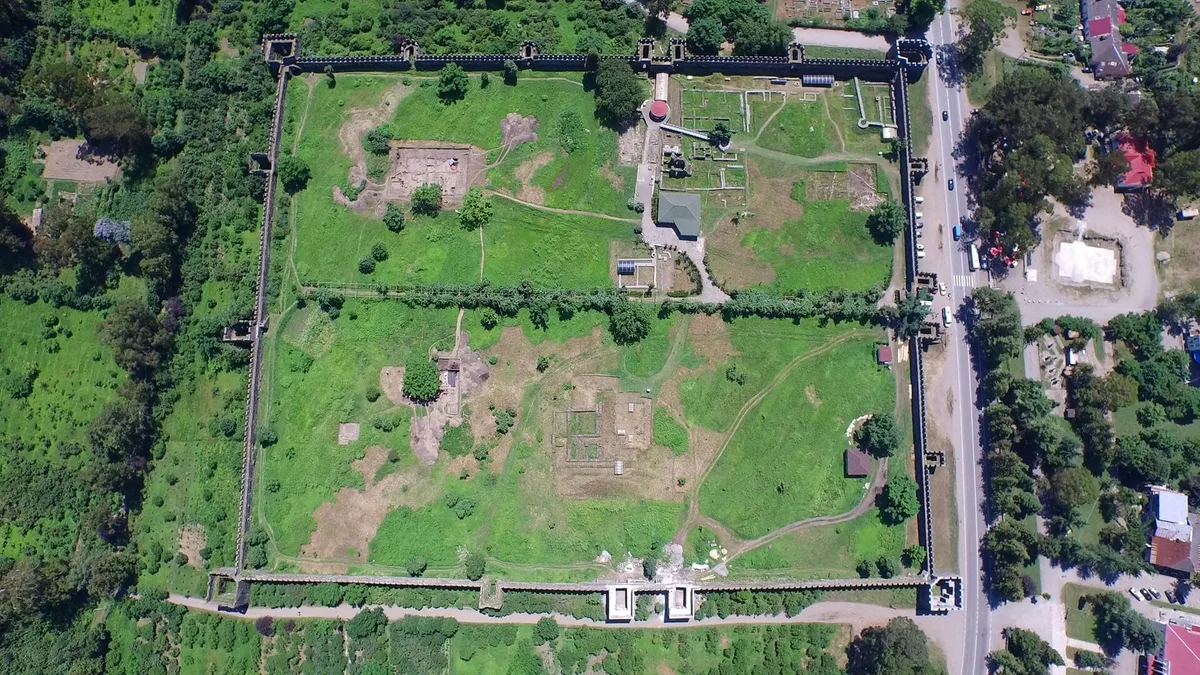
Inside the Roman rectangle
The walls hit you first. They are a long rectangle of grey stone with squat towers along each side, enclosing a grassy field the size of several football pitches. The Romans called the fort Apsaros and garrisoned it from around the 1st century AD to guard the mouth of the Chorokhi River and the coast road.
Later owners left their marks too. Byzantines, Genoese traders and the Ottomans all held it, and the Ottomans stayed until 1878. That layering is what you walk through:
- The walls and towers: parts of the wall walk are open, with views over the Black Sea and the Chorokhi delta.
- Excavated foundations: barracks, a Roman bath complex and drainage channels, laid out under the grass.
- The small museum: coins, pottery and other finds from the excavations.
- The Matthias grave: a simple cross inside the walls marks the spot tradition names as the burial place of Saint Matthias, the apostle chosen to replace Judas.
The name Apsaros links to the Golden Fleece story. Legend says Medea’s brother Absyrtus was killed and buried here, which is why the myth of Jason and the Argonauts comes up so often in Adjara.

The coast road south from Batumi
Gonio is on the main coastal highway running from Batumi to Sarpi. Minibuses heading south leave from central Batumi; look for “Gonio” or “Sarpi” on the windscreen card and ask the driver to stop at the fortress. A taxi or Bolt ride takes about 20–30 minutes, depending on traffic through the airport stretch.
The fortress stands a short walk inland from the highway, so you won’t have trouble spotting it. If you are driving, the beach strip a few minutes away usually has roadside parking.
Timing, tickets and the grave
You buy tickets at the gate, where the current price is posted. At the moment it opens 10am–5pm every day of this week. Opening times change with the season and on some holidays, so check the official site for this month’s schedule.
This is one of the best-known historic sites in Adjara and it draws plenty of visitors. Excursion groups from Batumi tend to arrive mid-morning, which is why turning up at 10am usually gets you a quieter field. Summer middays are hot because there is almost no shade inside the walls, so bring a hat and water.
At the Matthias cross, Georgian visitors often pause, cross themselves or light a candle. Keep your voice down, give them space and don’t stand on the grave for photos. Footpaths across the excavations are uneven grass and loose stone, and the steps up to the wall are steep.
Pairing it with the beaches
Gonio rewards a slow afternoon rather than a quick tick. Once you’re done with the walls, cross the highway to Gonio’s pebble beach. Or carry on south to Kvariati, whose clearer water makes it popular with snorkellers.
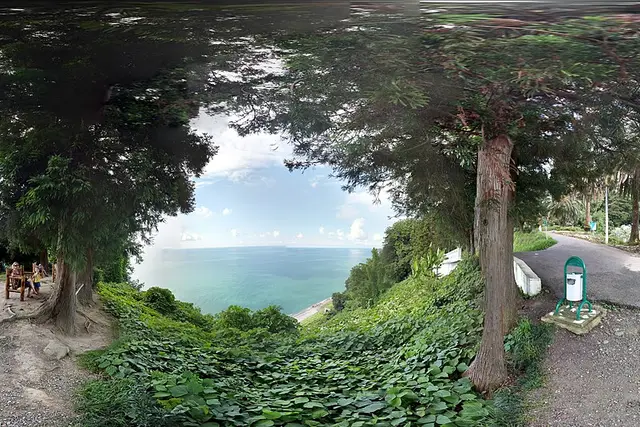
Sarpi, at the Turkish border, is a few kilometres further south. The Tamar Lookout on the cliff above the border post looks down over both countries. Heading back north, you can stop at the Batumi Botanical Garden at Mtsvane Kontskhi and make a full day of it.
Frequently asked questions
How do I get to Gonio Fortress from Batumi?
It is about 12 km south of central Batumi on the coast road to Sarpi. Southbound minibuses marked Gonio or Sarpi stop nearby, and a taxi or Bolt takes about 20–30 minutes.
How long should I spend at Gonio Fortress?
About 1–1.5 hours covers the walls, the excavated Roman foundations, the small museum and the Saint Matthias grave. Add time if you want a swim at Gonio beach across the road.
What are the opening hours?
This week it opens 10am–5pm every day. Hours change through the year and on some holidays, so check the official site before you go.
Is Saint Matthias really buried there?
Tradition holds that the apostle Matthias is buried inside the fortress, and a cross marks the spot. The claim isn't proven, but many Georgian visitors treat it as a place of pilgrimage, so be respectful there.
What else is nearby?
Gonio and Kvariati beaches are just south, and the Tamar Lookout sits above the Turkish border at Sarpi. The Batumi Botanical Garden is an easy stop on the way back north.
Plan your trip to Batumi
Georgia eSIM & staying connected →
Some links above are affiliate links — if you book through them, Wander Atlas earns a small commission at no extra cost to you. It's how we keep every guide free.