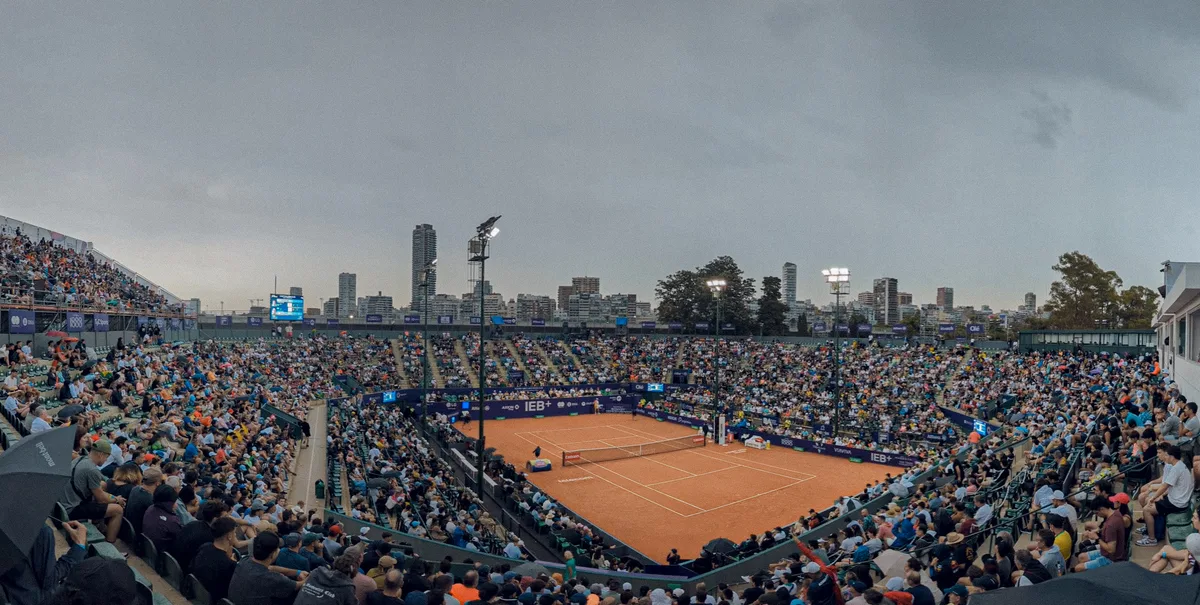
Red dust gets onto the shoelaces of the players, the ball kids and anyone in the front rows. At the IEB+ Argentina Open the courts are crushed brick, which Argentines call polvo de ladrillo. That brick surface has defined the tournament for decades, and the 2027 edition is reported to be its last.
Clay’s last February in Palermo
Reports say 2027 is the final edition on clay, with the event moving to hard courts in 2028. That makes this February a closing chapter for one of the longest-running clay stops on the ATP calendar.
Buenos Aires has long been part of South America’s February clay swing, the run of tournaments that tours the continent before the season turns back to hard courts. The city’s champions list includes Rafael Nadal, who won in 2015, and Carlos Alcaraz, who won in 2023. Argentine fans treat the week as a home Slam in miniature.
When the tournament takes place
The IEB+ Argentina Open takes place in February 2027. It is an ATP 250 event, so it follows the usual format for that level:
- Qualifying rounds on the opening weekend
- A main draw that runs through the following week
- Singles and doubles finals on the closing weekend
February is high summer in Buenos Aires. Afternoons are usually hot and humid, and the city’s late rhythm means night sessions feel normal rather than late. The organiser publishes the day-by-day order of play on the tournament’s official site.
The Estadio Guillermo Vilas and the club grounds
The tournament is held at the Buenos Aires Lawn Tennis Club, a private club on the edge of the Palermo parklands. The centre court is named after Guillermo Vilas, Argentina’s first great tennis star and a former winner of this event.
The stadium is a steep, compact bowl, and the seats run close to the baseline. Even the upper rows feel near the players. Outer courts sit around the grounds, and in the early rounds they let you watch from a few metres away, the kind of view that disappears once the draw narrows.
Most of the stands are open to the sky. Regulars bring a hat, sunscreen and water for afternoon sessions, because shade is limited on the higher tiers.
Getting to the club
The club sits in northern Palermo near the Hipódromo Argentino de Palermo and the Campo Argentino de Polo. It is a green, open part of the city.
- Subte: Line D to Olleros station, then a walk of about 15 minutes east along Olleros toward Avenida del Libertador.
- Taxi or ride-hail: widely used, especially after night sessions. Expect traffic around the gates when a session lets out.
- Walking or cycling: from central Palermo, the Bosques de Palermo paths make the trip pleasant in daylight.
Street parking near the club is scarce on tournament days. Most visitors leave the car behind.
Tickets and sessions
The organiser publishes ticket links and session details on the tournament’s official site. No prices are given here because none were verified.
Grounds passes and stadium seats are generally sold separately, and the weekend finals are the hardest seats to get. Qualifying days and the first rounds usually draw smaller crowds, so those are the days when wandering between outer courts works best.
Fans who want to see local players usually look at the order of play first. Argentine names tend to get the stadium slots and the loudest crowds.
In the stands with a Buenos Aires crowd
Argentine tennis crowds borrow from football. Between points you hear chants, drums of applause and the familiar “olé, olé, olé” when a local player wins a tight game. When the server bounces the ball, the stadium goes almost silent.
Some habits worth copying:
- Move on changeovers only. Ushers hold people at the stairs while a game is in play, so locals wait for the odd-game break.
- Cheer for your player, not against the opponent. Applause for a good shot from the visiting player is normal here and well received.
- Learn a few words. Entrada is a ticket, platea is a seated section, cambio de lado is the changeover.
- Pay digitally. Cards and QR payments through apps such as Mercado Pago are standard across Buenos Aires. A tip of about 10 percent (propina) is customary at restaurants.
On hot afternoons, many fans watch the early matches on the outer courts and come into the stadium for the late-afternoon feature match, once the sun has dropped behind the stands.
Around Palermo after match play
The club is a short ride from some of the city’s best evenings out. Porteños eat late, and dinner after nine is standard, so a night session still leaves plenty of time.
- Bosques de Palermo and the Rosedal: lakes, rose gardens and running paths, a few minutes from the club gates.
- Jardín Japonés: a Japanese garden on Avenida Casares, quieter in the late afternoon.
- Palermo Soho and Palermo Hollywood: cobbled streets packed with parrillas, wine bars and cafés, the default dinner zone after tennis.
- Belgrano and Las Cañitas: closer to the club, with restaurants along Báez that fill up when a session ends.
Visitors who come for several days usually stay in Palermo itself. It keeps the club, the parks and the restaurants within one neighbourhood.
Frequently asked questions
When is the IEB+ Argentina Open 2027?
It takes place in February 2027. Qualifying is held on the opening weekend and the main draw runs through the following week. The organiser publishes the exact dates and the daily order of play on the tournament's official site.
Where is the tournament held and how do I get there?
It is held at the Buenos Aires Lawn Tennis Club in Palermo, and the main court is the Estadio Guillermo Vilas. Most fans take Subte Line D to Olleros station and walk about 15 minutes east, or they come by taxi or ride-hail.
Is 2027 really the last edition on clay?
Reports say 2027 is the final clay edition, with a switch to hard courts in 2028. That makes this February the last chance to see the event on Argentina's traditional crushed-brick courts.
Which days are best for seeing players up close?
Qualifying days and the early main-draw rounds usually have smaller crowds and matches on the outer courts. You can watch from a few metres away on those days. The weekend finals are the hardest tickets to get.
What should I bring to a day session?
February is midsummer in Buenos Aires and the stands are mostly open to the sun. Regulars bring a hat, sunscreen and water. Cards and QR payments are widely accepted around the city.
Plan your trip to Buenos Aires
Argentina eSIM & staying connected →
Some links above are affiliate links — if you book through them, Wander Atlas earns a small commission at no extra cost to you. It's how we keep every guide free.
Related guides
arteBA 2026: Dates, Tickets & Venue (Buenos Aires)
Challenger AAT (Buenos Aires): Dates, Tickets & Venue (Buenos Aires)
 event