Six days on red brick dust
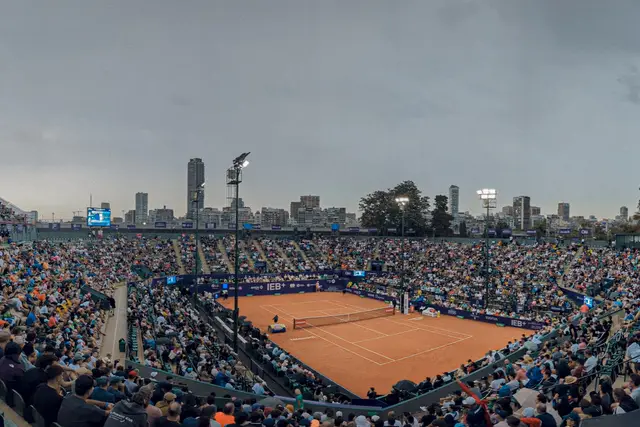
This is tennis at close range. The Challenger AAT de TCA is a professional event on the ATP Challenger Tour, the circuit just below the main tour. Players come here to earn ranking points, and many of them are trying to move up into the top 100.
The surface is clay. In Argentina that usually means polvo de ladrillo, crushed brick spread over the court in a fine orange-red layer. It slows the ball and lengthens the rallies, and it marks socks, shoes and the bottom of every towel. Points get built slowly here, so expect long baseline exchanges.
The calendar: Tuesday to Sunday in mid-January
The 2027 edition runs from Tuesday, January 12 to Sunday, January 17. Earlier editions also took place in mid-January, so the event has a settled place in the city’s summer calendar.
A Challenger week usually follows the same order:
- Early rounds, when several courts run at the same time and you can wander between matches
- Middle rounds, when the draw shrinks and the main court gets busier
- Semi-finals and finals at the end of the week, normally singles and doubles
The daily order of play sets match times. The organiser publishes it day by day, and match lengths on clay vary a lot, so later start times often shift.
Tickets, entry and where details live
The organiser publishes the dates, venue details and ticket information on its official site and social channels. The AAT in the name is the Asociación Argentina de Tenis, the national tennis federation, and its communications are the most direct source for the tournament.
This guide gives no prices because none were supplied to us. Challenger events are generally much more informal than Grand Slams, with smaller stands and fewer layers of security between you and the court. Fans who follow the circuit tend to treat the early rounds as walk-around days and save their seat for the final weekend.
Getting to the Tenis Club Argentino in Palermo
TCA stands for Tenis Club Argentino, a long-established private club in Palermo, the large district of parks and wide avenues in the north of Buenos Aires. The tournament takes over the club’s courts for the week.
Palermo’s parkland, the Bosques de Palermo around Parque Tres de Febrero, is well served by city buses (colectivos) and taxis. Ride-hailing apps are widely used in Buenos Aires. Most international visitors stay in Palermo itself or in neighbouring Recoleta, which keeps the trip to the courts short. To ride the buses you need a SUBE card, the city’s rechargeable transport card.
Courtside manners on clay
Argentine crowds know their clay-court tennis. The country has produced a long line of players raised on brick dust, and the fans at a Challenger here watch closely and react loudly when a home player is on court. A “¡Vamos!” between points is normal. Shouting during a point is not.
The etiquette that matters on a small court:
- Move only at changeovers. Wait until players switch ends after odd-numbered games before finding or leaving a seat.
- Phones on silent, no flash. Players are a few metres away, and you will be noticed.
- Watch the line calls. On clay the ball leaves a mark. When a call is disputed, the umpire climbs down to inspect it, and the crowd usually goes quiet while that happens.
- Pay digitally if you can. Card and QR payments through apps such as Mercado Pago are common in Buenos Aires, though carrying a little cash for small vendors is still sensible.
A few words help: cancha (court), partido (match), cuadro (draw), final (final).
The January heat and the Melbourne effect
January is high summer in Buenos Aires. Many residents leave for the Atlantic coast, so the city feels emptier than usual. Afternoons on an open-air clay court can be very hot, and the brick dust reflects the glare back up at the stands.
Regulars usually bring:
- A hat and high-factor sunscreen
- Water, plus a termo of mate if you want to look local
- Sunglasses, because the orange surface is bright at midday
- Shoes you don’t mind turning orange
The timing affects who plays. This week falls just as the Australian Open season begins on hard courts on the other side of the world. Players who choose a South American clay Challenger instead are often clay specialists, or players looking for ranking points on a surface they prefer. That means the draw tends to suit the long, grinding style the surface rewards.
Between matches: Palermo’s parks
The courts sit close to some of the city’s best green space, which helps on days when there are long gaps in the schedule. Within easy reach in Palermo are:
- El Rosedal, the rose garden beside the lakes of Parque Tres de Febrero
- Jardín Japonés, the Japanese garden with koi ponds and arched bridges
- Planetario Galileo Galilei, the domed planetarium that stands at the edge of the parks
- MALBA, the Museum of Latin American Art, a short ride towards Palermo Chico
Opening hours at these places change through the year, so their official sites carry the current times. In the evening, Palermo Soho and Palermo Hollywood are where most visitors go for dinner. Porteños eat late, and a 10pm table is ordinary, which leaves plenty of time to get there after the last match.
Frequently asked questions
When is Challenger AAT (Buenos Aires) 2027?
The 2027 edition runs from Tuesday, January 12 to Sunday, January 17, 2027. Earlier editions also took place in mid-January.
Where is the tournament played?
Its full name, Challenger AAT de TCA, links it to the Tenis Club Argentino, a tennis club in Palermo in northern Buenos Aires near the Bosques de Palermo parks. The organiser publishes venue details on its official channels.
What surface is it played on?
Outdoor clay. In Argentina that usually means polvo de ladrillo, crushed red brick, which slows the ball and produces long baseline rallies.
How long should I spend there?
Early-round days work well as a few hours of moving between courts. The semi-finals and finals at the end of the week are when most fans settle in for a full session on the main court.
What else is nearby?
Palermo's parks are close by: El Rosedal, the Jardín Japonés and the Planetario Galileo Galilei. MALBA is in nearby Palermo Chico, and Palermo Soho is where most visitors go for dinner afterwards.
Plan your trip to Buenos Aires
Argentina eSIM & staying connected →
Some links above are affiliate links — if you book through them, Wander Atlas earns a small commission at no extra cost to you. It's how we keep every guide free.
Related guides
arteBA 2026: Dates, Tickets & Venue (Buenos Aires)
 event
IEB+ Argentina Open (ATP Buenos Aires): Dates, Tickets & Venue (Buenos Aires)
 event