
A square at 3,600 metres
Chivay sits at around 3,600 metres, and you feel it on the walk in. The plaza is the town’s flat centre: paved paths, planted beds, benches and the parish church facing the square. Brown terraced slopes rise behind the rooftops. The farming terraces of the Colca valley start right at the edge of town.
This is where the town meets. Women in the embroidered skirts and hats of the Colca valley sit on the benches or walk the paths. School groups cut across. Minibuses unload tourists on the sides of the square. People come here to watch the street, not for one big sight.
What to look at
Work your way around the edges. The church is the anchor. Its stone front and plain whitewashed sides follow the colonial style you also see in the valley villages of Yanque, Coporaque and Maca.
- The church: step in if the door is open, quietly, and never during Mass.
- Traditional dress: the embroidery on hats and skirts tells you which valley community the wearer comes from.
- Mountain backdrop: clear mornings give you the sharpest view of the peaks around Chivay.
- Evenings: the lights come on and the square gets cold fast once the sun drops.
Photos, altitude and manners in Chivay
Locals in traditional dress, sometimes with an alpaca or a bird of prey, will pose for photos. They expect a tip. Ask before you raise the camera, agree on it first, and carry small coins and notes; change is hard to find. Photographing someone without asking is rude here, wherever you are on the plaza.
Walk slowly. If you have come straight up from Arequipa, the plaza is a good place to test the altitude before a hike. Mate de coca is sold all over town. The tour buses from Arequipa usually arrive around midday, so staying the night lets you have the square to yourself early the next morning.
Keep your Colca tourist ticket, the boleto turístico, on you. Checkpoints on the canyon road ask for it. Current prices are posted at the checkpoint and through the regional tourism authority.
Beyond the square
Chivay is small, and everything below is within easy reach of the plaza:
- Mercado de Chivay: the municipal market, a short walk away, sells local produce, cheese, quinoa and hot food at its stalls.
- La Calera hot springs: thermal pools a few kilometres out of town. You can walk, take a taxi or go by minibus.
- Yanque: the next village down the valley, with its own plaza and church.
- Cruz del Cóndor: the condor viewpoint, roughly 1.5 hours further along the canyon road. Go early in the morning.
Arequipa is roughly three to four hours away by road, over a high pass. Buses use Chivay’s terminal, a few blocks from the plaza.
Frequently asked questions
When can I visit the Plaza de Armas de Chivay?
It is a public square and Google currently lists it as open 24 hours. Mornings usually have the clearest mountain views. Evenings are cold at this altitude.
How long should I spend at the plaza?
30–60 minutes covers the church and a slow loop of the square. Add an hour or two for the nearby market and the La Calera hot springs.
How do I get to Chivay from Arequipa?
Buses and tours make the trip in roughly three to four hours over a high pass. Buses arrive at Chivay's terminal, a few blocks from the plaza.
Do I need to tip for photos with people in traditional dress?
Yes. Ask first, agree on it before you shoot, and carry small change.
What else is near the plaza?
The municipal market is a short walk away and La Calera hot springs are a few kilometres out of town. Yanque is the next village down the valley, and Cruz del Cóndor is about 1.5 hours away by road.
Plan your trip to Chivay
Peru eSIM & staying connected →
Some links above are affiliate links — if you book through them, Wander Atlas earns a small commission at no extra cost to you. It's how we keep every guide free.
Related guides
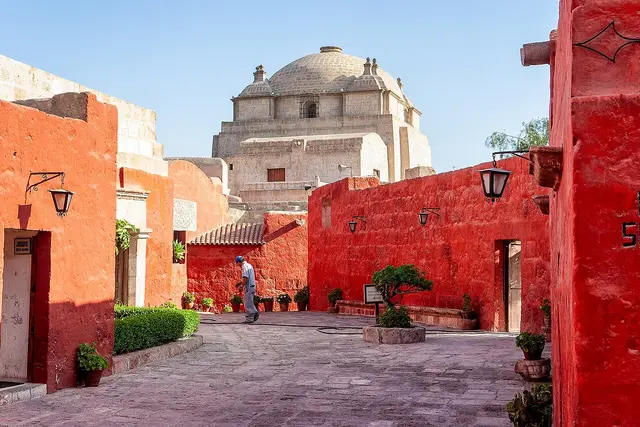 attraction
Santa Catalina Monastery: Arequipa Travel Guide (4.7★)
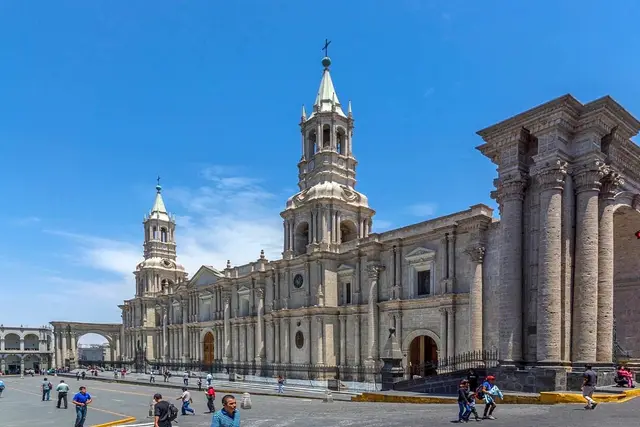 attraction
Basilica Cathedral of Arequipa: Travel Guide (4.7★)
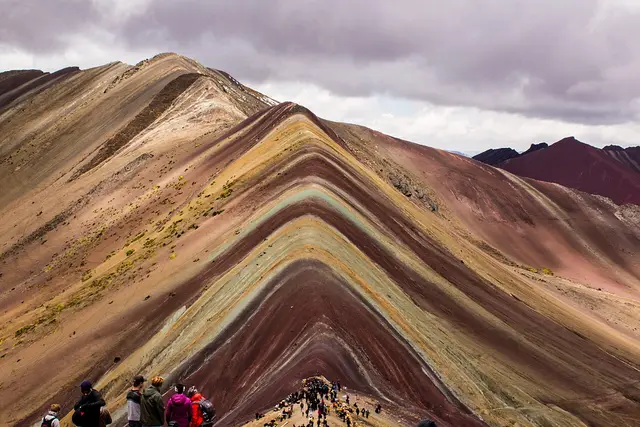 attraction
Vinicunca: Travel Guide (4.7★)
 attraction