Two Banks, One Canal
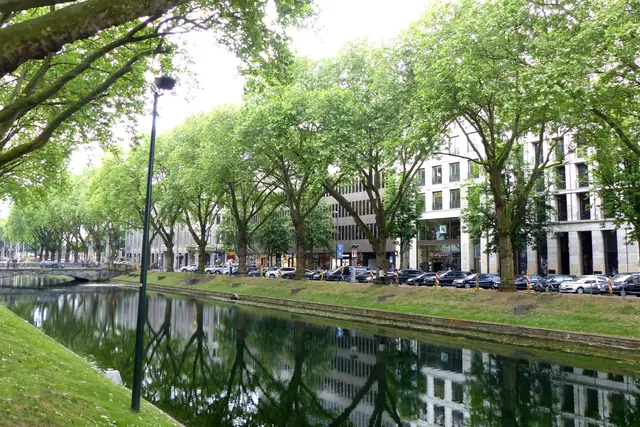
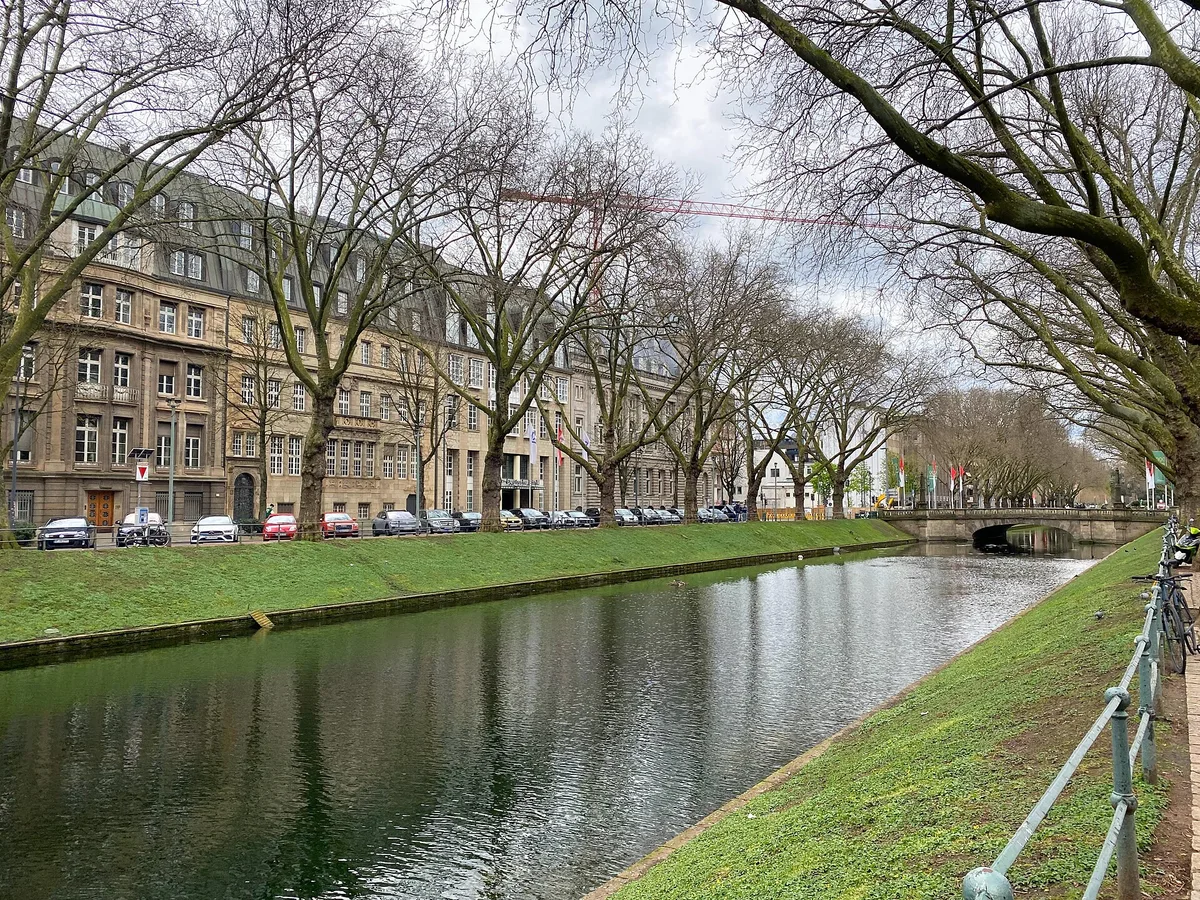
The Kö is split by water. The Stadtgraben, a leftover of the old city moat, runs straight down the centre of the boulevard. Rows of mature trees line it, and small stone bridges cross it.
The two sides feel different. The east bank holds the flagship fashion and jewellery houses, the window displays that put the street on postcards. The west bank leans towards banks, offices and hotel entrances, so it is quieter on the pavement.
The name has a story behind it. In 1848 the street was the scene of an insult to Prussia’s King Friedrich Wilhelm IV, who was reportedly pelted with horse dung. The city renamed the avenue Königsallee, “King’s Avenue”, in 1851 as a conciliatory gesture.
From the Triton Fountain South
Start at the northern end, where the canal opens out at the Tritonenbrunnen, a bronze fountain of a sea god set against the Hofgarten’s greenery. From there:
- Kö-Bogen: Daniel Libeskind’s curved white-and-glass buildings frame the top of the street.
- Kö-Bogen II: across the square, its sloping facade is covered in hornbeam hedges, which makes it one of Europe’s largest green walls.
- Kö-Galerie: an indoor arcade on the east side, useful when it rains.
- Graf-Adolf-Platz: the southern end, near the listed address at Königsallee 71.
A slow walk down one bank and back up the other takes 30–45 minutes. Allow half a day if you plan to shop.

Getting There and Linking Up
The U-Bahn drops you at either end. Heinrich-Heine-Allee is served by several U-Bahn lines and puts you at the north tip, a few minutes from the Altstadt’s lanes and the Rhine promenade. Steinstraße/Königsallee, on the Wehrhahn line, comes up mid-boulevard. Trams also stop at Graf-Adolf-Platz.
From Düsseldorf Hauptbahnhof it is about a 15-minute walk west, or a couple of stops on the U-Bahn. The Kö pairs easily with other sights:
- Altstadt: altbier halls on Bolkerstraße, just north.
- Hofgarten: Düsseldorf’s oldest public park, directly beyond the fountain.
- Rheinuferpromenade: about a 10-minute walk west.
Doing the Kö Without Spending a Fortune
Plenty of visitors only window-shop, and nobody minds. The benches along the canal are free, and the café terraces on the east bank are made for people-watching, so a coffee there earns you a seat. Prices at the terraces and boutiques match the address. Check menus before you sit down.
German trading laws close most shops on Sundays, apart from occasional city-approved shopping Sundays. A Sunday visit is still good: the windows stay lit, the pavement is calmer, and you can photograph the canal without dodging shopping bags. On Saturdays the east bank gets packed, so walk the west side if you are just passing through.
Cards are accepted almost everywhere on the street, but carry some euros for smaller cafés and kiosks nearby. Greet shop staff with “Guten Tag” when you walk in. In the luxury stores a doorman may open the door, and you can browse without an appointment. Keep to the pavement edges by the canal, as cyclists use the paths too.
Frequently asked questions
How do I get to Königsallee by public transport?
Take the U-Bahn to Heinrich-Heine-Allee for the northern end near the Triton fountain and Kö-Bogen. Steinstraße/Königsallee on the Wehrhahn line comes up mid-boulevard. From Düsseldorf Hauptbahnhof it is about a 15-minute walk.
How long should I spend on the Kö?
Walking the full length on both banks takes 30–45 minutes. Allow half a day if you want to shop or sit at a café terrace.
Are the shops open on Sunday?
Mostly no. German trading laws close most shops on Sundays, apart from occasional city-approved shopping Sundays. Sunday is still a calm day to stroll and look at the windows.
What is near Königsallee?
The Hofgarten park is beyond the northern fountain, the Altstadt and Bolkerstraße are a few minutes north, and the Rhine promenade is about a 10-minute walk west. Kö-Bogen II's hedge-covered facade is right at the top of the street.
Why is it called Königsallee?
The avenue was renamed "King's Avenue" in 1851. It was a conciliatory gesture after King Friedrich Wilhelm IV of Prussia was insulted there in 1848.
Plan your trip to Düsseldorf
Germany eSIM & staying connected →
Some links above are affiliate links — if you book through them, Wander Atlas earns a small commission at no extra cost to you. It's how we keep every guide free.