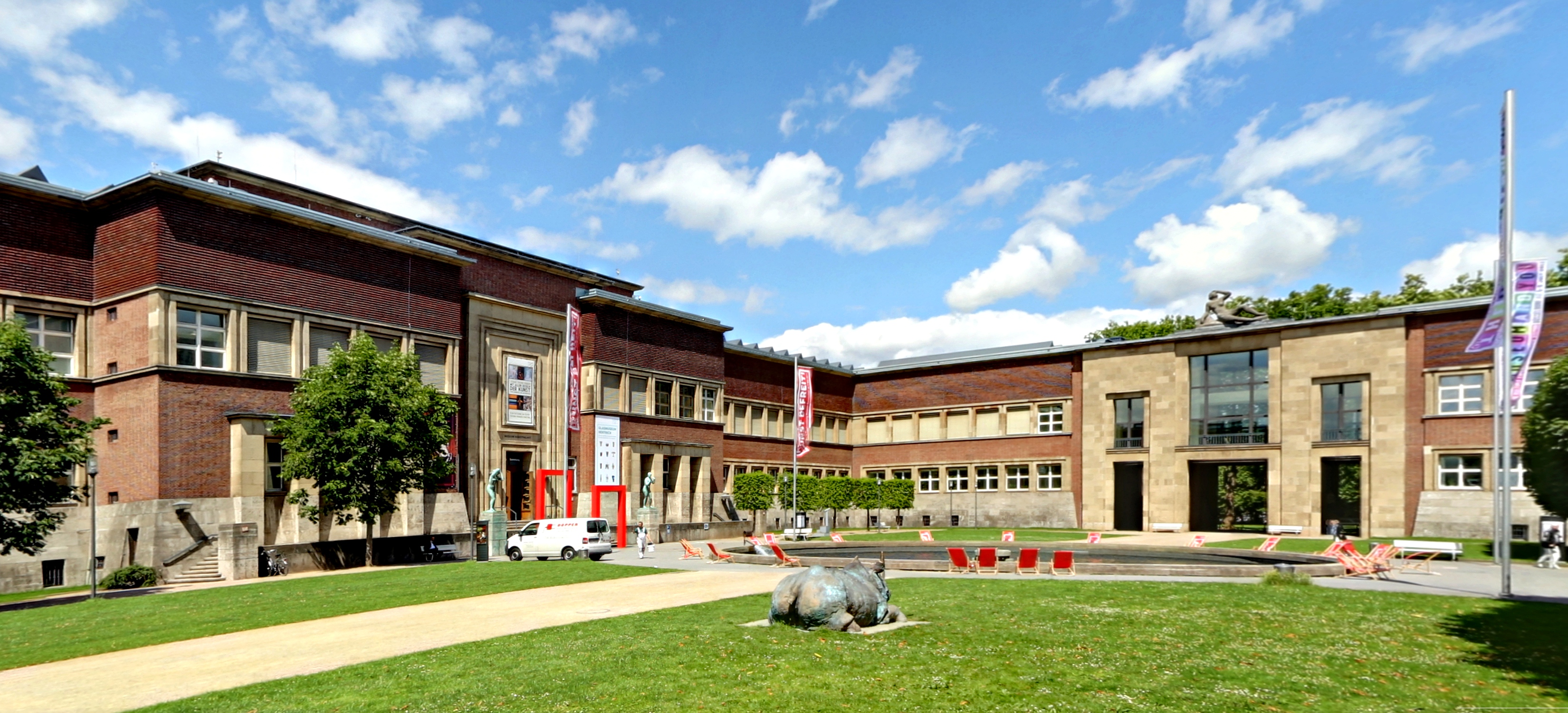
Brick, river and a courtyard built for a fair
The Ehrenhof sets the scene before you get to any painting. Its buildings are red-brown brick, arranged around a long courtyard that opens toward the Rhine. They were designed by Wilhelm Kreis for the 1926 GeSoLei exhibition, a huge fair on health, social welfare and physical exercise.
That exhibition architecture is now Düsseldorf’s main art museum. The domed building at the courtyard’s north end is the Tonhalle, a former planetarium that is now a concert hall. The NRW-Forum shares the same complex. On a clear afternoon, the courtyard works as a forecourt to the river promenade.
What’s actually on the walls
The collection covers a lot of ground. It goes from Old Masters to postwar experiments, with decorative arts in between. The collection was fully rehung and reopened in 2023, mixing periods and media rather than marching through them in strict order.
Look out for these:
- Peter Paul Rubens. The Assumption of the Virgin is a towering altarpiece that fills its wall. Venus and Adonis is here too.
- The Düsseldorf School of Painting. In the 19th century, the city’s academy was famous for its landscapes and genre scenes. Painters came from across Europe and America to train here.
- ZERO. Heinz Mack, Otto Piene and Günther Uecker began working together in Düsseldorf in the late 1950s. Expect light, movement, nails and reflective surfaces.
- Glass. The Hentrich glass collection ranks among the largest anywhere. It runs from ancient pieces to Art Nouveau vases.
Temporary exhibitions take up separate galleries and often draw the weekend crowds. Check the official site to see what’s on and whether it needs its own ticket.
Thursday after six
Thursday is this museum’s quirk, and the best way to use it. The schedule is 11am to 6pm on most days, but on Thursdays the doors stay open until 9pm.
Measured foot traffic shows that 6pm–7pm is the quietest weekday window. Thursday is the only weekday when the building is actually open then. Arrive around 5pm, see a temporary show while the daytime visitors leave, then have the permanent galleries mostly to yourself after six.
Weekends are the opposite. Between 12pm and 6pm on Saturday and Sunday is the busiest stretch, so skip it if you can. If a weekend is your only option, be at the door at 11am opening, before that wave builds.

Getting to the Ehrenhof
The nearest U-Bahn stop is Tonhalle/Ehrenhof, served by lines U78 and U79. These lines run from Düsseldorf Hauptbahnhof and through Heinrich-Heine-Allee, so a ride from the main station is short and direct. Once you’re above ground, the brick courtyard is right there.
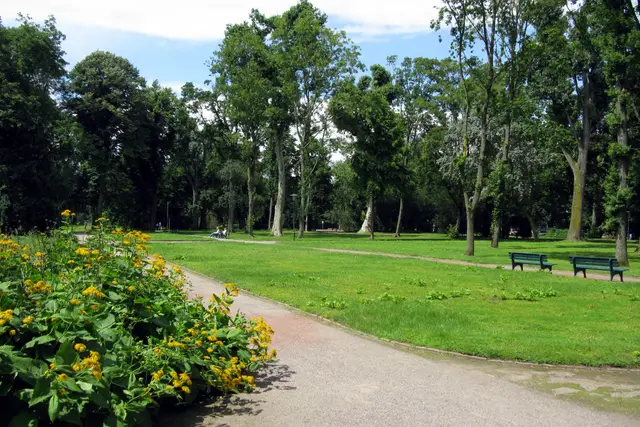
On foot from the Altstadt, follow the Rhine promenade north. It’s a flat walk of roughly 15–20 minutes along the river. Alternatively, cut through the Hofgarten, the city’s old court garden, which borders the museum to the east.
Pacing the galleries without burning out
Allow two to three hours for the permanent collection. Add another hour if a big temporary exhibition is on. The rooms run in long sequences, and the change from Baroque canvases to glass cases to ZERO light works can be more tiring than it looks on the floor plan.
One way to pace it: start with the Rubens while you’re fresh, then do the 19th-century Düsseldorf rooms. Leave the glass collection for later, since it rewards slow, close looking rather than stamina. Sit down wherever a bench appears.
Museum manners, Düsseldorf style
German museums run on a few quiet rules. Knowing them saves you an awkward moment at the cloakroom.
- Bags and coats. Large bags and backpacks generally go into lockers or the cloakroom (Garderobe) before you enter the galleries. Some lockers take a coin deposit, so a euro coin in your pocket helps.
- Tickets. Buy online in advance for popular temporary shows, especially on weekends. Current prices and any time-slot rules are posted on the museum’s official site.
- Payment. Cards are normally accepted at the desk, but Germany still leans on cash more than many countries. A little cash covers lockers and small purchases.
- Photography. Rules can vary by exhibition, particularly for loans. Look for the camera symbols at gallery entrances, and never use flash.
- Mondays. The museum is closed every Monday. Visitors who plan a whole Düsseldorf day around Monday are the ones most often left facing locked doors.
Around the Ehrenhof afterwards
The museum sits at a natural crossroads. The Rhine promenade runs straight south to the Altstadt, where the brewpubs serve Altbier in small glasses. Waiters keep replacing your empty glass until you put a beer mat on top.
Closer by, the Hofgarten makes an easy stroll between museum sessions. The Tonhalle, next door, is worth a look at its dome even if you aren’t going to a concert. If you still want more art, the Kunstsammlung NRW’s K20 at Grabbeplatz is a short walk south toward the old town.
Frequently asked questions
When is the quietest time to visit Museum Kunstpalast?
On weekdays, 6pm–7pm is the quietest window. The museum only stays open past 6pm on Thursdays (until 9pm), so a Thursday evening visit is the way to use it. Avoid weekends between 12pm and 6pm, which is the busiest stretch.
What days is Museum Kunstpalast open?
It's open Tuesday to Sunday from 11am to 6pm, with a late opening on Thursdays until 9pm. It is closed on Mondays.
How do I get to Museum Kunstpalast by public transport?
Take U-Bahn line U78 or U79 to Tonhalle/Ehrenhof, which leaves you right by the museum's brick courtyard. From the Altstadt, it's also an easy 15–20 minute walk north along the Rhine promenade.
How long should I spend at Museum Kunstpalast?
Allow two to three hours for the permanent collection: Rubens, the Düsseldorf School of Painting, the ZERO artists and the glass collection. Add about an hour if you're also seeing a temporary exhibition.
What is there to see near Museum Kunstpalast?
The NRW-Forum shares the Ehrenhof complex and the domed Tonhalle stands next door. The Hofgarten park borders the museum, and the Rhine promenade leads south to the Altstadt and K20 at Grabbeplatz.
Plan your trip to Düsseldorf
Some links above are affiliate links — if you book through them, Wander Atlas earns a small commission at no extra cost to you. It's how we keep every guide free.