Boboli Gardens: Florence Travel Guide (4.2★)
When to visit Italy: month-by-month weather, crowds and holidays →
✓ Facts verified via Google Places · Sep 20, 2026
At a glance
Opening hours
- Monday: 8:15 AM – 7:10 PM
- Tuesday: 8:15 AM – 7:10 PM
- Wednesday: 8:15 AM – 7:10 PM
- Thursday: 8:15 AM – 7:10 PM
- Friday: 8:15 AM – 7:10 PM
- Saturday: 8:15 AM – 7:10 PM
- Sunday: 8:15 AM – 7:10 PM
Live foot-traffic data via BestTime.app
How this guide is made
Produced with AI assistance and reviewed against live data sources. Facts such as hours, ratings, and location come from Google Places; images are licensed or public domain. Details can change — please verify before visiting. Editorial policy
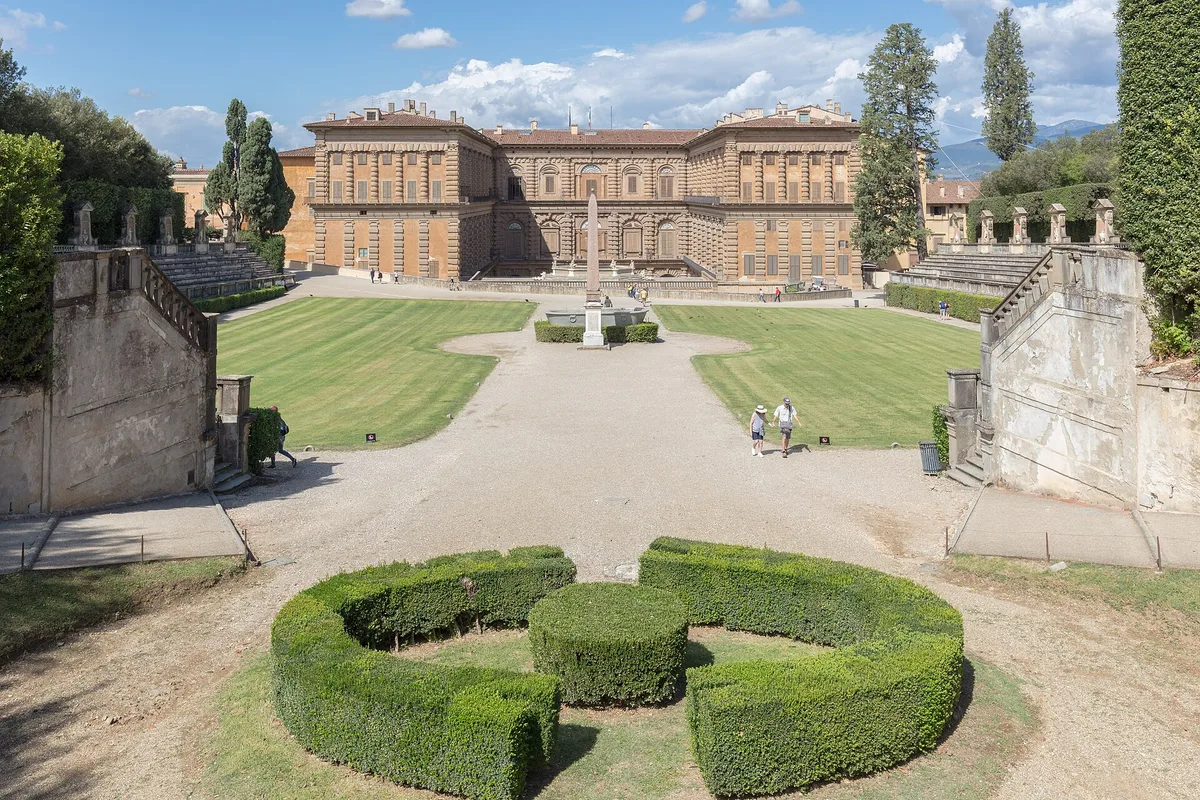
Cross the Ponte Vecchio, keep walking into the Oltrarno, and the Pitti Palace’s stone facade opens onto a hillside of clipped hedges and gravel paths that once served as the Medici family’s private backyard. This is Boboli Gardens, laid out in the 16th and 17th centuries and still shaped by the same formal Italian garden logic: axial paths, cypress-lined avenues, statues placed to be seen from specific angles.
Getting oriented at the entrance
You’ll enter through the Pitti Palace courtyard or a side gate near Porta Romana, and the ticket includes access to the palace’s Silver Museum and porcelain collection if you want to combine them.
The gardens climb a hill behind the palace, so expect slopes and staircases rather than flat lawns. Wear shoes that can handle gravel and uneven stone. A basic paper map at the entrance helps, since paths fork often and signage for individual fountains is minimal.
The amphitheater and the view up top
Just behind the palace, the Amphitheater is a grass horseshoe ringed with statues and an Egyptian obelisk hauled from Rome, built where the Medici once staged spectacles. From there, paths climb toward the Fountain of Neptune and, higher still, the Statue of Abundance, which looks back down over the palace roofline and the Duomo’s dome in the distance.
Keep climbing past the Kaffeehaus, a small rococo pavilion built in the 1770s, to reach the Giardino del Cavaliere at the garden’s upper edge. It’s the quietest corner most days simply because it’s the farthest from the entrance.
When to go to skip the worst of it
Boboli is very popular with day-trippers pairing it with the Pitti Palace or Uffizi, so plan around that rather than hoping for an empty garden. Weekdays between 5pm and 7pm are consistently the calmest stretch, right before closing.
Weekends are more forgiving overall, staying relatively steady from 9am to 7pm, but avoid arriving between 11am and 5pm, when tour groups from the palace spill into the main avenues. If you can only come on a weekend, an early or late visit still beats the midday window.

Finding the quiet corners
Most visitors stick to the central avenue between the amphitheater and the Neptune fountain, so that’s where congestion builds fastest. The Isolotto, an isolated oval island fountain at the garden’s far end, sees noticeably fewer people simply because of the walk required to reach it.
The Viottolone, a long cypress avenue lined with classical statues, connects the upper gardens to the Isolotto and is usually calm even midday. Treat it as the route to take rather than the fastest path.
- Amphitheater and Neptune fountain: busiest, closest to entrance
- Kaffeehaus and Giardino del Cavaliere: uphill, thins out naturally
- Isolotto and Viottolone avenue: farthest walk, least crowded
Buying tickets and moving through the gate
Tickets are sold on-site and online through the Uffizi Galleries’ official booking system, which also covers the Pitti Palace complex; buying ahead online avoids the ticket-window line, especially on weekends. Entry is timed loosely rather than strictly slotted, so arriving close to your printed time is fine.
Bring a bottle of water since shaded benches are more common than refreshment stands, though the Kaffeehaus area sometimes has a small kiosk in high season. Cash and card are both generally accepted at the ticket booths, but confirm current payment options before you go.
Combining it with the rest of the Oltrarno
Boboli connects directly to the palace, so many visitors treat it as a half-day loop: Pitti Palace galleries in the morning, gardens in the afternoon, then a walk down through the Oltrarno’s smaller streets toward Santo Spirito for an early dinner. The gardens close promptly at 7:10pm daily, and staff do clear the paths at closing, so don’t plan on lingering past the posted time. Check official hours before visiting, since seasonal adjustments do happen around holidays.
Frequently asked questions
How long should I spend at Boboli Gardens?
Plan on 90 minutes to 2 hours to walk the main avenues, the amphitheater, and up to the Kaffeehaus and Isolotto without rushing.
What's the quietest time to visit?
Weekdays from 5pm to 7pm are calmest. On weekends, the gardens stay relatively steady all day, but avoid 11am to 5pm, when crowds peak.
Do I need a separate ticket from the Pitti Palace?
The Boboli Gardens ticket typically covers the Silver Museum and porcelain collection inside the Pitti Palace complex too; buy through the official Uffizi Galleries booking site to skip the line.
Is Boboli Gardens stroller and wheelchair friendly?
It's hilly with gravel paths and staircases, so it's manageable but not flat; sturdy shoes help more than a stroller.
What's nearby if I want to extend the visit?
The Pitti Palace sits right at the entrance, and the Oltrarno neighborhood with Santo Spirito's restaurants and workshops is a short walk downhill.
Plan your trip to Florence
Some links above are affiliate links — if you book through them, Wander Atlas earns a small commission at no extra cost to you. It's how we keep every guide free.
Related guides
 attraction
 Uffizi Galleries: Florence Travel Guide
 attraction
 Palazzo Vecchio: Florence Travel Guide
 attraction
 Cathedral of Santa Maria del Fiore: Florence Travel Guide
 attraction