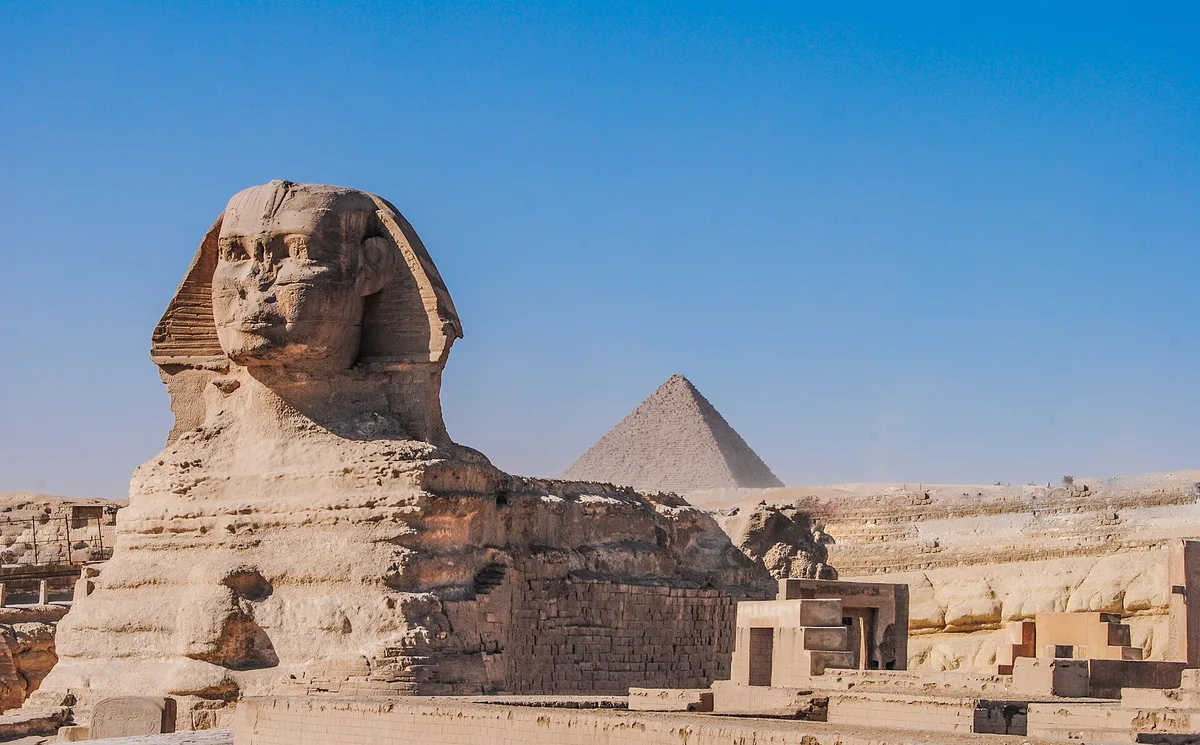
Carved from the plateau itself
The Sphinx was never built. It was cut. Fourth Dynasty quarrymen shaped it straight out of the plateau’s limestone bedrock around 4,500 years ago, leaving a lion’s body with a human head. Most Egyptologists link it to the pharaoh Khafre, whose pyramid rises directly behind it.
You look down at it from above. It sits in a sunken enclosure, roughly 73 metres long and about 20 metres high. The body shows soft, banded layers of stone that have worn away unevenly over the centuries, and they look nothing like the harder rock of the head.
It faces due east, toward the Nile and the sunrise. The nose has been gone for centuries, and so has most of the royal beard. Look closely at the head and you can still see the striped nemes headcloth draped behind the ears.
Timing your morning at the Sphinx
Go early. That is the whole strategy. Usually the quietest window is 7am–9am, on weekdays and weekends alike, and that is when the low eastern light falls full on the face.
On weekends, avoid 9am–2pm. That is when tour coaches unload and the viewing terrace fills shoulder to shoulder. If you can only come later, a weekday afternoon is the better gamble.
At the moment the site opens 7:00am–4:00pm every day of the week. Giza’s hours shift through the year and on holidays, though, so check the official Egyptian antiquities ticketing site for this month’s times. The evening Sound and Light show runs separately from daytime entry and has its own schedule.
Reaching the Sphinx gate
The plateau has two main entrances. The main gate is up the hill on the Pyramids Road side, near the Mena House hotel. The Sphinx gate is down at the bottom, beside the Nazlet el-Samman neighbourhood, and it drops you almost directly at the Valley Temple.
Most visitors come by ride-hailing app or taxi from central Cairo. Without traffic the drive is under an hour, but at rush hour it can stretch much longer. Type “Sphinx entrance” into the app so you don’t end up at the top gate.

Through the Valley Temple to the terrace
Your route to the Sphinx runs through the Valley Temple of Khafre. Inside, huge rectangular pillars of red granite hold up the roof, and the floor is pale alabaster. The surfaces have no carvings at all. The blocks themselves are the spectacle.
Past the temple you come out onto a raised viewing terrace beside the enclosure. You can’t walk down to the Sphinx’s paws; barriers keep visitors at the rim. Plan on 45 minutes to an hour for the temple, the terrace and the classic profile shot with a pyramid behind the head.
Right in front of the paws is the Sphinx Temple, mostly in ruins. Between them stands the Dream Stele of Thutmose IV, a granite slab telling how a prince cleared the sand from the Sphinx.
Handling tickets, touts and camels at Giza
The pressure starts before the gate. Men may wave you over, saying the entrance is closed or that you need a guide to get in. Neither is true. Walk on to the official ticket office.
- Tickets: buy at the official window or online through Egypt’s government monuments site. The current price is posted there, and the general plateau ticket covers the Sphinx area.
- Payment: many Egyptian sites now take cards at the ticket window. Bring a card, plus small cash for tips and toilets.
- Camel and horse rides: agree the full price, the currency and the route before you climb on. Getting down tends to cost more than getting up.
- Photos with “helpers”: anyone who offers to take your picture, or hands you a headscarf, will expect a tip afterwards.
- Saying no: a firm “la, shukran” (no, thank you) while you keep walking works better than any long reply.
Shoulders and knees don’t have to be covered here the way they do in mosques, but modest clothing draws fewer comments. The terrace has almost no shade, so a hat counts for more than anything else in your bag.
Pairing it with the pyramids
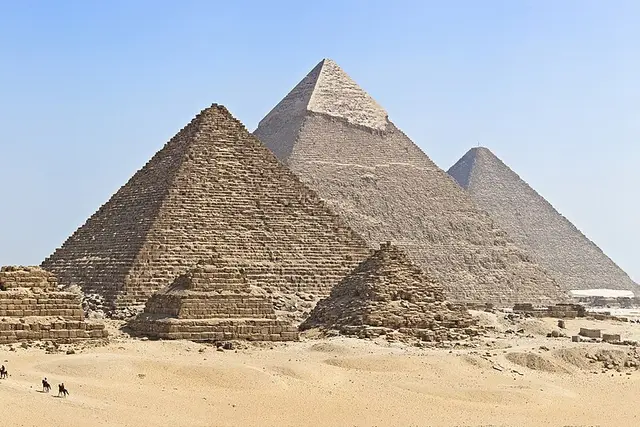
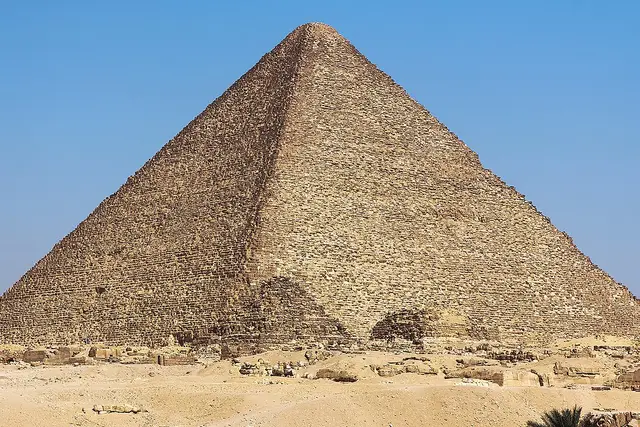
The Sphinx is best as the final stop. The Pyramid of Khafre is directly uphill. The Great Pyramid of Khufu and the smaller Pyramid of Menkaure complete the main group, and the Panorama viewpoint out in the desert to the southwest lines up all three.
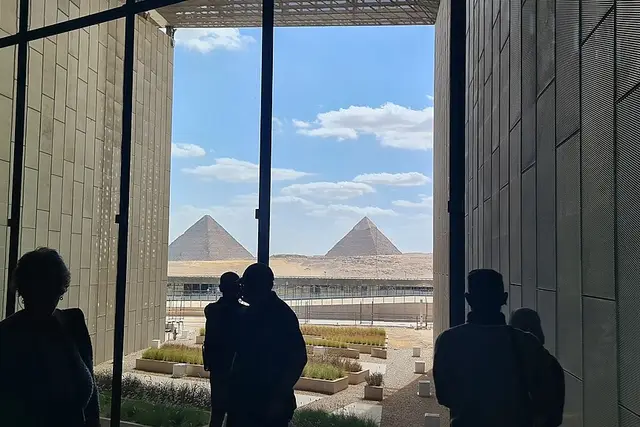
A sensible half day starts at the top gate for the pyramids, then works downhill to finish at the Sphinx gate. That way you never climb back up in the midday heat. The Grand Egyptian Museum is a short drive away, and its galleries hold many of the objects that came from this plateau.
Frequently asked questions
When is the quietest time to visit the Great Sphinx?
Usually 7am–9am, on weekdays and weekends alike. On weekends, avoid 9am–2pm, which is typically the busiest stretch.
What are the opening hours?
At the moment it opens 7:00am–4:00pm daily. Giza's hours change with the season and on holidays, so check the official Egyptian monuments ticketing site before you go.
Which entrance is closest to the Sphinx?
The Sphinx gate beside Nazlet el-Samman, at the bottom of the plateau, leads almost straight into the Valley Temple of Khafre. The main gate near Mena House is up the hill by the pyramids.
How long should I spend at the Sphinx?
Allow 45 minutes to an hour for the Valley Temple and the viewing terrace. Combined with the pyramids and the Panorama viewpoint, a half day is realistic.
Can I get close to or touch the Sphinx?
No. Visitors look down on it from a terrace at the edge of its sunken enclosure, and barriers keep you away from the paws and body.
Plan your trip to Giza
Egypt eSIM & staying connected →
Some links above are affiliate links — if you book through them, Wander Atlas earns a small commission at no extra cost to you. It's how we keep every guide free.