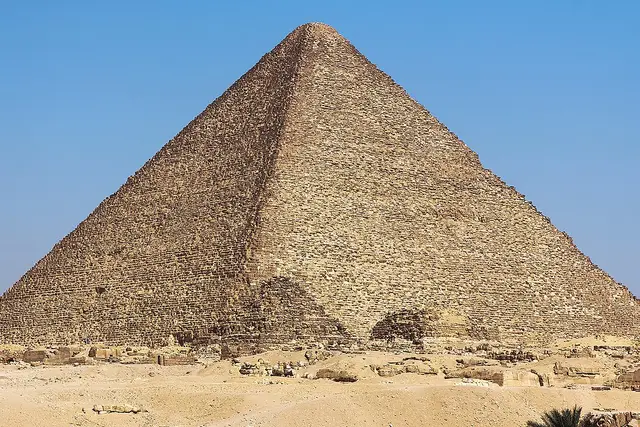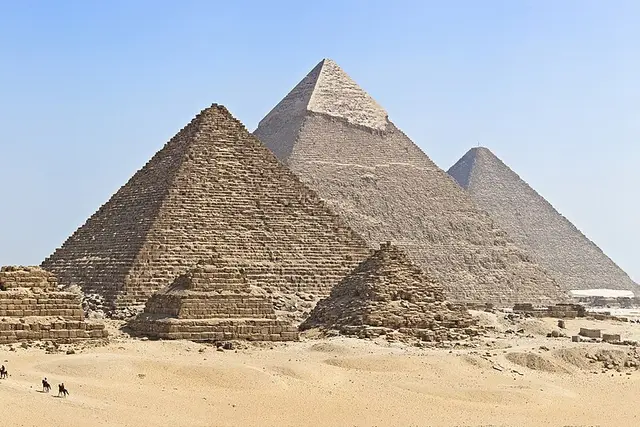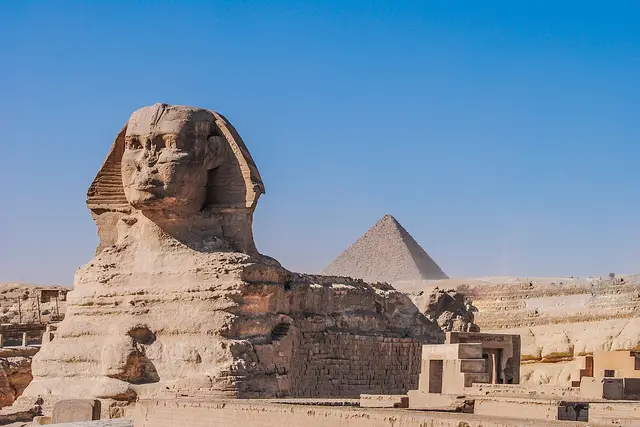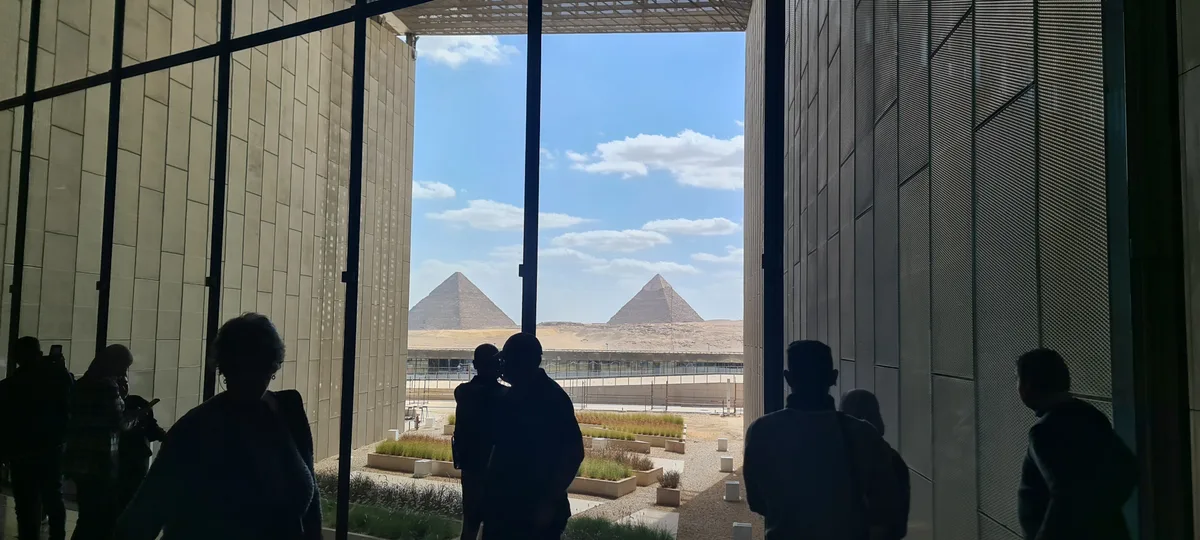
From the forecourt you can see the Pyramids of Giza over the museum’s roofline. That view explains the whole project. The Grand Egyptian Museum was built on the edge of the desert plateau so the collection could sit within sight of the monuments it came from. The building is a huge wedge of glass and pale stone, and it angles itself toward Khufu’s pyramid.
This is one of the most-reviewed museums in the Middle East, and it gets the crowds to match. Plan your timing first and the rest of the day gets much easier.
Arriving on the desert road
The address is Kafr Nassar, Al Haram, right on the Cairo–Alexandria Desert Road. Most visitors come by taxi or ride-hailing app. Uber and Careem both work across Cairo and Giza, and drivers know the museum by name.
If you’re staying downtown or in Zamalek, the drive can take anything from half an hour to well over an hour. It depends on traffic on the ring road and Pyramids Road. If you’re staying in the hotels around the plateau, it’s a short hop.
Expect airport-style security at the entrance, with bags going through a scanner. Keep your bag small and you’ll get through faster.
Under the hanging obelisk
The first object you meet stands outside, before you’ve even shown a ticket. A granite obelisk of Ramesses II is raised on supports in the plaza, so you can walk underneath it. Look up and you’ll see the cartouche carved on its base, a face that was never meant to be seen.
Inside, the atrium is built around another colossus of Ramesses II. The standing granite figure is roughly 11 metres tall. Give yourself a minute here, because the scale sets up everything that follows.
The Grand Staircase climb
The Grand Staircase is the museum’s spine. It is a broad, stepped hall several storeys high, with royal statues, sarcophagi and stelae arranged up both sides in rough chronological order. You climb through Egyptian kingship one landing at a time.
At the top, a wall of glass frames the Giza pyramids. Most people stop dead here, and the top landing gets crowded around midday. You can take the staircase slowly as a gallery in its own right, or ride the escalators alongside it and save your legs for the main halls.
Tutankhamun and the main galleries
The Tutankhamun galleries are the reason many visitors book. They bring the boy king’s burial goods together in one place:
- the gold funerary mask
- the nested shrines and coffins
- chariots, thrones and beds
- jewellery, sandals and everyday objects from the tomb
The general galleries beyond are arranged by period and theme. They run from prehistory through the pharaonic dynasties to the Greco-Roman era. You won’t see it all properly in one go. Pick two or three periods that interest you and let the others pass at walking pace.
Plan on at least half a day. A full day isn’t excessive, especially if you stop for a meal at one of the on-site cafés or restaurants.
Wednesday and Saturday nights
The museum’s timing quirk is worth planning around. At the moment it opens 9am–6pm most days, but on Wednesdays and Saturdays it stays open until 9pm. Museum hours shift through the year and around holidays, so check the official site for this month’s schedule.
Those late nights are when the place breathes. BestTime’s forecast shows Saturday evening, 6pm–9pm, as one of the quietest stretches of the week. On Wednesdays, 6pm–7pm is calm as well.
On the other days the doors close at 6pm, so a late-afternoon arrival leaves you very little time.
Beating the crowds through the doors
Timing matters more here than at almost any other museum in Cairo. Follow the forecast and the queues are manageable.
- Arrive at 9am. The forecast puts 9am–11am as the quietest window on both weekdays and weekends.
- Avoid weekend afternoons. 1pm–5pm is the busiest stretch, when tour coaches overlap and the Tutankhamun rooms fill up.
- Go straight to what matters most. If the gold mask is your priority, head there first while the rooms are thin, then work back to the staircase.
Buy tickets in advance through the museum’s official website. Current prices are posted there and at the ticket booth. Foreign visitors pay a separate, higher rate than Egyptian residents, so check which category applies to you. Some areas may be ticketed separately, and the official site lists what is included.
Photography rules and fees can change, so check the current policy at the entrance before you start shooting. Cards are widely accepted inside. Small cash in Egyptian pounds helps with taxis and tips outside.
Pairing it with the plateau
The museum sits only about 2 km from the Giza plateau, so the obvious move is to pair the two. Each takes real energy, though. The pyramids are hot and exposed, and the museum is long and absorbing.
A good plan is to do the plateau early, when it’s cooler. Then come to the museum for a Wednesday or Saturday late session, when the halls are quieter.
The Great Sphinx and the Valley Temple of Khafre sit at the plateau’s eastern edge, nearest the town of Nazlet el-Semman. If you’ve just seen statues of Khafre on the staircase, standing beside his causeway afterwards connects the two in a way few museums can manage.
Frequently asked questions
When is the quietest time to visit the Grand Egyptian Museum?
BestTime's forecast shows 9am–11am as the calmest window every day. On Wednesdays, 6pm–7pm is also quiet, and on Saturdays 6pm–9pm is quiet. Avoid weekend afternoons between 1pm and 5pm, which are the busiest.
What are the opening hours?
At the moment the museum opens 9am–6pm, and until 9pm on Wednesdays and Saturdays. Hours can change by season and around holidays, so check the official website before you go.
How do I get to the Grand Egyptian Museum?
It's on the Cairo–Alexandria Desert Road in Giza, about 2 km from the Pyramids plateau. Taxis and ride-hailing apps like Uber and Careem are the simplest options from central Cairo. Allow extra time for traffic.
How long should I spend there?
Allow at least half a day. If you want to see the Tutankhamun galleries, the Grand Staircase and several of the period galleries properly, a full day isn't too much.
Can I visit the pyramids on the same day?
Yes. The plateau is a short drive away. Visit the pyramids early while it's cooler, then spend the afternoon or a Wednesday or Saturday evening at the museum.
Plan your trip to Giza
Egypt eSIM & staying connected →
Some links above are affiliate links — if you book through them, Wander Atlas earns a small commission at no extra cost to you. It's how we keep every guide free.