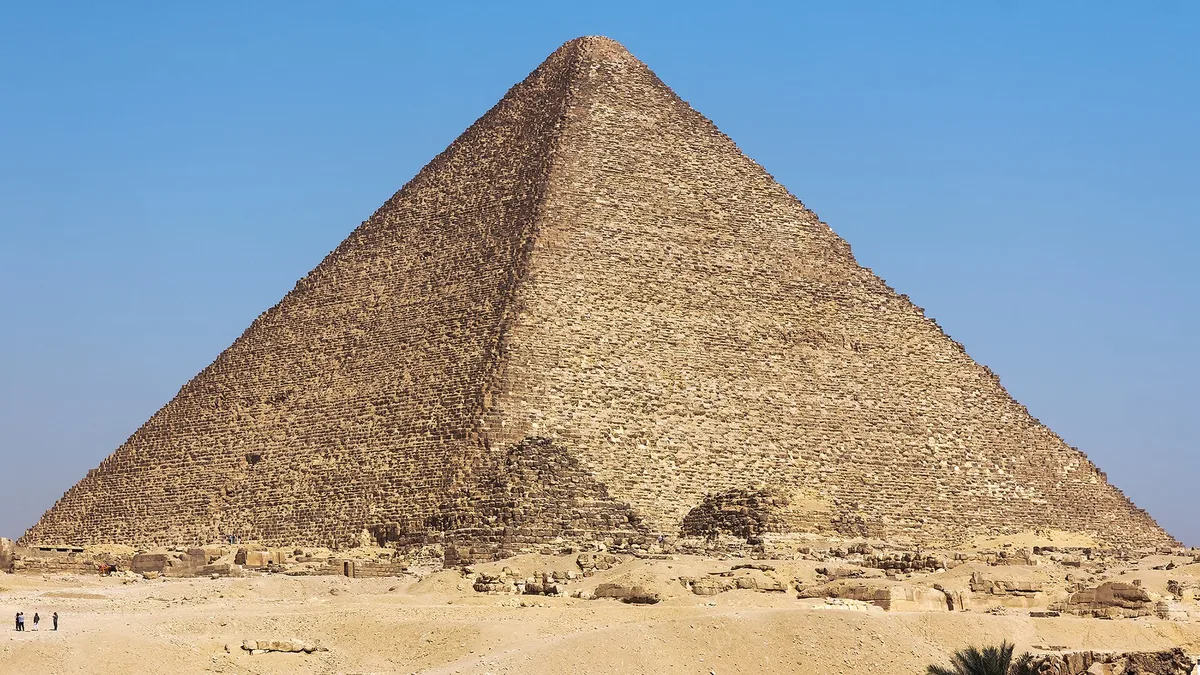
Stone at the scale of a hillside
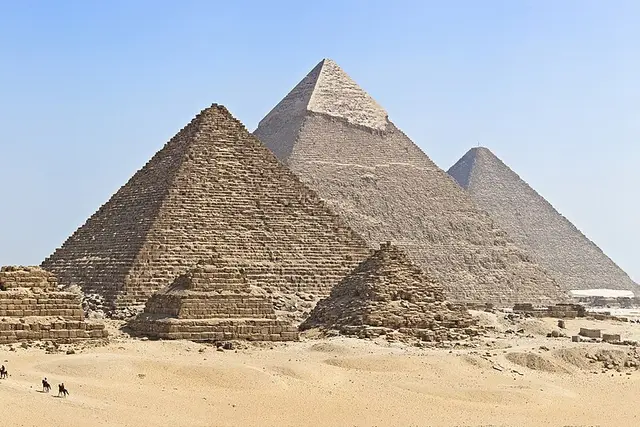
Up close, it stops looking like a triangle. What you face is a staircase of rough limestone blocks, each step roughly waist to chest high, climbing away until the courses blur together. The smooth white casing that once covered it is almost all gone, so you are looking at the core.
Pharaoh Khufu had it built in the Fourth Dynasty, around 2560 BC. It rose to about 146 metres and now stands near 138 after losing its tip. For roughly 3,800 years nothing people built was taller. It is also the only one of the Seven Wonders of the Ancient World still standing.
Climbing the outside is forbidden, and guards enforce it. Walk the base instead. The bottom courses are where you feel the size of individual blocks against your own shoulder.
Inside Khufu’s passages
The interior takes a separate ticket. Most visitors find it either the highlight or the part they regret. You enter through the Robbers’ Tunnel, a rough passage traditionally credited to the Caliph al-Ma’mun’s men in the 9th century. From there you join the original ascending passage.
Expect:
- A low, steep ramp where you climb bent nearly double, gripping wooden handrails
- Warm, close, humid air with little circulation
- The Grand Gallery, a tall corbelled corridor that suddenly lets you stand upright
- The King’s Chamber, a bare granite room holding an empty, lidless sarcophagus
There is nothing painted or carved to read inside. The point is the engineering and the strangeness of being there. Skip it if tight spaces or knee strain bother you.
Reaching the plateau from Cairo
Most people come by car. Uber and Careem both work across Cairo and drop at the plateau gates. The trip from downtown follows Al-Haram Street (Pyramids Road), and traffic decides whether it takes 30 minutes or well over an hour.
On the metro, ride Line 2 to Giza station, then take a taxi or ride-hail the rest of the way. The plateau has more than one entrance, including one by the Sphinx in Nazlet El-Semman. Check which gate your driver is heading for, because they are a long walk apart.

Timing the 7am gate
At the moment the site opens 7am–5pm. Hours shift through the year, so confirm on the official Egyptian antiquities ticketing site before you go.
The calmest stretches are usually 7am–8am and 3pm–5pm, on weekdays and weekends alike. Try not to arrive between 9am and 1pm on weekends. That is when tour coaches fill the car parks and the queue for the interior lengthens. An early start also beats the heat, which on an open desert plateau with almost no shade matters for most of the year.
Late afternoon brings a lower sun that throws shadows across the stone courses. It is the better light for photos.
Handling the touts and the tickets
The plateau is crowded with men offering camel rides, horse carts, “guides” and photos. A firm, friendly “la, shukran” (no, thank you) while you keep walking works better than any argument. If you do want a ride, agree on the full price, the route and the duration before you get on.
A few habits help:
- Ignore anyone outside the gate who says the site is closed or that you need a different entrance
- Buy tickets only at the official ticket office or online, and carry a bank card
- Keep small Egyptian pound notes for toilets and baksheesh, the small tips that are routine here
- If someone hands you a scarf or headdress “for a photo”, hand it back unless you mean to pay
Licensed Egyptologist guides can be booked through reputable agencies. They are worth it if you want context and someone to keep the hustle away.
Beyond Khufu’s pyramid
The Great Pyramid is the largest monument on a plateau full of them. Nearby you can see:
- The Pyramid of Khafre, which looks taller because it sits on higher ground and still has casing stones near its tip
- The Pyramid of Menkaure, the smallest of the three
- The Queens’ Pyramids, small satellite pyramids beside Khufu’s
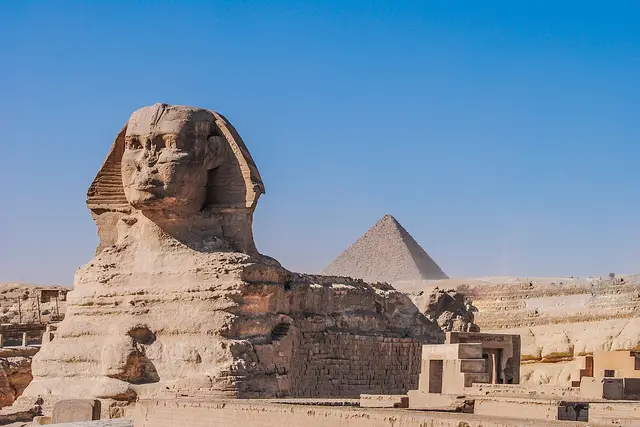
- The Great Sphinx and Khafre’s Valley Temple, built of huge granite-faced blocks
- The panorama point in the desert to the southwest, where all nine pyramids line up in one frame
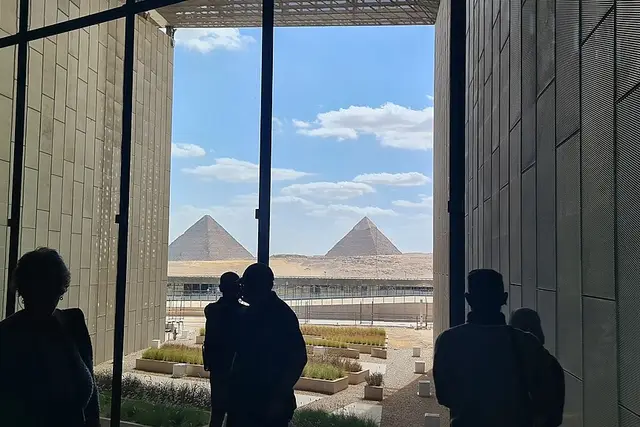
The Grand Egyptian Museum sits a short drive away along the plateau’s edge. Many visitors pair the two in one long day.
Frequently asked questions
When is the quietest time to visit the Great Pyramid of Giza?
Usually 7am–8am and 3pm–5pm, on both weekdays and weekends. Avoid weekends between 9am and 1pm, which are typically the busiest hours.
What are the opening hours?
At the moment it opens 7am–5pm every day of the week. Hours change with the season, so check the official Egyptian antiquities ticketing site for the current month.
Can you go inside or climb the Great Pyramid?
You can go inside on a separate ticket. You climb a low, steep passage to the Grand Gallery and King's Chamber. Climbing the outside is prohibited.
How long should I spend there?
Plan 2–4 hours to cover the Great Pyramid, its interior, Khafre's and Menkaure's pyramids, the panorama point and the Sphinx.
How do I get there from central Cairo?
Uber or Careem along Al-Haram Street is easiest. Alternatively, take Metro Line 2 to Giza station and a taxi from there. Confirm which plateau entrance you're heading to.
Plan your trip to Giza
Egypt eSIM & staying connected →
Some links above are affiliate links — if you book through them, Wander Atlas earns a small commission at no extra cost to you. It's how we keep every guide free.