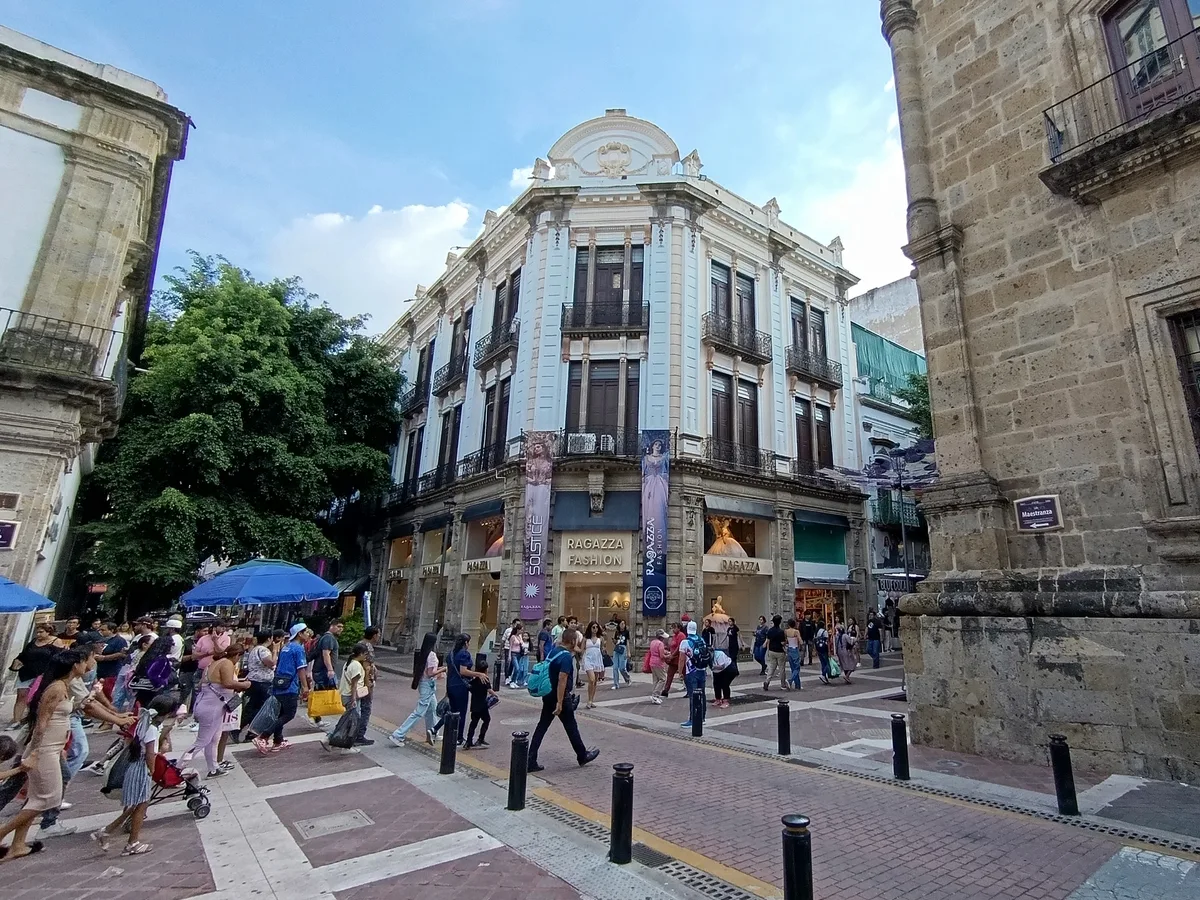
A cross of plazas around one cathedral
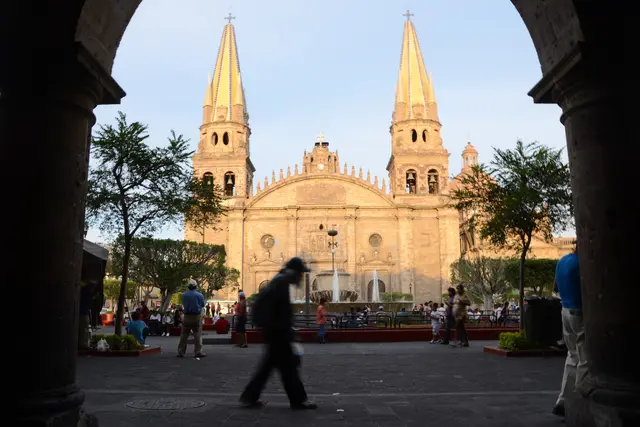
The two yellow-tiled spires are your compass. They top the Catedral de Guadalajara, whose original towers fell in the 1818 earthquake and were replaced in the 1850s with the neo-Gothic points you see now. Four plazas surround the cathedral in a rough cross, so you can walk all of them without crossing a major road.
- Plaza de Armas, south: an ornate iron bandstand shipped from France in the early 1900s.
- Plaza Guadalajara, west: laurel trees and café tables facing the cathedral front.
- Rotonda de los Jaliscienses Ilustres, north: a ring of columns and bronze statues of notable people from Jalisco.
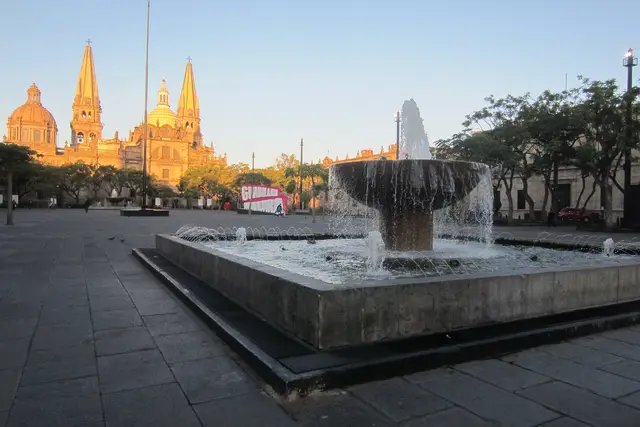
- Plaza de la Liberación, east: the columned Teatro Degollado sits at its far end.
The walk east to Cabañas
Past the theatre, the pedestrian Plaza Tapatía runs about half a kilometre of stone paving, fountains and sculpture. At its end is the Hospicio Cabañas. It was built as an orphanage in the early 1800s and is now a UNESCO World Heritage Site.
Inside, José Clemente Orozco’s murals cover the chapel, with The Man of Fire in the central dome. Look straight up. Orozco also painted the Palacio de Gobierno on Plaza de Armas, where a huge Miguel Hidalgo with a raised torch fills the main staircase. Count on 45 minutes for Cabañas and 20 for the Palacio.
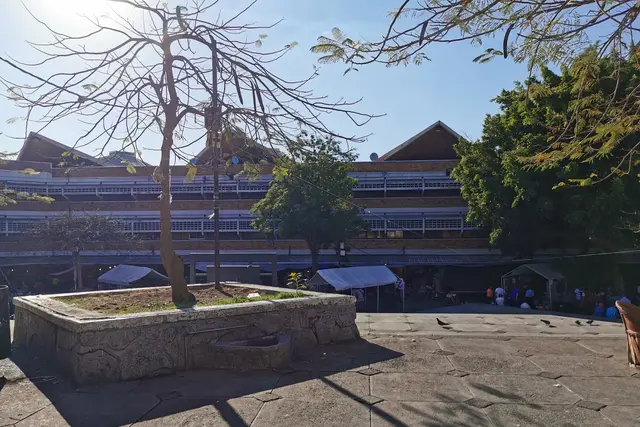
Just south of Cabañas is Mercado San Juan de Dios (also called Mercado Libertad). It has three floors: produce and food stalls, then leather, electronics and crafts.
Eating and moving through Zona Centro
Line 2 of Mi Tren, Guadalajara’s light rail, runs under Avenida Juárez. Its Plaza Universidad station is a few blocks south of the cathedral, and San Juan de Dios station is right by the market. Once you arrive, walk. The whole district is flat and the main axis is car-free.
What to eat here:
- Torta ahogada: a crusty birote roll soaked in tomato sauce, with chilli sauce added to taste.
- Birria: goat or beef stewed with chilli, served in its broth.
- Jericalla: the city’s baked custard, close to a crème brûlée.
Timing the centre on a weekend
The streets are public and open 24 hours, but the buildings keep their own schedules. The cathedral pauses for Mass, and museum hours shift through the year. Check Cabañas and the Palacio on their official sites before you plan around them.
On weekend evenings, 6pm–11pm is when the plazas fill to their peak. Do the murals and the market earlier in the day, then come back after dark if you want the crowds and the floodlit spires.
Inside the cathedral, cover your shoulders, take off your hat and keep your voice down during services. At the market food counters, pay in pesos, in cash, and keep small notes. Order a torta “media ahogada” if you want it half-drowned in hot sauce, or “bien ahogada” for fully drenched. Sauce is added at the counter, so say which you want when you order.
Frequently asked questions
How do I get to Centro Histórico de Guadalajara?
Take Mi Tren Line 2 to Plaza Universidad station, a few blocks south of the cathedral, or to San Juan de Dios station beside the market at the eastern end.
When is it busiest, and when should I avoid it?
Weekend evenings, 6pm–11pm, are the busiest. Visit museums and the market earlier in the day and save that window for evening strolling if you want the buzz.
How long do I need?
One full day covers the cathedral plazas, the Palacio de Gobierno murals, Plaza Tapatía, Hospicio Cabañas and lunch at Mercado San Juan de Dios.
Are the buildings open 24 hours like the district?
No. The streets are always open, but the cathedral, Palacio de Gobierno and Hospicio Cabañas set their own hours, which change through the year. Check their official sites.
What should I eat in the centre?
Torta ahogada, birria and jericalla custard. Mercado San Juan de Dios's food floor is the easiest place to find them together; bring cash in pesos.
Plan your trip to Guadalajara
Mexico eSIM & staying connected →
Some links above are affiliate links — if you book through them, Wander Atlas earns a small commission at no extra cost to you. It's how we keep every guide free.
Related guides
 hidden gem
 Mercado Libertad - San Juan de Dios: Guadalajara Travel Guide
 attraction
 Plaza de la Liberación: Guadalajara Travel Guide (4.7★)
 attraction
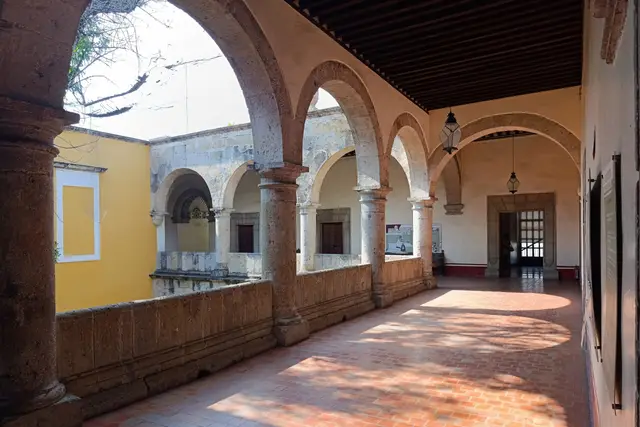
 Regional Museum of Guadalajara: Travel Guide (4.5★)
 attraction