Three buildings, one ticket
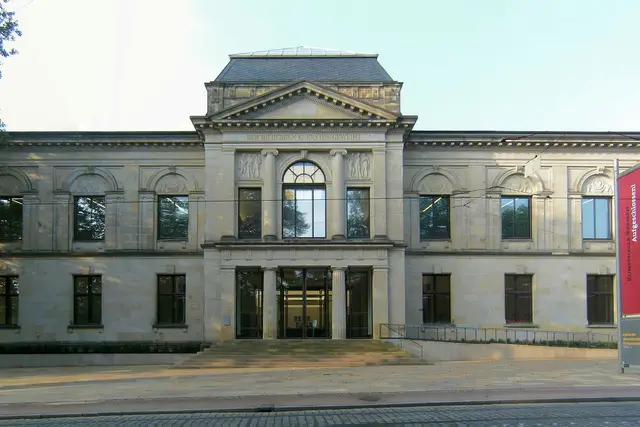
The Kunsthalle comes in three architectural pieces. The oldest is the 1869 red-brick building facing the Alster side, with sandstone trim and an Italianate profile. Behind it, the pale stone extension of 1919 doubled the space. Across the plaza stands the Galerie der Gegenwart, Oswald Mathias Ungers’ 1997 white cube on a raised granite base.
An underground passage links the old buildings to the cube. You can move from a fourteenth-century altar to a twenty-first-century video room without stepping outside. That range is the point of the place. Plan on three hours if you want to see all of it properly. Two hours covers the highlights if you choose a wing and commit.
The fog, the ice and Friedrich
Most visitors come for one painting. Caspar David Friedrich’s Wanderer above the Sea of Fog hangs here: a man in a dark green coat with his back to you, standing on a rock above banks of cloud. It is smaller than reproductions suggest. People are often surprised by how close they can stand to it.
Nearby hangs The Sea of Ice, Friedrich’s grinding pile of pack-ice slabs with a crushed ship barely visible in the wreckage. The Kunsthalle holds one of the strongest German Romantic collections anywhere. Look for Philipp Otto Runge, the Hamburg-connected painter whose large Morning shares the Romantic galleries. Give this section time; it rewards slow looking more than the famous postcard does.
Gold altars and old masters
Start early in the chronology and the light changes. The Grabow Altarpiece by Master Bertram dates from 1379–83. It was made for Hamburg’s St. Petri church, and its painted creation scenes are full of tiny animals. Master Francke’s work from the early 1400s sits close by, a reminder that Hamburg was a serious Hanseatic city long before it was a modern port.
From there the Dutch rooms bring Rembrandt and his contemporaries. Then the nineteenth-century French and German galleries pick up the thread. You will find:
- Édouard Manet’s Nana, the painting rejected by the 1877 Salon
- Max Liebermann, the Berlin Impressionist the museum collected early
- Edvard Munch, including his Madonna
- German Expressionists, rebuilt after the Nazi-era “degenerate art” seizures
Much of this collecting began under Alfred Lichtwark, director from 1886 to 1914. He pushed the museum to buy living artists and Hamburg subjects.

Walking over from the Hauptbahnhof
The museum sits right beside Hamburg Hauptbahnhof, which makes it easy to reach. The station is served by S-Bahn lines and the U1, U2, U3 and U4. If you take the U2 or U4, get off at Hauptbahnhof Nord and follow signs for the Kunsthalle. The exit puts you on Glockengießerwall within a couple of minutes.
From the main station halls, leave by the north side toward the Alster. The red-brick building is visible across the road. Arriving by long-distance train with luggage is common here. That makes the Kunsthalle a realistic first or last stop in Hamburg if you check the locker rules first.
Thursday after six
The schedule has one quirk worth building a trip around. Every other open day the doors close at 6pm, but on Thursday the Kunsthalle stays open until 9pm. Measured foot traffic shows the quietest weekday window is 6pm–7pm. On a Thursday, that means you can still walk in during the calmest hour.
Arrive around 6pm, head straight to the Friedrich room, then work outward. Weekends are the opposite case. From 11am to 6pm on Saturday and Sunday the galleries are at their fullest. That is when you will be waiting behind a row of phones at the Wanderer. Also remember the museum is closed every Monday.
Lockers, tickets and gallery manners
The Kunsthalle runs like most large German museums. A few habits make the visit smoother:
- Bags: larger bags and backpacks generally have to go into the lockers or cloakroom before you reach the galleries. Coats usually go there too in winter.
- Tickets: buy at the desk or on the museum’s official website, where current prices and any special-exhibition supplements are posted.
- Photos: non-flash photography is usually allowed in the permanent collection. Temporary shows often have their own signs, so check at each entrance.
- Pace: Germans visiting museums tend to read the wall texts. Labels are bilingual in German and English, so you can follow along.
Special exhibitions are often timed or ticketed separately. Check the website before a weekend visit. Pick up a floor plan at the entrance, because the passage between buildings is easy to miss.
Out the door and down to the Alster
When you leave, you are minutes from the water. Walk west along Ballindamm and you reach the Binnenalster, with Jungfernstieg’s promenade on its far side. The Alster pavilion steps and the white passenger boats make it a natural place to sit after hours of standing.
If you have more appetite for museums, the Museum für Kunst und Gewerbe is on the other side of the Hauptbahnhof. It covers design and decorative arts. The Deichtorhallen, two former market halls showing contemporary art and photography, are a short walk south toward the HafenCity edge.
Frequently asked questions
When is the quietest time to visit the Hamburger Kunsthalle?
The quietest weekday window is 6pm–7pm. The museum only stays open past 6pm on Thursdays, when it closes at 9pm, so Thursday evening is the time to go. Avoid weekends from 11am to 6pm, the busiest period.
How do I get to the Hamburger Kunsthalle?
It's at Glockengießerwall 5, right next to Hamburg Hauptbahnhof. Take the U2 or U4 to Hauptbahnhof Nord and follow the signs to the Kunsthalle. You can also walk out of the main station's north side toward the Alster.
Is the Kunsthalle open on Mondays?
No. It's closed on Mondays. From Tuesday to Sunday it opens at 10am and closes at 6pm, except Thursday, when it stays open until 9pm.
How long should I spend at the Kunsthalle?
Allow about three hours to see all three buildings. With two hours you can focus on the highlights, such as the Caspar David Friedrich room, the medieval altarpieces and one section of the Galerie der Gegenwart.
What is there to do nearby after visiting?
The Binnenalster and Jungfernstieg are a few minutes' walk west. The Museum für Kunst und Gewerbe is just across the Hauptbahnhof, and the Deichtorhallen contemporary art halls are a short walk south.
Plan your trip to Hamburg
Some links above are affiliate links — if you book through them, Wander Atlas earns a small commission at no extra cost to you. It's how we keep every guide free.