Why Gajah Mada Food Street Matters
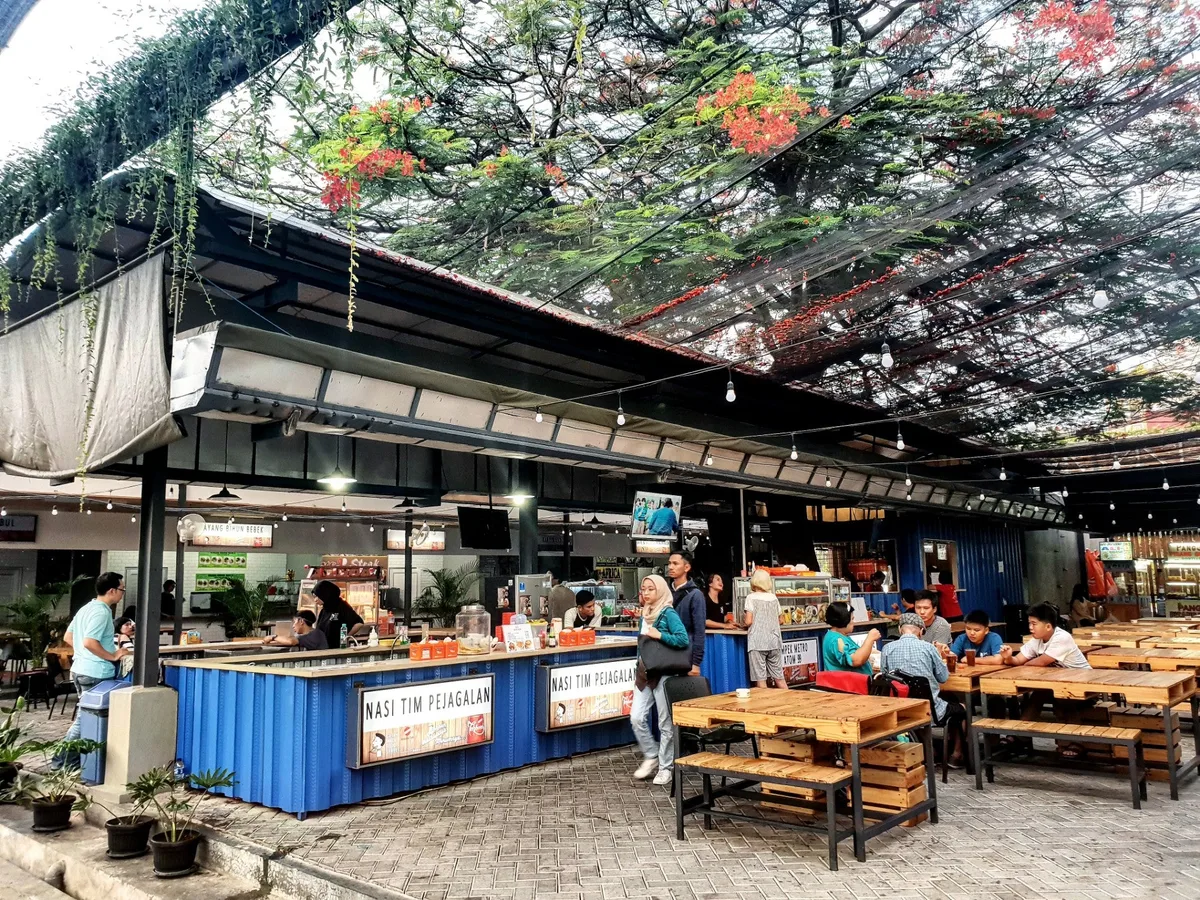
Jakarta’s food-court culture usually means air-conditioned mall basements, but Gajah Mada Food Street flips that script with an open-air, semi-covered courtyard lined with independent stalls and long communal tables. It sits on Jl. Gajah Mada, the old commercial spine connecting Central Jakarta to the historic Glodok and Pancoran Chinatown district in West Jakarta (Kecamatan Taman Sari). The address puts it right in the Krukut neighborhood, an area layered with colonial-era shophouses, temples, and decades-old eateries, so the food street works as both a dinner destination and a jumping-off point for exploring one of the city’s oldest quarters.
With a 4.5 rating from close to 2,900 reviews, it’s firmly established on Jakarta’s dining map, not a hidden find, but a dependable, well-known gathering spot for a casual night out with a broad crowd of regulars, families, and after-work groups.
Getting There
The site sits directly on Jl. Gajah Mada, one of West Jakarta’s major arterial roads, making it easy to reach by car, taxi, or ride-hailing app (Gojek/Grab), which is how most visitors arrive given Jakarta’s traffic patterns and the lack of a direct rail stop at the door. The closest heavy-rail option is Jakarta Kota Station, a hub for both KRL Commuterline trains and the historic old-town area, roughly a 10–15 minute drive depending on traffic.
If you’re coming from the TransJakarta busway network, corridors running along Gajah Mada/Hayam Wuruk drop passengers within walking distance. Given the road’s one-way traffic flow and limited street parking, ride-hailing drop-off directly at the entrance is usually the least stressful option.
What to Eat
Expect an “upmarket outdoor food court” format: a rotating lineup of stalls under one roofed, open-sided structure, rather than a single kitchen. The strength here is variety. Expect stalls doing Chinese-Indonesian classics (think kwetiau goreng, bebek/babi panggang-style dishes typical of Jakarta’s Chinatown food scene), Indonesian standards like sate and nasi campur, plus grilled seafood and Western-leaning options for mixed groups.
Cold beer service is a defining feature (uncommon at many Jakarta food courts), which is part of why it draws an evening crowd rather than a lunch one. Price level sits in the mid-range (moderate) bracket. Plan for a step up from a street-side warung but well below a sit-down restaurant, and confirm current menu prices at the stall since food-court vendors set their own.
When to Go
This is fundamentally a dinner destination. The open-air seating and beer-forward atmosphere come alive after dark, roughly from early evening onward. Jakarta’s tropical climate means daytime heat makes the uncovered sections less comfortable at midday, so evenings (and the relative cool after sunset) are when the space is most pleasant. Weekends draw the heaviest crowds and longest waits for tables; if your schedule allows, a weeknight visit gets you the same food with more breathing room.
How to visit like a local
Since this is a well-known, well-reviewed spot rather than an under-the-radar one, the practical challenge is crowd management, not discovery. Arrive by 6:30–7 pm on a weeknight to snag a table before the after-work and dinner rush fills the communal seating. Tables are shared-style. It’s normal to sit near strangers, so don’t wait for a private table to open up.
Order at each stall individually rather than expecting one central menu; cash is still commonly used at smaller stalls, though many now accept QRIS mobile payment or cards, so carry some rupiah as backup. Tipping isn’t standard practice at Indonesian food courts, round up or leave small change if service was notably good, but it’s not expected. The most common visitor mistake is treating it like a single restaurant with one bill: keep track of what you order at each stall, since payment is typically settled per vendor, not at a central counter.
After eating, it’s worth walking a few minutes into the surrounding Glodok/Pancoran area, one of the oldest Chinatowns in Southeast Asia, for dessert or a look at nearby temples and old shophouse architecture, a natural extension of the same night out.
Frequently asked questions
How do I get to Gajah Mada Food Street without a car?
Take a Gojek or Grab ride-hail directly to Jl. Gajah Mada No. 83, or ride the KRL Commuterline to Jakarta Kota Station and continue by taxi or app-based ride (about 10–15 minutes depending on traffic).
How much does a meal cost here?
It's listed as mid-range (price level 2 out of 4), so expect moderate food-court pricing — more than a street warung but less than a full sit-down restaurant. Confirm current prices at each stall since vendors set their own menus.
What's the best time to visit?
Evenings are best, since the open-air seating and beer-drinking crowd make it primarily a dinner spot. Weeknights around 6:30–8 pm offer good energy with shorter waits than weekends.
How long should I plan to stay?
Most visits run 1 to 1.5 hours, enough time to sample a few stalls and enjoy the communal seating without rushing.
What else is nearby?
The food street sits at the edge of Jakarta's historic Glodok and Pancoran Chinatown district, walkable for temple visits, old shophouses, and additional street-food stops before or after your meal.
Plan your trip to Jakarta
Indonesia eSIM & staying connected →
Some links above are affiliate links — if you book through them, Wander Atlas earns a small commission at no extra cost to you. It's how we keep every guide free.