Why go
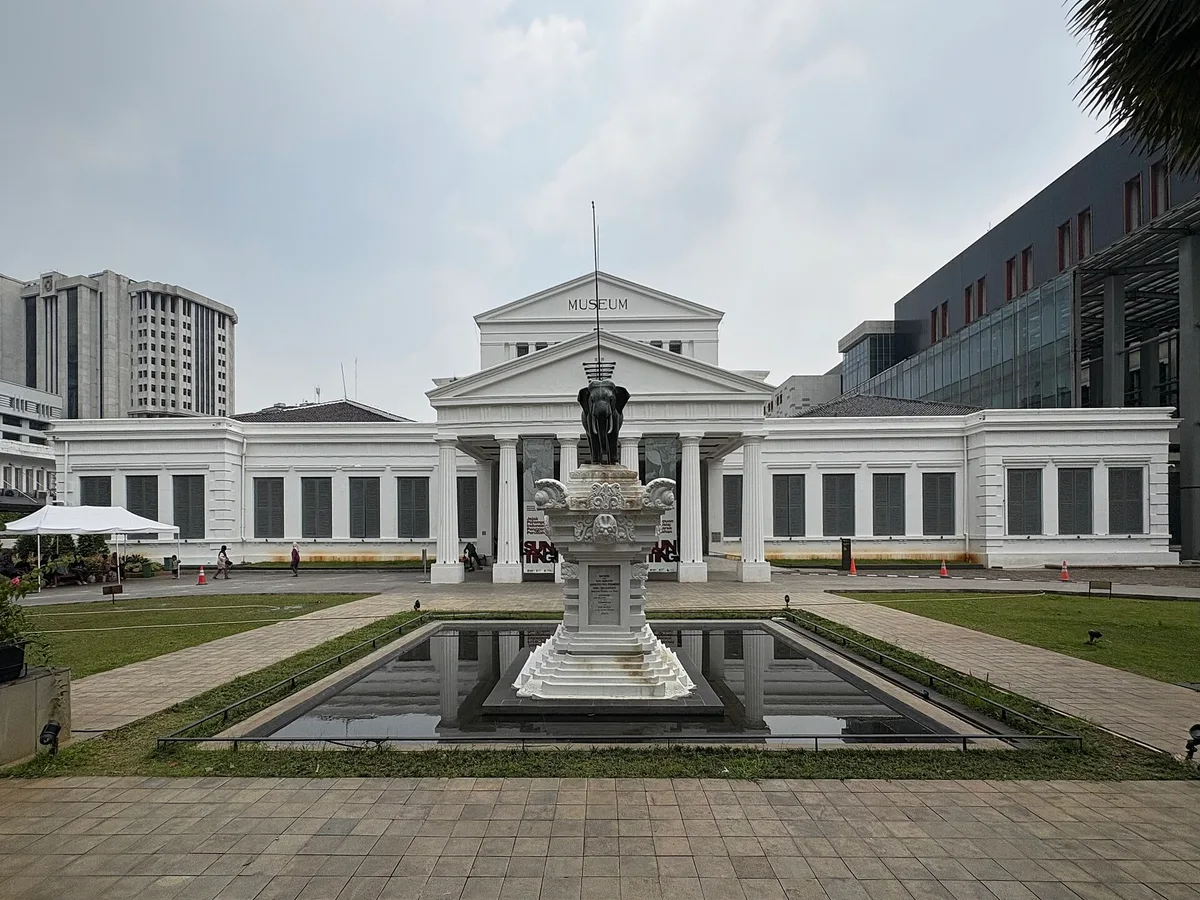
Step through the colonnaded entrance and the first thing you notice is scale. Vaulted ceilings, marble floors, and rows of stone statuary that once stood in Javanese temples fill a courtyard bathed in filtered daylight.
This is Indonesia’s oldest and largest museum, founded in 1778, holding a collection that spans prehistoric tools, Hindu-Buddhist bronzes, and centuries of ceramics traded along the archipelago’s coasts. Locals call it Museum Gajah after the bronze elephant statue, a gift from Thailand’s King Chulalongkorn, standing sentinel in the front yard.
With a 4.7-star rating from over 20,000 reviews, it’s consistently one of the best-regarded stops in the city.
Getting there
The museum sits on Jl. Medan Merdeka Barat, directly facing Merdeka Square and the National Monument (Monas), in Gambir, Central Jakarta.
The nearest train stop is Gambir Station, a short walk or quick becak/ojek ride away. If you’re using the TransJakarta busway, the Monas or Balai Kota corridor stops drop you within a few minutes’ walk.
Grab or Gojek rides are cheap and simple if you’d rather skip navigating on foot in the heat.

What to see inside
Budget two to three hours to do the collection justice. The ground floor’s bronze and stone sculpture halls are the visual highlight, towering Hindu-Buddhist statues, some over a thousand years old, arranged around the central courtyard.
Don’t miss:
- The Treasure Room, holding gold and jewelry from royal courts across the archipelago (usually a small separate entry fee and bag check)
- The ceramics galleries, tracing trade porcelain from China and Southeast Asia
- The ethnographic wing, with textiles, masks, and traditional house models from Indonesia’s many regions
- The prehistoric section, including early hominid fossil casts tied to Java’s own fossil record
Signage is bilingual in Indonesian and English throughout most halls, though some older cases still rely on Indonesian-only labels.
When to go
The museum is closed every Monday, so don’t build that into your Jakarta itinerary. Tuesday through Thursday it runs 8am to 6pm; Friday, Saturday, and Sunday it stays open until 8pm.
Crowds build steadily through the day, with weekends typically busier than weekdays as tour groups and families pack the courtyard.
If you’re visiting on a weekend, arrive right at opening. The 8am to 9am window is noticeably quieter. On weekdays, aim for the morning as well, before crowds build toward the afternoon.
How to visit like a local
Because this is a very popular stop on nearly every Jakarta itinerary, timing your visit matters more than finding a secret entrance. Aim for that weekend 8am opening rush or a late Friday visit to dodge the tour buses.
Entry tickets are inexpensive and typically bought at a counter just inside the gate, cash and card are usually both accepted, but carry small rupiah notes as backup since queues move faster with exact change.
A few practical notes:
- Modest dress isn’t strictly enforced but is appreciated, as with most Indonesian public institutions
- Photography is generally allowed in most galleries; flash is often restricted near fragile textiles and manuscripts
- Guides sometimes wait near the entrance offering tours in English, agreeing on a rate before starting saves confusion later
- The first-timer mistake is treating this as a quick stopover before Monas; the collection genuinely rewards two-plus hours
Pair your visit with Merdeka Square and Monas right across the street, since both sit within the same walkable plaza and make for a natural half-day loop through Jakarta’s civic heart.
Frequently asked questions
What are the National Museum of Indonesia's opening hours?
Closed Mondays. Tuesday to Thursday it's open 8am–6pm, and Friday through Sunday it stays open later, until 8pm.
When is the quietest time to visit?
On weekends, go between 8am and 9am right at opening. On weekdays, the calmest hour is 6pm–7pm, so a late Friday visit works well since it's open until 8pm.
How do I get to the museum by public transport?
It's a short walk from Gambir train station, or take TransJakarta to the Monas or Balai Kota busway stop, both a few minutes' walk from the entrance.
How long should I spend at the museum?
Plan for two to three hours to see the bronze and stone sculpture halls, ceramics galleries, ethnographic wing, and the Treasure Room properly.
What's nearby the museum?
It faces Merdeka Square and sits right across from the National Monument (Monas), making it easy to combine both into one half-day visit.
Plan your trip to Jakarta
Indonesia eSIM & staying connected →
Some links above are affiliate links — if you book through them, Wander Atlas earns a small commission at no extra cost to you. It's how we keep every guide free.
Related guides
 attraction
 Selamat Datang Monument: Jakarta Travel Guide (4.7★)
 attraction
 Taman Mini Indonesia Indah: Jakarta Travel Guide
 restaurant
 Social House Grand Indonesia: Where to Eat in Jakarta
 restaurant