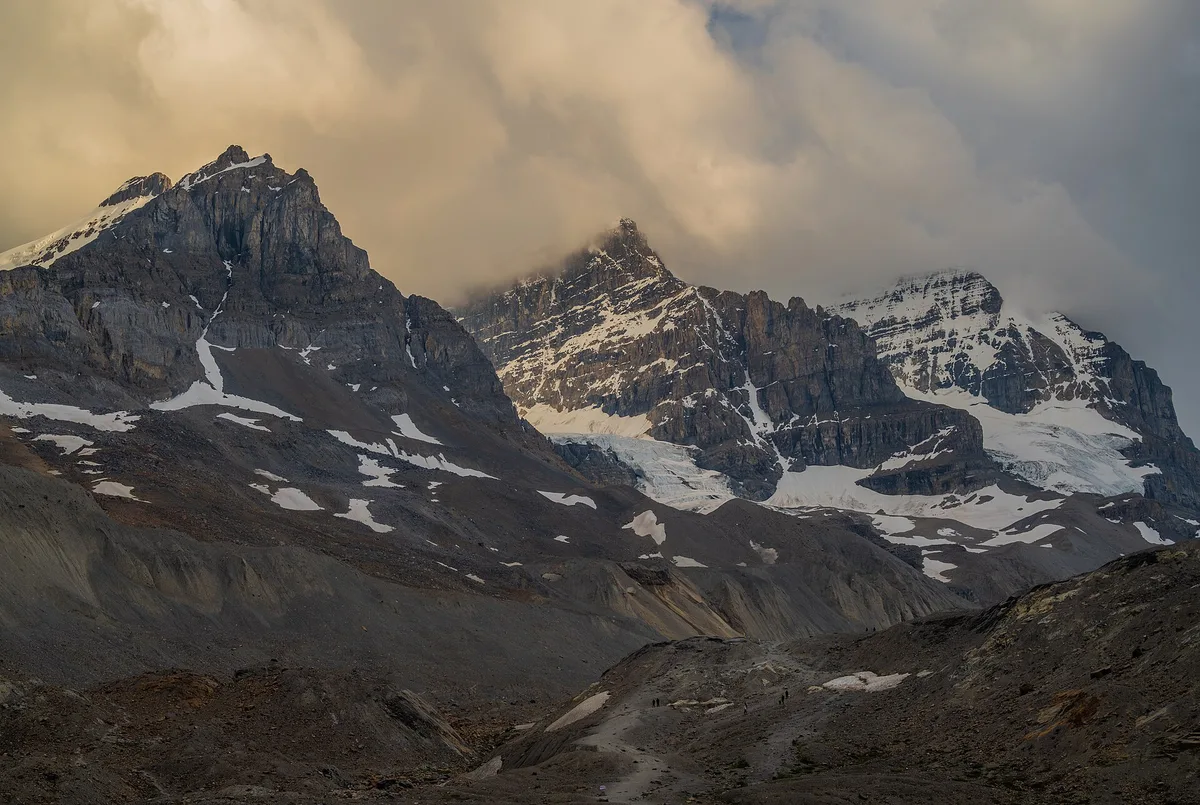
Thirteen thousand square kilometres of valley and ice
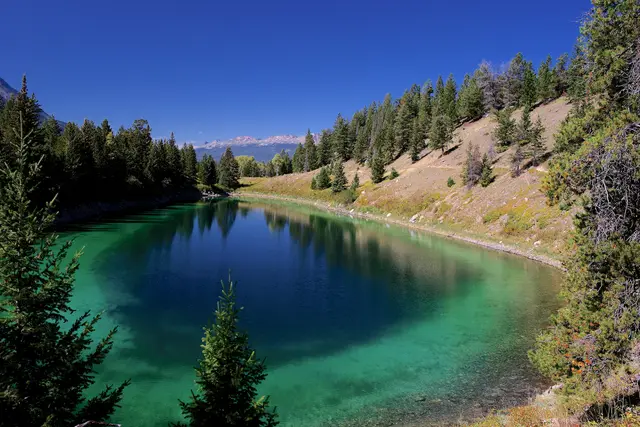
Jasper is the biggest park in the Canadian Rockies. It covers roughly 13,000 square kilometres of river valleys, glaciers and lakes coloured by glacial silt. The town of Jasper sits near the middle, where the Athabasca and Miette rivers meet. Most of what you’ll want to see lies along a handful of roads that fan out from it.
It is one of the Canadian Rocky Mountain Parks that make up a UNESCO World Heritage Site. It is also a Dark Sky Preserve, so the town keeps its lighting low and the sky above it gets properly dark. This is a well-known, heavily visited park. Expect company at the famous viewpoints, and plan around it.
The roads that shape your days
Think of the park as a set of out-and-back drives from town. Each one makes a good half or full day.
- Maligne Road: first Maligne Canyon, a narrow limestone slot crossed by a series of footbridges. Then Medicine Lake, whose water drains away underground, and finally Maligne Lake, where boat tours run out to Spirit Island.
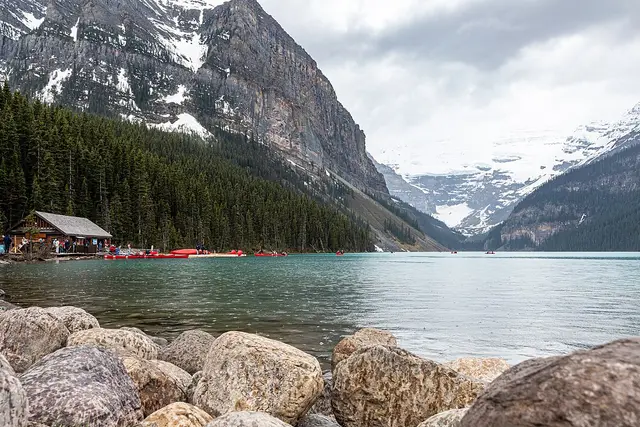
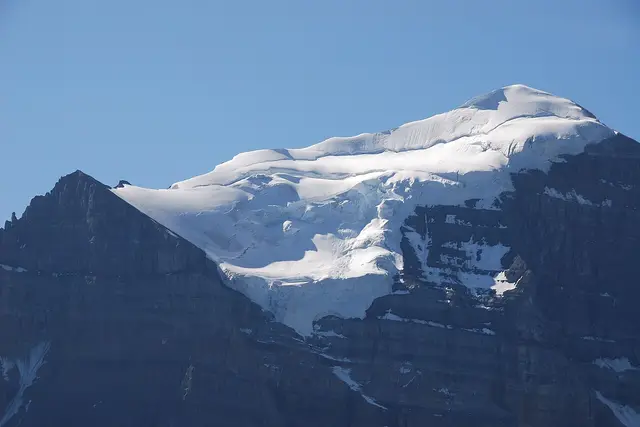
- Icefields Parkway (Highway 93): heads south past Athabasca Falls and Sunwapta Falls to the Columbia Icefield and the Athabasca Glacier, then carries on to Lake Louise.
- Mount Edith Cavell Road: a winding, seasonal road up to the Path of the Glacier trail, which looks across at Angel Glacier on the north face.
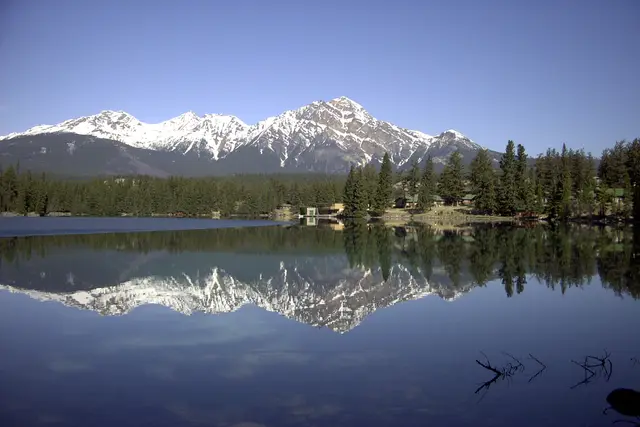
- Pyramid Lake Road: a short drive above town to Patricia and Pyramid lakes, a good choice for an evening.
The Jasper SkyTram goes up Whistlers Mountain just south of town. Further east, Miette Hot Springs sits at the end of its own side road off Highway 16.
Elk on the verges, bears in the meadows
Wildlife is the reason many people come. Elk graze around the townsite and along the river flats. Bighorn sheep often turn up on the slopes near the eastern park gate and on the road to Miette. Black bears and grizzlies feed in roadside meadows, mostly in spring and early summer. Mountain goats work the cliffs above the Icefields Parkway.
Dawn and dusk are when animals move most. The drives along Maligne Road and Highway 16 east of town are the classic stretches for spotting them. Bring binoculars. The best sightings are often across a valley, not beside your car door.

Seeing Jasper without the jam
A row of cars stopped on the verge usually means an animal, and locals call it a bear jam. Pull fully off the road or keep driving. Never stop in a lane. Parks Canada asks you to stay at least 30 metres from elk and sheep and 100 metres from bears, wolves and cougars. It is illegal to feed or approach wildlife, and people do get fined.
A few more habits that make the day go smoothly:
- Buy your park pass first. You need one for every day in the park, and it’s sold online and at the gates. Check the current rates on the Parks Canada site.
- Carry bear spray on any trail, and keep it on your belt, not in your pack.
- Start early. You’ll beat the tour coaches and get parking at Maligne Canyon and the Edith Cavell trailhead.
- Book ahead for Maligne Lake cruises and campsites in summer. Parks Canada campgrounds go through its online reservation system.
Fill up the tank in town before you take the Icefields Parkway. Services along it are few and far between, and mobile coverage drops out for long stretches.
When the park changes character
July and August bring the warmest weather, the longest days and the biggest crowds. In September, elk are rutting around town and the aspens turn gold, and visitors are fewer. Snow often hangs on at high elevations into June. The Edith Cavell road only opens once it has cleared, so its season is short.
Winter is a different park. Guided ice walks go along the frozen floor of Maligne Canyon, and Marmot Basin runs skiing. October brings the Jasper Dark Sky Festival. In July 2024 a wildfire burned through parts of the park and the townsite. Check Parks Canada’s current trail and road reports before you set your route.
Getting in and staying put
Most visitors drive. Jasper is about four hours west of Edmonton on the Yellowhead Highway (16). From Banff and Lake Louise you come north on the Icefields Parkway, a trip that deserves a full day of stops. VIA Rail’s Canadian also calls at Jasper station in the middle of town, and the station is walkable from the hotels.
Staying in town keeps every scenic drive within easy reach. Campgrounds such as Whistlers and Wapiti sit just south of town. Give yourself three days if you can: one for the Maligne Road, one for the Parkway, and one for Edith Cavell, the SkyTram and an evening at Pyramid Lake.
Frequently asked questions
How do I get to Jasper National Park?
Most visitors drive. It's about four hours west of Edmonton on Highway 16 (the Yellowhead), or a full day north from Banff and Lake Louise on the Icefields Parkway (Highway 93). VIA Rail's Canadian also stops at Jasper station in town.
What is the best time to visit Jasper National Park?
Late June to September, when the high roads like Mount Edith Cavell are open. July and August are the busiest months. September is quieter and has the elk rut and autumn colour. Winter is good for the Maligne Canyon ice walks and dark-sky viewing.
How many days do I need in Jasper?
Plan for at least two to three full days. Spend one on the Maligne Road (the canyon, Medicine Lake and Maligne Lake), one on the Icefields Parkway down to the Athabasca Glacier, and one on Edith Cavell, the SkyTram and Pyramid Lake.
Do I need a pass to enter Jasper National Park?
Yes. Everyone who stops in the park needs a Parks Canada pass, sold online and at the park gates. Current prices are listed on the Parks Canada website.
Where can I see wildlife in Jasper?
Elk graze around the townsite. Bighorn sheep are often seen near the east gate and the Miette Hot Springs road. Bears tend to be in roadside meadows along Maligne Road and the Icefields Parkway, especially at dawn and dusk. Keep 30 metres from elk and sheep and 100 metres from bears.
Plan your trip to Jasper
Canada eSIM & staying connected →
Some links above are affiliate links — if you book through them, Wander Atlas earns a small commission at no extra cost to you. It's how we keep every guide free.