Drums, soot and the Santo Niño
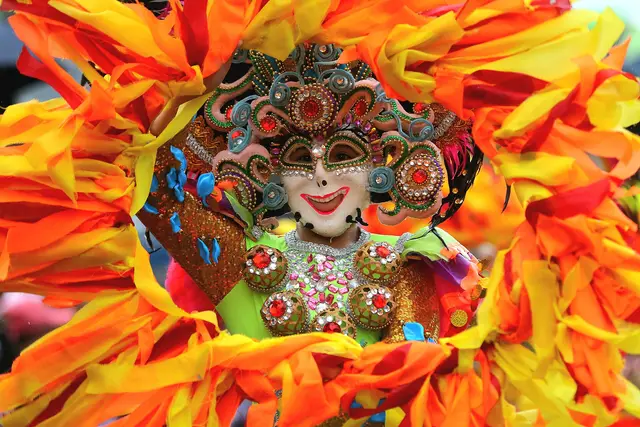
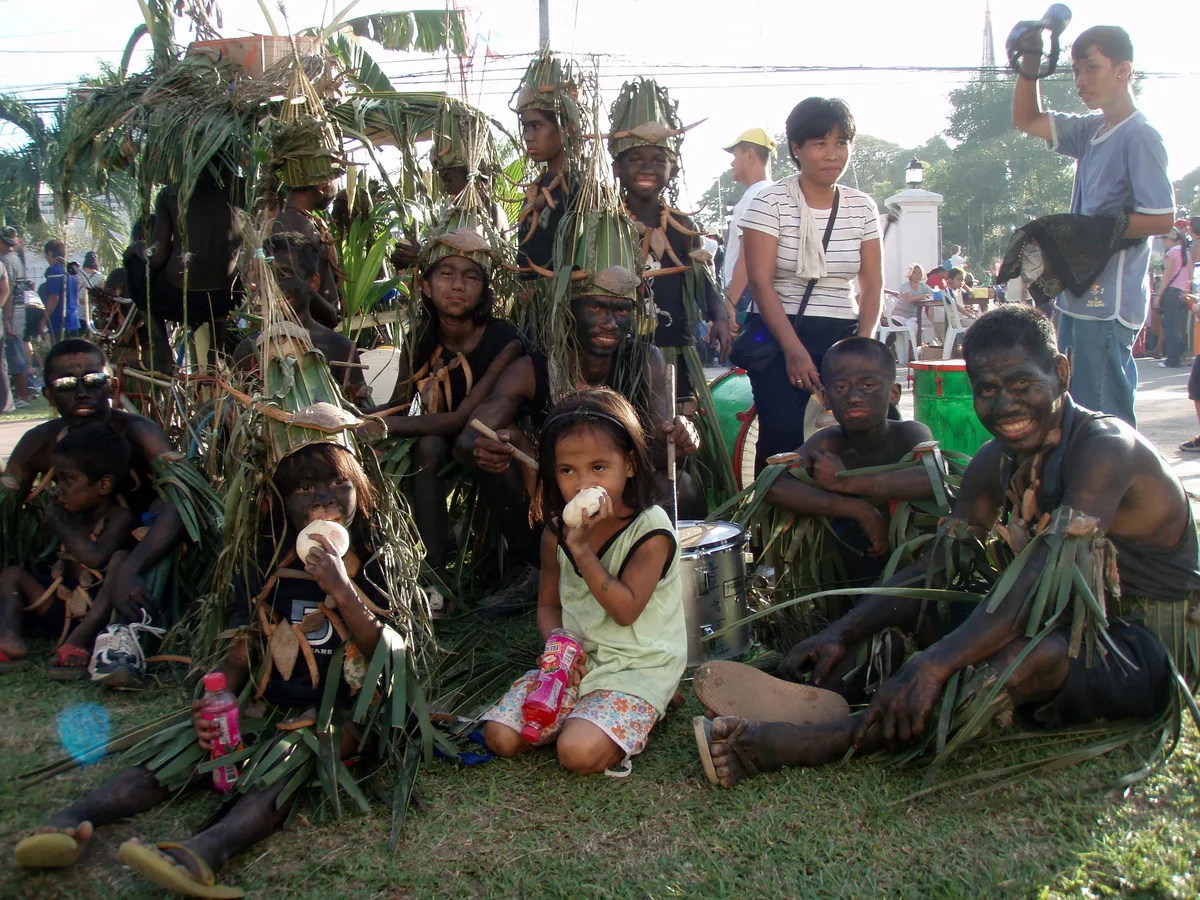
Kalibo turns into one long parade for a week. Drum groups set the beat with snares, bass drums and anything else that can be struck. Dancers come behind them with faces and arms blackened with soot, wearing costumes of feathers, shells, raffia and woven fibre.
People call it the “Mother of All Philippine Festivals,” and many of the country’s other street festivals borrowed its format. At its centre is devotion to the Santo Niño, the image of the Child Jesus. You see small Santo Niño statues everywhere: held above the crowd, tied to floats, carried by grandmothers in the middle of the dancing.
The blackened faces come from the festival’s origin story. In the legend, Bornean datus arrive on Panay and trade with Marikudo, chief of the Ati people, the island’s earlier inhabitants. Painting yourself dark honours the Ati. Spanish-era Catholicism later laid the Santo Niño devotion over that older celebration, and the two have stayed together ever since.
January 11–18, 2027: how the week builds
The 2027 festival runs from January 11 to 18. It peaks on the third Sunday of January, which falls on January 17, 2027. The days before Sunday build up slowly, with group dancing, school and barangay contingents, and more drumming in the streets every evening.
Sunday is the big day. Most visitors arrange their trip around it and are in town from Friday or Saturday. Sunday’s programme usually combines Mass for the Santo Niño, a long day of street dancing, and a candlelit religious procession through the town centre after dark. The final day, January 18, winds the week down.
Typically the competing tribal groups perform in full costume over the final weekend, and that is when you see the most elaborate headdresses. If you can only manage one day, make it Sunday. The candle procession shows the devotional side that the daytime parade can hide.
Where it happens: Pastrana Park and the cathedral
There is no gated venue. The festival happens on Kalibo’s streets, and most of it circles the town centre. Pastrana Park is the main plaza and the natural centre point. Across from it stands the Cathedral of St. John the Baptist, known simply as Kalibo Cathedral, where the Masses and blessings take place.
The roads around the plaza fill with dancers, vendors and spectators. Traffic stops for long stretches. Kalibo is a small, flat town, so walking is the fastest way to get anywhere during festival week. Tricycles are the usual local transport, but they make slow progress near the parade route.
Hala bira! Joining the sadsad
Here you are expected to dance, not just watch. Sadsad is the Aklanon word for the shuffling street dance, and spectators routinely step in behind a drum group and follow it down the block. The chant you hear again and again is “Hala bira! Puera pasma!”, along with “Viva Señor Santo Niño!” Shout it back.
A few things locals and regulars do:
- Get your face blackened. Being daubed with soot is part of the fun, and people may mark you without asking. Wear clothes you are willing to ruin.
- Join behind the drummers, not in front. Dropping in behind a group’s drum line is welcome. Pushing into a competing tribe’s formation during judging is not.
- Respect the religious moments. During Mass and the evening procession, people carrying Santo Niño images are praying, not performing. Keep your voice down, take photos without flash, and move aside for the procession.
- Keep your phone in a sealed pouch. Soot, sweat and spilled drinks get everywhere.
- Carry small bills. Street food stalls and tricycle drivers deal mostly in cash, and cards are of little use on the street.
Drinking in the street is part of the scene by late afternoon. The crowds stay good-natured, but they are packed tight. Keep valuables in a front pocket.
Getting to Kalibo
Kalibo is the capital of Aklan province, on the northern side of Panay Island. Kalibo International Airport sits just outside town and has domestic flights from Manila and other Philippine cities. It also serves as a common arrival point for Boracay, so the arrivals hall is always busy, and busier still during the festival.
From the airport, a short tricycle or van ride gets you into the town centre. Some visitors combine the festival with a beach stay. They base themselves in Boracay and travel down to Kalibo by road via Caticlan for the main weekend. That journey is a couple of hours each way and slower during festival traffic, so most people who do it make a day of it.
Tickets, rooms and the real bottleneck
Watching the street parades costs nothing: you stand on the pavement and they pass you. Some organised events, such as competition viewing areas, may have their own arrangements set by the local organisers. Kalibo’s municipal government and the festival organisers are the source for those details.
Accommodation is the real constraint. Kalibo has a limited number of hotels and inns. Regular attendees usually reserve rooms months ahead and expect festival-week rates. Anyone who leaves it late often ends up in surrounding Aklan towns or homestays, or travels in from Boracay.
When the drums go quiet
Kalibo is worth some time outside the parade route. The Bakhawan Eco-Park in New Buswang is a mangrove reforestation project with a long bamboo boardwalk out through the trees toward the sea. It is a calm change after days of drumming.
Aklan is also known for piña, a fine, translucent fabric woven from pineapple leaf fibre and used for the formal barong Tagalog. Weaving workshops around Kalibo show the process, from scraping the fibre to working the loom. To eat, look for inubarang manok, an Aklanon dish of chicken stewed with banana pith in coconut milk. It is a local dish you are unlikely to find outside the province.
Frequently asked questions
When is the Ati-Atihan Festival in 2027?
It runs from January 11 to 18, 2027, in Kalibo, Aklan. The main day is Sunday, January 17, the third Sunday of January, which has the biggest street dancing and the evening candlelit procession.
Do you need tickets for Ati-Atihan?
No ticket is needed to watch or join the street parades. They take place on Kalibo's public streets around Pastrana Park and Kalibo Cathedral. Any separate arrangements for organised competition viewing are set by Kalibo's municipal organisers.
How do I get to Kalibo for the festival?
Fly into Kalibo International Airport, which has domestic flights from Manila and other cities. The town centre is a short tricycle or van ride away. Some visitors stay in Boracay and come by road via Caticlan, which takes a couple of hours each way.
Can visitors join in the dancing?
Yes. Spectators often join the sadsad street dance by following a drum group and chanting "Hala bira! Puera pasma!" Expect someone to blacken your face with soot. Stay quiet and respectful during the Masses and the religious procession.
How many days should I spend at Ati-Atihan?
Most visitors come for the final weekend, arriving Friday or Saturday and staying through Sunday, January 17, 2027. A spare day lets you visit Bakhawan Eco-Park or a piña weaving workshop near Kalibo.
Plan your trip to Kalibo
Philippines eSIM & staying connected →
Some links above are affiliate links — if you book through them, Wander Atlas earns a small commission at no extra cost to you. It's how we keep every guide free.