You turn off a fairly ordinary street and the pavement changes first, smooth wood-toned tiles replacing concrete, and suddenly the buildings lean in close, dark timber lattices called kimusuko screening every window.
This is Higashi Chaya, Kanazawa’s largest preserved geisha teahouse district, a few blocks of Edo-period ochaya where geisha once entertained wealthy patrons behind those very screens. Some still do, in a handful of teahouses that keep the tradition alive today.
Why Higashi Chaya matters
Kanazawa escaped the bombing that flattened most of Japan’s historic castle towns in 1945. That accident of history is why this district survives essentially intact.
The two-story wooden ochaya here date largely to the 1820s, when the shogunate formally designated this as one of the city’s licensed pleasure quarters. Walk the main street, Higashiyama-Chayagai, and you’re looking at real urban fabric, not a reconstruction.
What you’ll actually see and do
The architecture is the headline act, but there’s plenty to fill two or three hours here.
- Shima Teahouse and Kaikaro – two former ochaya open to the public, showing tatami performance rooms, red-lacquered stairs, and geisha instruments up close
- Gold-leaf shops – Kanazawa produces nearly all of Japan’s gold leaf, and stores along the main lane sell leaf-dusted ice cream, sake, and cosmetics
- Hakuza Hikari Kura – a gold-leaf shop with a startling gilded room you can step inside
- Kanazawa lacquerware and craft boutiques tucked into side alleys running off the main street
Budget an hour just for the two teahouse museums if you want to sit and look properly rather than just glance through doorways.

Getting there
From Kanazawa Station, hop on the Kanazawa Loop Bus or a city bus toward Hashiba-cho, then walk about five minutes across the Asano River via Tenjinbashi bridge.
A taxi from the station costs a bit more but skips any bus-timing guesswork. Either way, the river crossing itself is worth slowing down for, willow trees lean over the water and the district’s rooftops come into view gradually rather than all at once.
When to go
The district is outdoors and unticketed, so it’s technically accessible 24 hours a day, every day. That doesn’t mean every hour is equal.
Foot traffic data shows things stay calm from 7am to 11pm on both weekdays and weekends, but weekends between 10am and 6pm are when tour buses and day-trippers fill the main lane shoulder to shoulder. If you want photos of the empty lattice-fronted street, avoid that window entirely.
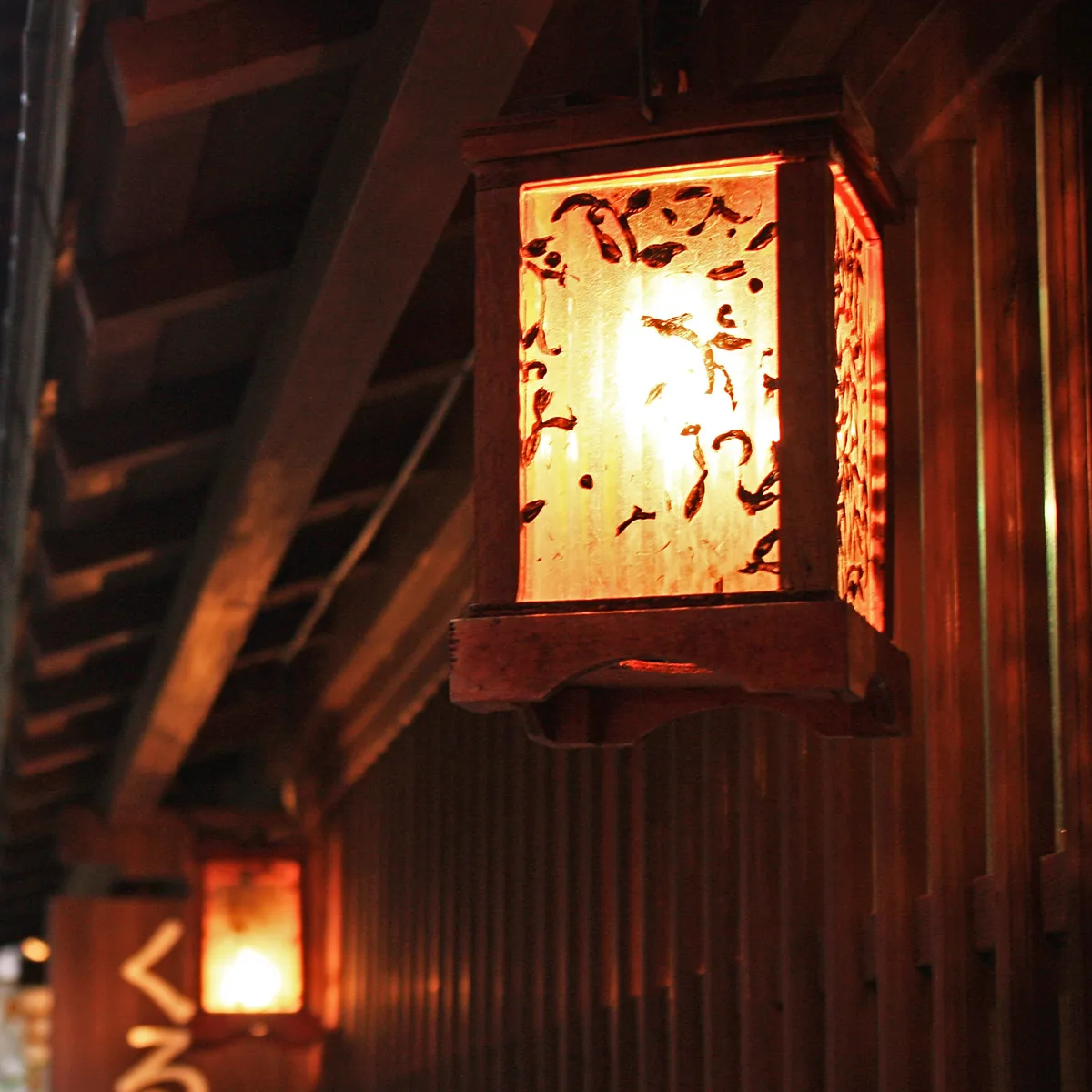
Early morning, especially before 9am, gives you soft light on the dark wood facades and almost nobody else around. Evening after the shops close down brings a quieter, moodier version of the same streets, with lanterns lit outside a few teahouses.
How to visit like a local
Higashi Chaya draws heavy tour traffic, so plan around the crowd rather than through it. This is not an under-the-radar spot. It’s one of Kanazawa’s most-visited sights, and the main street reflects that on weekend afternoons.
- Time it right: arrive early morning or after the shops close, to have the lanes mostly to yourself
- Pay in cash for small shops: many gold-leaf and craft stores are cash-friendly but not all take cards, so carry yen
- Don’t photograph private residences or working teahouses’ interiors without permission. Most ochaya here are still lived-in or operating businesses, not open-air museums
- Skip the group-tour crush: if you arrive to a wall of people, detour into the quieter side lanes one block back from Higashiyama-Chayagai, same architecture, far fewer people
- Book an evening geisha performance in advance if you want to see one; these are limited-seating and by reservation through specific teahouses, not walk-in
Pair the visit with a short walk to Kazuemachi, a smaller, calmer teahouse district on the opposite riverbank, if you want a second dose of this atmosphere without the density of visitors that Higashi Chaya now attracts.
Frequently asked questions
How do I get to Higashi Chaya District from Kanazawa Station?
Take the Kanazawa Loop Bus or a city bus toward Hashiba-cho, then walk about 5 minutes across the Asano River. A taxi takes roughly 10–15 minutes.
Is there an entrance fee for Higashi Chaya District?
No — it's a public street district, open 24/7 with no admission. Individual sights like Shima Teahouse or Kaikaro charge a small entry fee to go inside.
When is the quietest time to visit?
Foot traffic is calmest from 7am to 11pm on both weekdays and weekends. For the emptiest streets, aim for right around 7am; avoid 10am–6pm on weekends, which is the busiest window.
How long should I spend here?
Two to three hours covers the main street, a teahouse museum or two, and a gold-leaf shop stop. Add 20–30 minutes if you walk across to Kazuemachi district as well.
Can I see a real geisha performance?
A few teahouses still host performances, but these are typically by reservation and limited in seating — arrange this in advance rather than expecting a walk-in show.
Plan your trip to Kanazawa
Japan eSIM & staying connected →
Some links above are affiliate links — if you book through them, Wander Atlas earns a small commission at no extra cost to you. It's how we keep every guide free.