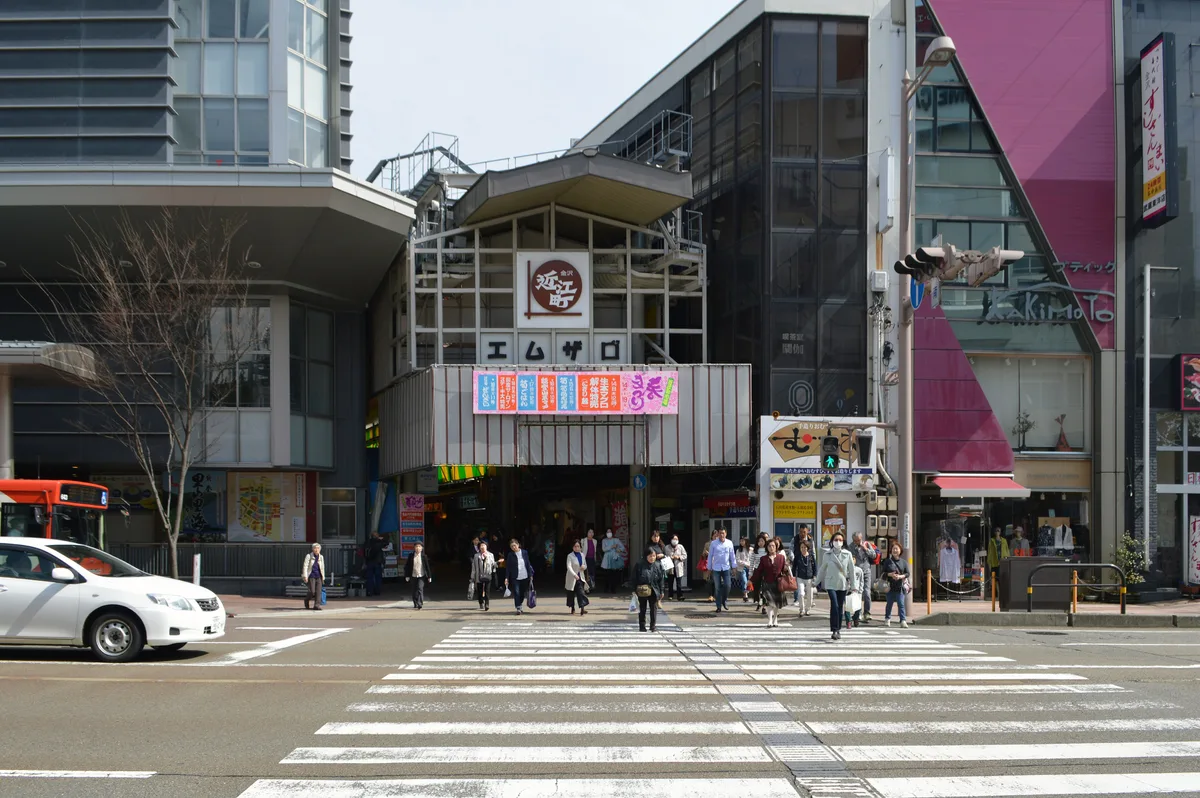
Why Omicho Market is worth the detour
Kanazawa built its wealth on the Sea of Japan’s cold currents, and Omicho Market is where that wealth still lands every morning. Ice-packed crates of snow crab, glossy discs of botan shrimp, and fat scallops in their shells crowd the stalls. Vendors in rubber boots call out prices in a Kanazawa dialect that rolls faster than you’d expect. This has functioned as the city’s kitchen for centuries, and it still feels like one.
Getting there and getting oriented
The market sits right in central Kanazawa, at 50 Kamiōmichō, a short walk from the Katamachi and Korinbo shopping districts. From Kanazawa Station’s east exit, hop the Kanazawa Loop Bus and get off at the Omicho Market stop. Walking takes roughly 15-20 minutes if the weather’s cooperating.
Inside, it’s a warren of narrow, roofed alleys branching off a main covered street. Don’t expect a single tidy building. It’s more a cluster of stalls stitched together under a glass-and-steel canopy that’s been rebuilt since its Edo-period start.
What to eat and see
Seafood is the headline act, but the market rewards slow wandering.
- Kaisendon (seafood rice bowls) piled with sashimi-grade crab, uni, and salmon roe
- Nodoguro (blackthroat sea perch), a Hokuriku specialty often grilled or served raw
- Kanazawa’s own Kaga vegetables, knobby lotus root, sweet potatoes, and stubby cucumbers
- Fresh oysters shucked to order at counter stalls
- Wagashi and mochi stands tucked between the fish counters for something sweet after
Several upstairs and side-alley counters turn the morning’s catch into breakfast bowls before 10am. Sit at the counter and watch the knife work. It’s part of the show.

When to go
The market runs 9am to 5pm every day of the week, so there’s no early-bird loophole before opening. The calmest stretch is right at opening on either weekday or weekend mornings, before the tour groups arrive. Avoid 11am to 3pm on weekends specifically. That’s when the lanes bottleneck with cameras and shopping bags. A weekday morning right after 9am is your best bet for actually seeing the stallholders work rather than the backs of other visitors’ heads.
How to visit like a local
Omicho isn’t a quiet, undiscovered corner of Kanazawa. It’s one of the city’s most-visited food destinations, so plan around the crowds rather than expecting to dodge them entirely.
- Arrive at or just after 9am, especially on a weekday, for elbow room and fresher morning selections
- Bring cash for smaller stalls; many now take IC cards or credit cards, but not all do
- Point and ask “kore, kudasai” (this, please) if you don’t speak Japanese, vendors are used to it
- Skip the urge to haggle; prices are generally fixed, unlike some Asian markets
- Eat where you buy, many stalls sell single oysters or skewers meant to be eaten standing right there, not carried off
- Watch for the second, quieter arcade past the main covered street, where locals still buy daily groceries alongside the tourist-facing seafood counters
The biggest mistake visitors make is treating Omicho purely as a photo op and rushing the food stalls near the entrance. Push a little further in, the crowd thins, the produce stalls appear, and you start to see the market that actually feeds Kanazawa’s restaurants and households, not just its visitors.
Nearby to pair with your visit
Kanazawa rewards a full day out. After the market, Kenrokuen Garden and Kanazawa Castle Park are both within a 20-25 minute walk or short bus ride, making an easy pairing with a market breakfast. The Higashi Chaya geisha district, with its lattice-fronted teahouses, sits on the opposite side of the Asano River and makes a natural afternoon follow-up.
Frequently asked questions
What are Omicho Market's opening hours?
It's open daily from 9:00 AM to 5:00 PM, with no variation across the week — so there's no early-morning window before opening to beat the gates.
When is the quietest time to visit Omicho Market?
Right at opening, 9am, on either a weekday or weekend, is calmest. Avoid 11am to 3pm on weekends, when it's busiest with tour groups and day-trippers.
How do I get to Omicho Market from Kanazawa Station?
Take the Kanazawa Loop Bus from the station's east exit to the Omicho Market stop, about 10 minutes. Walking takes 15-20 minutes.
How much time should I budget for a visit?
An hour is enough to wander the stalls, but plan 90 minutes to two hours if you want to sit down for a seafood rice bowl breakfast.
What should I eat at Omicho Market?
Try kaisendon (seafood rice bowls), fresh-shucked oysters, nodoguro (blackthroat sea perch), and Kaga vegetables specific to the Kanazawa region.
Plan your trip to Kanazawa
Japan eSIM & staying connected →
Some links above are affiliate links — if you book through them, Wander Atlas earns a small commission at no extra cost to you. It's how we keep every guide free.
Related guides
 trendy
 Curio Espresso and Vintage Design Café: Kanazawa Travel Guide
 restaurant
 Kourin Sushi: Where to Eat in Kanazawa
 attraction
 Kanazawa Castle Park: Travel Guide (4.3★)
 attraction