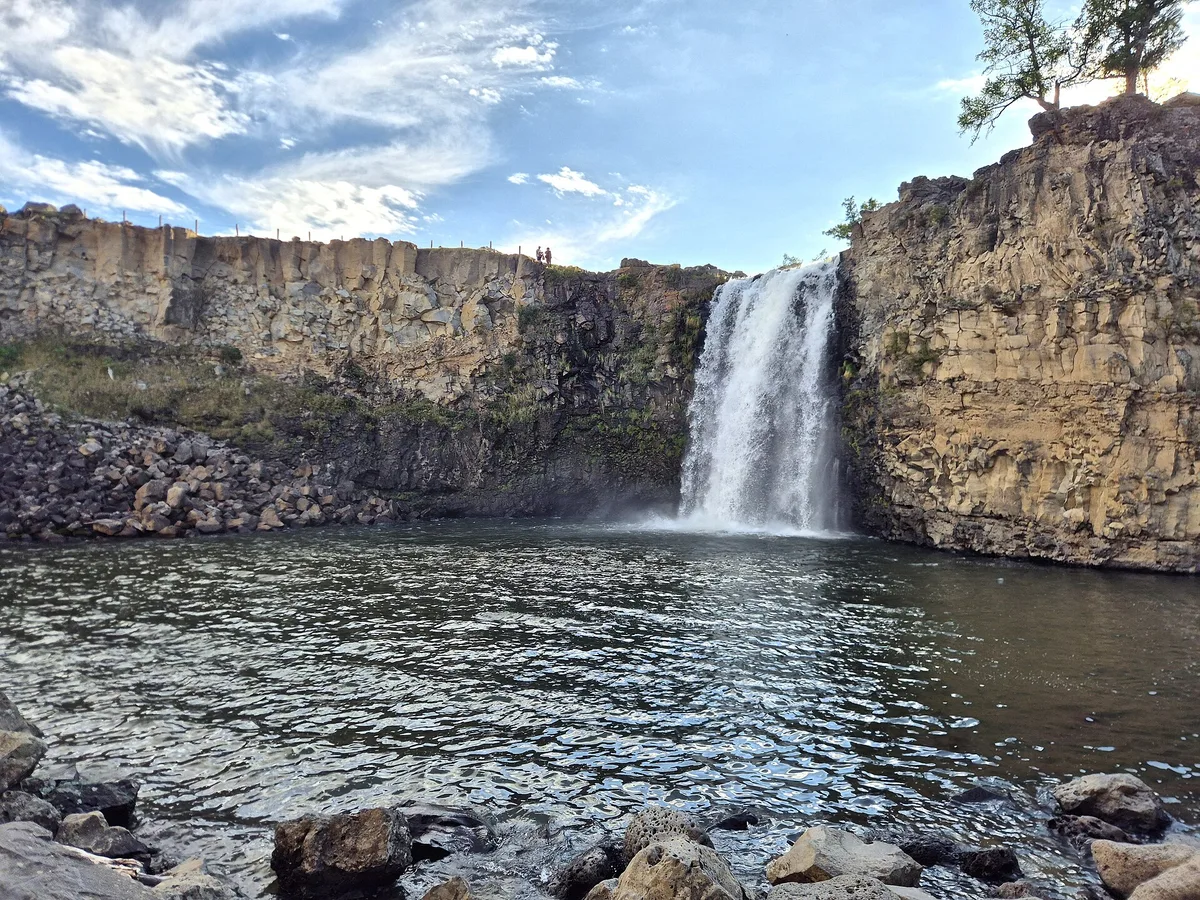
A river that drops into the steppe
The Orkhon River runs flat across open grassland, then falls into a black basalt crack. That gorge was formed by ancient volcanic and seismic activity. Most sources put the drop at about 20 metres, and the cliff edge has no railings. Larch-dotted hills and grazing yak and horse herds surround the rim.
The falls lie inside the Orkhon Valley Cultural Landscape, a UNESCO World Heritage Site since 2004. In Mongolian it’s Ulaan Tsutgalan, the “Red Waterfall”. This corner of the valley is still well off the main circuit. On a lot of days you’ll share the rim with a few drivers and a herding family.
The road from Kharkhorin
You can’t get here by public transport. Most visitors hire a driver with a Russian UAZ van or a Land Cruiser, either in Kharkhorin or as part of a central Mongolia tour from Ulaanbaatar.
- Distance: roughly 120 km from Kharkhorin, mostly on dirt tracks and rocky river crossings.
- Time: expect several hours each way, and longer after rain, when the tracks turn to mud.
- Route: many itineraries combine the falls with Tövkhön Monastery, which sits on a forested ridge in the same direction.
- Signal: mobile coverage comes and goes, so agree a pickup plan with your driver before you set off.
When the water is worth it
Water levels decide the visit. The rains come in July and August, and that’s when the falls run broad and brown-white. In a dry spring or early summer the flow can shrink to ribbons. Ask your driver about recent rainfall before you commit to the drive.
In winter the falls freeze into a column of ice, and very few people make the trip. The site is open grassland with no gate, but road conditions limit when you can actually reach it, so check with local operators.
Down into the gorge, and into the gers
A steep, rough path leads to the bottom of the gorge. You’ll need shoes with real grip and both hands free. From the base you look up at the full curtain of water and the dark columns of rock. Allow 1–2 hours at the site in total.
Herding families set up nearby in summer, and several ger camps sit within reach of the rim. If you’re invited into a ger, a few customs matter:
- Step over the threshold, never on it.
- Move clockwise once you’re inside.
- Take a bowl of tea or airag (fermented mare’s milk) with your right hand, or with both hands, and at least sip it.
- Don’t point your feet at the stove or the family altar.
Bring Mongolian tögrög in cash for horse rides, yak rides or dairy snacks bought from families. Card readers are rare out here. Rangers may collect a protected-area fee: pay the posted amount and keep the receipt. Pack all your rubbish out, because there’s no collection at the falls.
Lots of travellers also stop at the Khujirt hot springs on the way back, or go on to Naiman Nuur (the Eight Lakes) on horseback. Then they finish at Erdene Zuu Monastery in Kharkhorin.
Frequently asked questions
How do I get to Orkhon Waterfall from Kharkhorin?
By hired 4x4 with a driver. It's about 120 km, mostly on dirt tracks, and takes several hours each way, more after rain. No public transport goes there.
When is the best time to see the waterfall flowing?
July and August, after the summer rains. In a dry spring or early summer the flow can be thin, and in winter the falls freeze over.
Can you walk down to the bottom of the falls?
Yes. A steep, rough path drops into the basalt gorge. Wear shoes with good grip and keep your hands free. Plan on 1–2 hours at the site.
Is there anywhere to stay near Orkhon Waterfall?
Several ger camps and summer herding families are close to the falls. Most travellers stay one night instead of doing the round trip from Kharkhorin in a day.
What else is nearby?
Tövkhön Monastery, the Khujirt hot springs, Naiman Nuur (Eight Lakes) by horse, and Erdene Zuu Monastery back in Kharkhorin.
Plan your trip to Kharkhorin
Mongolia eSIM & staying connected →
Some links above are affiliate links — if you book through them, Wander Atlas earns a small commission at no extra cost to you. It's how we keep every guide free.
Related guides
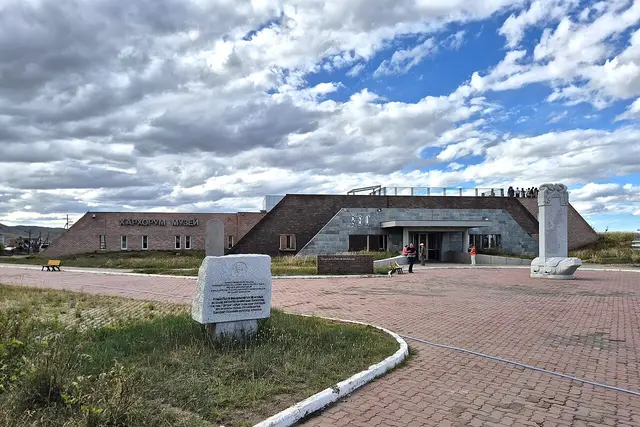 attraction
 Kharakhorum Museum: Kharkhorin Travel Guide (4.5★)
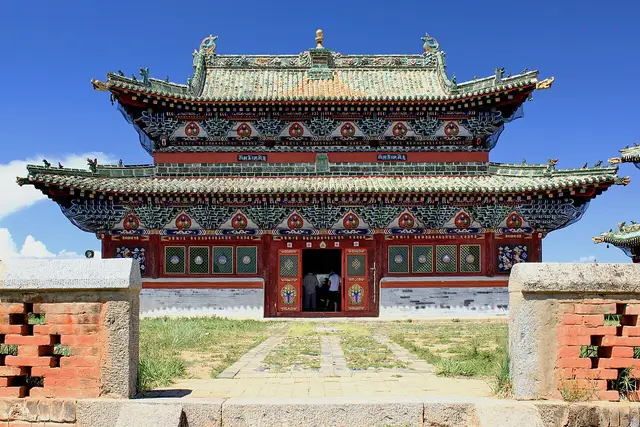 attraction
 Erdene Zuu Monastery: Kharkhorin Travel Guide (4.5★)
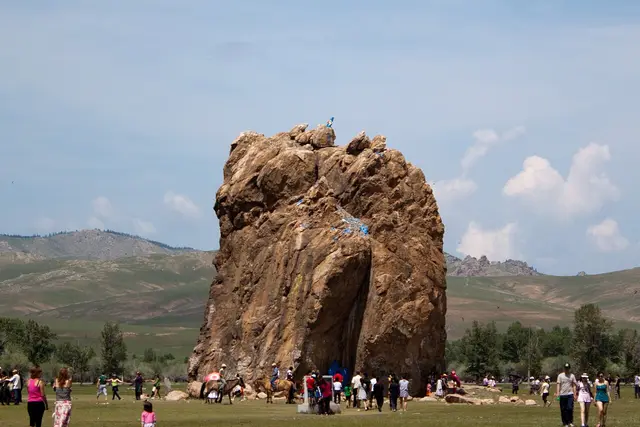 attraction
 Taikhar Rock: Tsetserleg Travel Guide (4.3★)
 attraction