Ruins on Both Banks of the Ongi
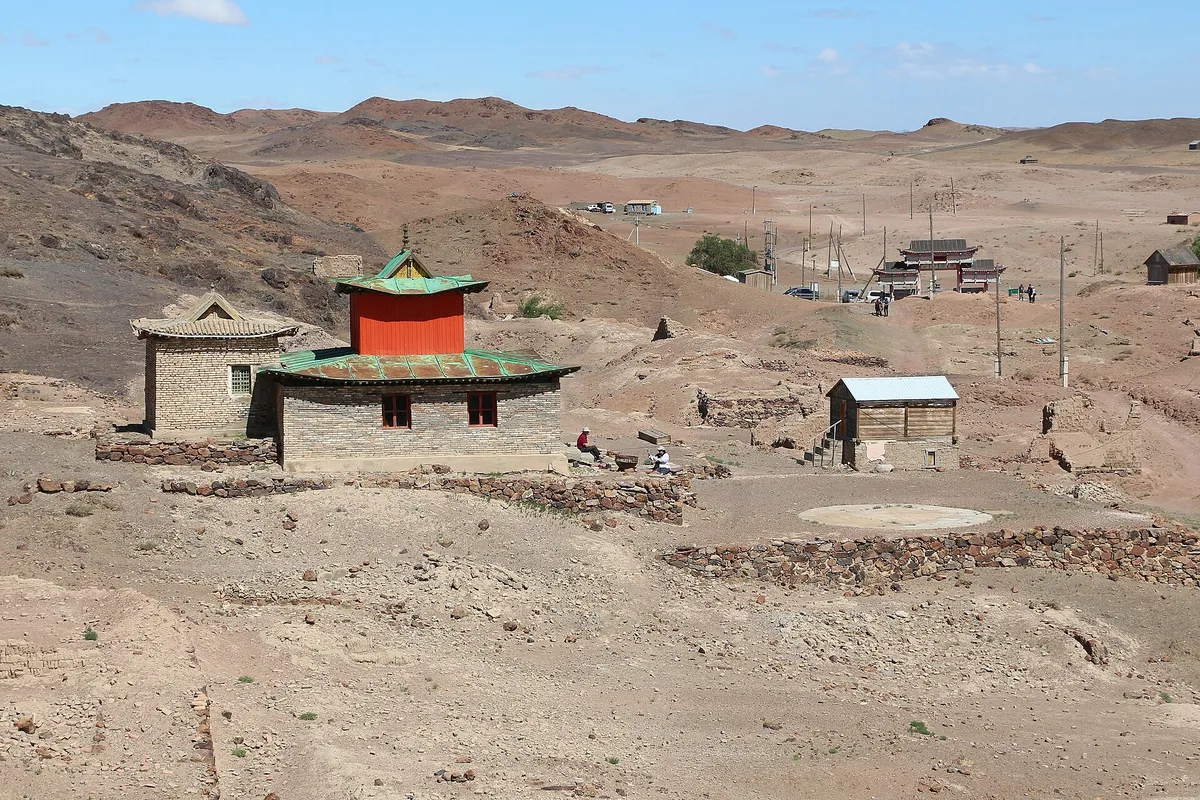
The ground here is made of broken walls. Low ridges of clay brick and stone run across the slopes on both sides of the Ongi River. Most are worn down to knee or waist height, and they follow the outlines of temples that stood here for nearly three centuries.
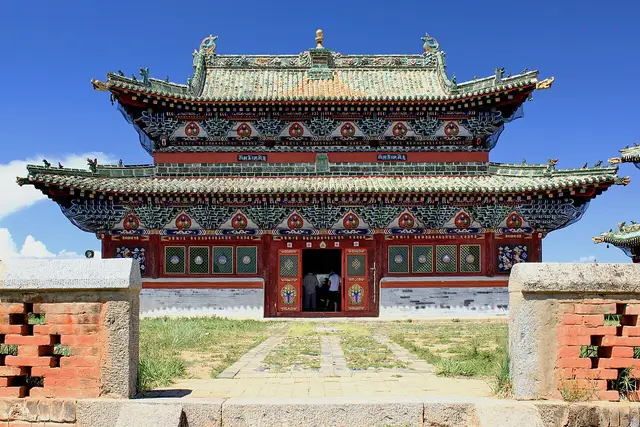
Between them is open steppe edging into the Gobi: gravel, short grass and a wide sky. Look closer and you start to see doorways, courtyard edges and the round bases of collapsed stupas. A small rebuilt temple and its prayer flags give the eye the only bright colour in the valley.
Two Monasteries, One Purge
Ongi was really two monasteries facing each other across the water. Most accounts give 1660 as the founding date. Over the following centuries Barlim Khiid on one bank and Khutagt Khiid on the other grew into one of the largest Buddhist centres in Mongolia, home to around a thousand monks at its height.
That ended in 1939. During the communist purges under Choibalsan the complex was torn down and many of its monks were killed, as happened at hundreds of monasteries across the country. What you walk through today is the result of that year. Knowing it changes how the empty valley feels.
Religious life came back after 1990. A handful of monks returned, a modest temple went up among the ruins, and a small museum now displays objects connected to the site.
Reading the Ruins on Foot
The ruins are spread out, so you’ll be on uneven ground. Here’s how to see them well:
- Cross the river. Tour groups often stay on one bank. The other side has its own spread of walls and a better view back across the valley.
- Climb a slope. From a small rise you can see the layout of courtyards and temple footprints, which is impossible to read from inside them.
- Watch your step. The bricks are loose and the gravel slides. Don’t climb on the walls: they are fragile, and for many visitors this is still a sacred site.
- Look at the river itself. The Ongi often runs low or stops in stretches. Mining upstream has damaged it, and in the 2000s it became the focus of one of Mongolia’s best-known grassroots environmental campaigns.
Inside the Rebuilt Temple
The temple is small, and you’ll get round it in minutes. Inside you’ll find the usual furnishings of a Mongolian Buddhist temple: butter lamps, painted images and offerings laid out in front of the altar. If monks are present, you may arrive during chanting.
The temple and museum keep the listed hours, which are currently 9am–5pm every day. As at most places of worship, those hours can change through the year and on religious holidays. Ask at your ger camp or check with your driver before you go. Plan to reach the temple well before 5pm so you aren’t standing at a closed door.
Temple Manners on the Ongi River
You won’t see crowds here, but you are walking into a working temple and a memorial. Mongolian Buddhist etiquette is simple to follow:
- Walk clockwise around the temple, the stupas and any ovoo (the stone cairns hung with blue khadag scarves). If you’d like to join in, add a stone as you pass the ovoo.
- Take off your hat indoors. Cover your shoulders and knees.
- Never point your feet at the altar or at monks. When you sit, tuck them under you or to one side.
- Ask before taking photos inside. Shooting the ruins outside is fine. The interior is often a different matter.
- Leave a donation in the box if you want to give. No amount is posted or expected. Hand things over with your right hand, with your left touching your right forearm, the way Mongolians do.
Drivers and guides on Gobi tours know these customs well. If you’re unsure about something, ask them quietly.
Getting Here from Dalanzadgad
Ongi is in Dundgovi Province, north-west of Dalanzadgad. The drive takes several hours on a mix of tarmac and dirt track. Very few people come independently. Most arrive by 4x4 or Russian UAZ van as part of a multi-day Gobi loop, usually between Ulaanbaatar and the southern sights around Dalanzadgad, such as Bayanzag (the Flaming Cliffs) and Yolyn Am.
There is no public transport to the ruins. If you’re putting a trip together in Dalanzadgad, hire a driver who already knows the route. Tracks split often out here and phone signal comes and goes. Bring water and snacks for the drive. Shops along the way are few and far apart.
Timing the Visit
This is somewhere to stay the night, not just pass through. Several ger camps sit near the river. Sleeping at one gives you the ruins in low morning or evening light, when the brickwork turns warm and the shadows show the outlines of buildings that have otherwise gone.
Late spring through early autumn is the usual season for Gobi tours. Summer days can be hot, so do your walking early or late and keep the temple for the middle of the day while it’s open. Allow one to two hours for the ruins, the temple and the museum, and a little more if you want to cross the river and climb for the view.
Since this is one of the quieter stops on the Gobi circuit, you may have whole stretches of the ruins to yourself. Make time for that.
Frequently asked questions
How do I get to Ongi Monastery from Dalanzadgad?
By road, with a driver. Ongi is in Dundgovi Province, several hours north-west of Dalanzadgad on a mix of tarmac and dirt track. No public transport goes there, so most visitors come by 4x4 or UAZ van as part of a multi-day Gobi tour.
What are the opening hours?
The temple and museum currently open 9am–5pm every day. Hours at places of worship can shift with the season and on religious holidays, so check with your ger camp or driver before you go.
How long should I spend at Ongi Monastery?
Allow one to two hours for the ruins on both banks, the rebuilt temple and the small museum. A lot of travellers stay overnight at a nearby ger camp to see the ruins in morning or evening light.
What happened to Ongi Monastery?
It was founded in the 17th century as two monasteries facing each other across the Ongi River, and it grew into one of Mongolia's largest Buddhist centres. It was destroyed in 1939 during the communist purges. Monks returned after 1990 and built a small temple among the ruins.
Is there etiquette I should follow?
Yes. Walk clockwise around the temple, stupas and ovoo cairns. Take off your hat indoors, don't point your feet at the altar or at monks, and ask before taking photos inside the temple.
Plan your trip to Dalanzadgad
Mongolia eSIM & staying connected →
Some links above are affiliate links — if you book through them, Wander Atlas earns a small commission at no extra cost to you. It's how we keep every guide free.
Related guides
 attraction
 Yolyn Am Canyon: Gobi Gurvansaikhan National Park Travel Guide
 attraction
 Kharakhorum Museum: Kharkhorin Travel Guide (4.5★)
 attraction
 Orkhon Waterfall: Kharkhorin Travel Guide (4.7★)
 attraction