
A lane that was once a drain run
It takes about thirty seconds to walk the whole thing. Kwai Chai Hong is a single back alley behind a row of pre-war shophouses in Kuala Lumpur’s Chinatown. For decades it was a service lane of drainpipes and rubbish bins. It reopened in 2019 after a restoration project turned it into an open-air gallery of murals.
You step in off Lorong Panggung, and the city noise drops away. Two-storey shophouse walls rise on either side, their rear windows and shutters left in place. Red lanterns hang on wires strung overhead. The painted figures on the walls are life-sized, so the lane feels peopled even when it’s empty.
What’s painted on the walls
The murals show everyday Chinatown life from around the 1960s. Children play, and residents lean out of windows and go about their chores in the lane. Many are painted to fit the real architecture, so a figure seems to look out from a real window frame or sit on a real ledge.
A few things to look for as you walk:
- The entrance arch, with the lane’s Chinese name, which most people photograph first
- Figures built around the old windows and doors, where the painting and the building blur
- The lanterns overhead, which frame almost every shot looking down the lane
- Small details low on the walls, easy to miss if you only shoot at eye level
This is a place for photographs rather than a museum with labels. Twenty to forty minutes is plenty, unless you stop for a drink nearby.
Why it’s called “Little Ghost Lane”
Kwai Chai Hong is Cantonese, and it translates roughly as “Little Ghost Lane”. Most accounts say the name comes from the lane’s rougher past. The “little ghosts” were the kids and small-time gangsters who once hung around these back streets.
That history is the reason the murals exist. The restoration set out to remember the families who lived in these shophouses, not only to decorate a wall. Knowing this changes how you read the paintings. The kid on the wall stands for the kind of child the lane was named after.
Beating the camera queue
Kwai Chai Hong is well known and it gets crowded, so this section is about timing. The lane is narrow. A few groups posing at once can block the popular murals for minutes at a time.
On weekdays it’s calmest between 9am and 11am. At weekends the quiet window is shorter, 9am to 10am. Try not to arrive between 1pm and 11pm on a Saturday or Sunday. That’s the busiest stretch, and it runs almost until closing.
The lane is open every day from 9am to midnight, so an early start works any day of the week. Morning light also sits more evenly between the tall walls than the hard glare of midday.

Lane manners among the murals
Everyone here wants the same few photos, so there’s an unspoken queue. Stand back, wait until the group in front has finished, then take your turn. Keep your own session short. Don’t set up a tripod in the middle of the lane, because there’s no other way past.
Some practical habits to follow:
- Don’t touch or lean on the murals. The paint takes enough of a beating from the humidity.
- Keep your voice down near the upper windows. The buildings around Chinatown are still in use.
- Pay the local way. Cafés and shops nearby usually take cards, and many also take Malaysian e-wallets such as Touch ‘n Go. Carry a little cash for street stalls on Petaling Street.
- Plan for the heat. The lane has no shade to speak of at midday, so bring water.
If a mural has a queue, walk to the far end and come back. Groups tend to cluster near the entrance.
Getting to Lorong Panggung
The lane sits at the southern edge of Chinatown, near where Jalan Petaling meets Jalan Sultan. The easiest rail stop is Pasar Seni, which serves both the LRT Kelana Jaya Line and the MRT Kajang Line. From there it’s a walk of roughly ten minutes through Chinatown.
Maharajalela Monorail station and Plaza Rakyat LRT station are also within walking distance. If you take a Grab, enter “Kwai Chai Hong” rather than the street name. Lorong Panggung is a tiny road, and drivers usually drop you on the main street nearby.
The streets around here are narrow and often jammed with traffic. Walking from the train is usually faster than a car at weekends.
Under the lanterns after dark
The lane changes once the sun goes down. The red lanterns come on and throw a warm light onto the painted walls. It suits people who find the daytime heat too much. It’s open until midnight, so there’s no rush.
Evening is also when it’s busiest, especially at weekends, so treat it as an atmosphere visit rather than a photo session. Weekday evenings are the better bet if you want the lanterns without a crowd.
Making a Chinatown loop of it
Kwai Chai Hong works best as one stop on a half-day walk rather than the reason for the trip. Places within a few minutes on foot:
- Petaling Street, Chinatown’s covered market street, for stalls and street food
- Sri Mahamariamman Temple, on Jalan Tun H.S. Lee, the oldest Hindu temple in Kuala Lumpur, with its tall carved gopuram
- Guan Di Temple, a short way along the same road, dedicated to the Chinese god of war
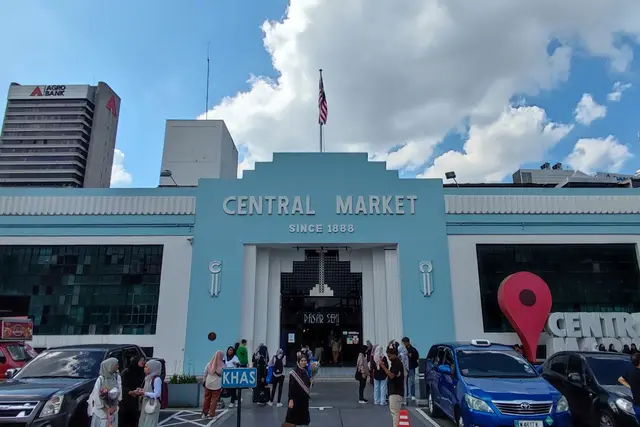
- Central Market (Pasar Seni), a blue-and-white Art Deco building full of Malaysian crafts, next to the station
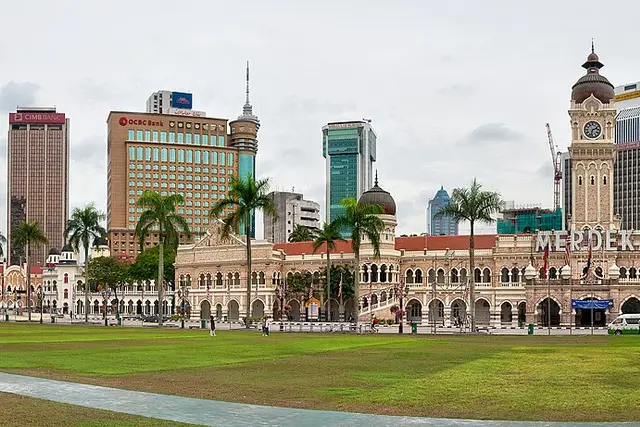
- Merdeka Square, a longer walk north, if you want colonial-era architecture
A good plan is to arrive at Kwai Chai Hong right at 9am. Then work north through the temples and Petaling Street before the midday heat and the afternoon crowds arrive.
Frequently asked questions
When is the quietest time to visit Kwai Chai Hong?
On weekdays it's quietest from 9am to 11am. At weekends the calm window is 9am to 10am. Weekends from 1pm to 11pm are the busiest, so avoid them if you want clear photos.
What are Kwai Chai Hong's opening hours?
It's open every day from 9am to midnight.
How do I get to Kwai Chai Hong by train?
Take the LRT Kelana Jaya Line or the MRT Kajang Line to Pasar Seni, then walk about ten minutes into Chinatown to Lorong Panggung. Maharajalela Monorail and Plaza Rakyat LRT are also within walking distance.
How long should I spend at Kwai Chai Hong?
The lane itself takes 20 to 40 minutes, including photos. Most people add Petaling Street, Sri Mahamariamman Temple, Guan Di Temple and Central Market nearby to make a half-day walk.
Is Kwai Chai Hong worth visiting at night?
Yes, if you want atmosphere. The red lanterns light up the murals after dark. Evenings are busy, though, especially at weekends, so for photos go on a weekday morning.
Plan your trip to Kuala Lumpur
Some links above are affiliate links — if you book through them, Wander Atlas earns a small commission at no extra cost to you. It's how we keep every guide free.
Related guides
 hidden gem
 Central Market: Kuala Lumpur Travel Guide (4.4★)
 hidden gem
 Batu Caves: Kuala Lumpur Travel Guide
 attraction
 Islamic Arts Museum Malaysia: Kuala Lumpur Travel Guide
 attraction