Jidai Matsuri: Dates, Tickets & Venue (Kyoto)

How this guide is made
Produced with AI assistance and reviewed against live data sources. Facts such as hours, ratings, and location come from Google Places; images are licensed or public domain. Details can change — please verify before visiting. Editorial policy
Kyoto stages three great festivals a year, and Jidai Matsuri is the one that turns the streets into a walking history textbook. On October 22, 2026, roughly two thousand people in costume move from the old Imperial Palace grounds down through the city to Heian Shrine, each block of marchers representing a different era of Japanese history, in reverse chronological order from the Meiji Restoration back to the eighth century.
That structure is what makes it different from a generic parade. You are not watching a themed float show; you are watching Kyoto’s own idea of its history, staged by neighbourhood associations that have done this since 1895.
What the parade actually shows you
The procession is organized into roughly twenty groups, each built around a historical period.
- Meiji-era imperial guards and Restoration-era loyalists open the march
- Edo-period feudal lords, samurai retainers, and their attendants
- Momoyama and Azuchi warlords in armor associated with Oda Nobunaga and Toyotomi Hideyoshi
- Muromachi and Kamakura-era court and warrior dress
- Heian-period nobility, including a re-creation of Lady Murasaki Shikibu’s court
Two portable shrines (mikoshi) carrying the spirits of Emperors Kanmu and Komei, Kyoto’s founding and final emperors, close out the religious core of the event. Costumes, armor, and hairstyles are researched and rebuilt by local textile and craft guilds, not rented from a costume house, which is why Kyoto treats this parade as a living archive as much as a spectacle.
Getting there and reading the route
The parade begins near the Kyoto Imperial Palace (Kyoto Gyoen), moves down Karasuma-dori, turns onto Oike-dori, continues along Kawaramachi-dori, and finishes at Heian Shrine in the Okazaki area.
- Nearest stations to the start: Marutamachi or Imadegawa (Karasuma Line)
- Nearest stations to the finish: Higashiyama or Jingu-Marutamachi (Tozai Line)
- Walking between viewing points along Oike-dori or Kawaramachi-dori is easy since the route runs mostly straight through central Kyoto
Most spectators pick one fixed spot along the route rather than following the parade, since it moves at walking pace over several hours and side streets fill in fast once it passes.
Free viewing versus reserved seating
Standing room along most of the route costs nothing. You simply find a curb along Karasuma-dori, Oike-dori, or Kawaramachi-dori and wait.
Paid reserved seating, arranged through the Kyoto City Tourism Association, is sold for sections nearer the start of the route, usually as grandstand-style seats with a clear sightline. This is worth it if you want to sit rather than stand for a couple of hours, or if you are visiting with people who tire easily on their feet.
Confirm timing and tickets on the official site, since reserved-seat details and exact start times are set by the organizers each year and should not be assumed from a previous year’s schedule.
The Kurumayose departure ritual
Before the main parade even starts, there is a smaller, quieter ceremony worth knowing about: the Kurumayose, where the imperial mikoshi are formally sent off from the Kyoto Gyoen grounds with Shinto rites. It draws a much thinner crowd than the parade route itself, largely local families and shrine parishioners, and gives you a close, unhurried look at priests and shrine staff before the costumed procession takes over the streets. If you arrive early, this is the moment that rewards patience.
Weather, timing and how long to stay
Late October in Kyoto sits between the last of the autumn heat and the start of proper cool weather, so mornings can be mild and afternoons can turn breezy once the sun drops behind the hills. The parade itself runs for several hours from late morning into early afternoon, but you do not need to watch the whole thing from one spot.
Most visitors budget one to two hours: enough to see a meaningful cross-section of eras pass, take photographs, and step away before the crowd context. If Heian Shrine is your priority, arrive there in early afternoon rather than at the very start, since the earliest historical groups take the longest to reach the finish.
Blending in at the roadside
Kyoto residents treat Jidai Matsuri as a familiar autumn fixture rather than a novelty, so the etiquette at the roadside is understated.
- Fold-up stools or portable chairs are common among locals staking out a curb spot early; nobody minds if you bring one
- Sections directly in front of shops or private gates are informally claimed by regulars, so it is polite to find open curb space rather than crowd an existing group
- Photography is welcome, but stepping into the street to get closer is discouraged and is watched by event marshals stationed along the route
- Vendors and convenience stores nearby sell drinks and snacks, so there is no need to pack a full meal, just something to sip while you wait
Payment everywhere in the area is a normal mix of cash and IC transit cards, and there is no separate fee for standing along the free sections of the route.
Combining it with the rest of Kyoto that day
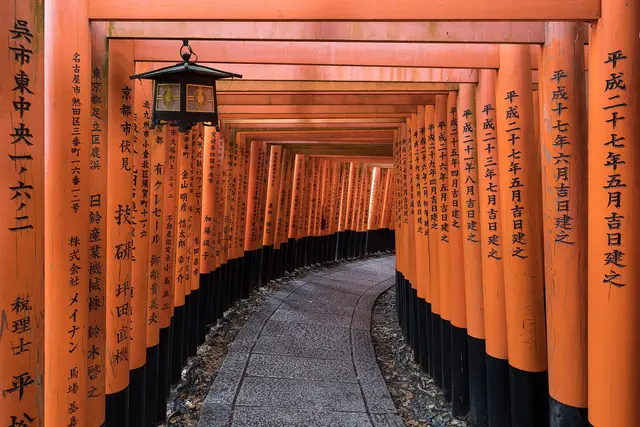
Because the route runs right past Heian Shrine, many visitors treat the parade’s end as the start of an afternoon at the shrine itself: its vermilion torii gate and gravel courtyard are a short walk from the finish line. The Okazaki area around the shrine also has canal paths and museums, including the Kyoto Municipal Museum of Art, that make sense as a follow-on stop once the crowds along Kawaramachi-dori start to thin out.
Frequently asked questions
What are the dates for Jidai Matsuri 2026?
The parade is scheduled for October 22, 2026, running from the Kyoto Imperial Palace grounds to Heian Shrine. Confirm timing on the official site, since weather-related rescheduling has happened in past years.
Do I need a ticket to watch Jidai Matsuri?
No ticket is needed for standing views along most of the route on Karasuma-dori, Oike-dori, and Kawaramachi-dori. Paid reserved grandstand seating is available near the start of the route through the Kyoto City Tourism Association for those who want a seat.
Which station should I use to reach the parade?
For the start near the Imperial Palace, use Marutamachi or Imadegawa station on the Karasuma subway line. For the finish at Heian Shrine, use Higashiyama or Jingu-Marutamachi station on the Tozai line.
How long does the parade take to watch?
The full procession runs for several hours from late morning into early afternoon, but most visitors watch from one spot for one to two hours rather than following the whole route.
What else can I do nearby after the parade?
Heian Shrine sits right at the finish line, and the surrounding Okazaki area has canal paths and museums, including the Kyoto Municipal Museum of Art, making it an easy add-on for the rest of the afternoon.
Plan your trip to Kyoto
Some links above are affiliate links — if you book through them, Wander Atlas earns a small commission at no extra cost to you. It's how we keep every guide free.
Related guides

More Kyoto guides: Kinkaku-jiYoichiba, Kyoto (Nakagyo)