Kyoto National Museum: Travel Guide (4.3★)
✓ Facts verified via Google Places · Sep 17, 2026
At a glance
Opening hours
- Monday: Closed
- Tuesday: 9:30 AM – 5:00 PM
- Wednesday: 9:30 AM – 5:00 PM
- Thursday: 9:30 AM – 5:00 PM
- Friday: 9:30 AM – 8:00 PM
- Saturday: 9:30 AM – 5:00 PM
- Sunday: 9:30 AM – 5:00 PM
Live foot-traffic data via BestTime.app
How this guide is made
Produced with AI assistance and reviewed against live data sources. Facts such as hours, ratings, and location come from Google Places; images are licensed or public domain. Details can change — please verify before visiting. Editorial policy
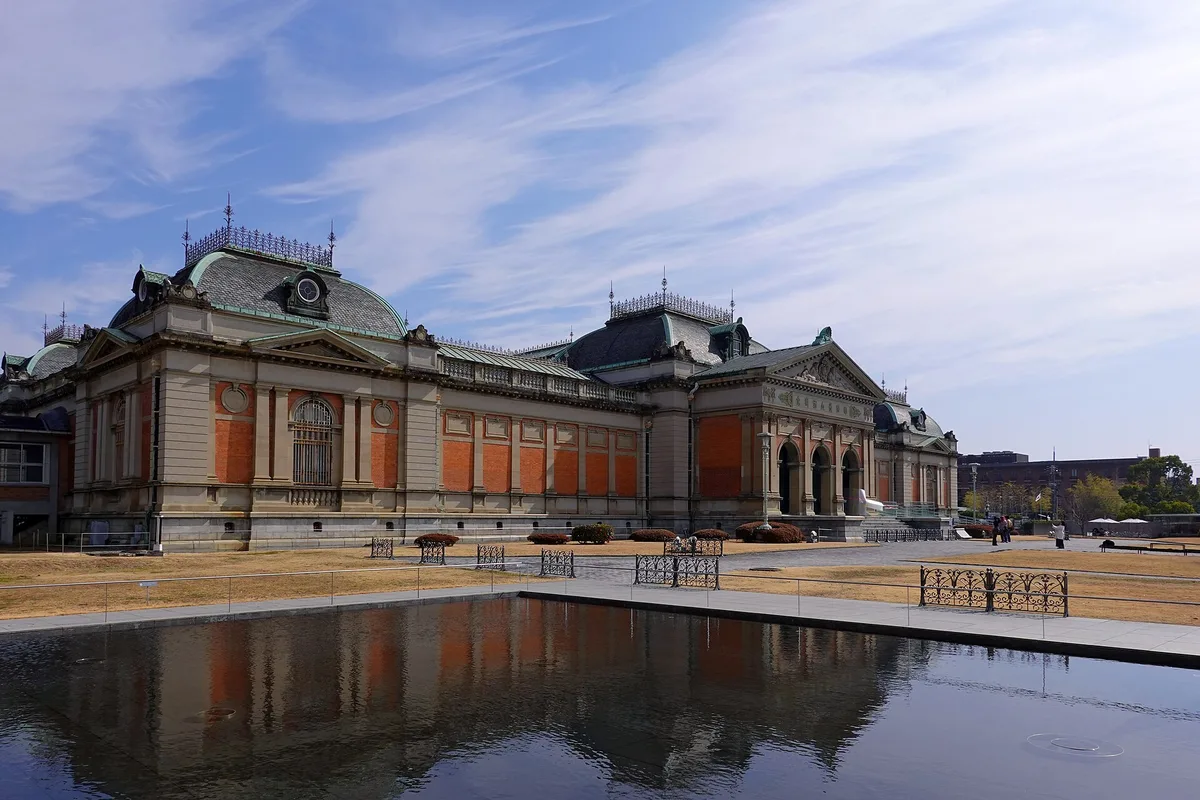
Cross the Shichijo-dori intersection in Higashiyama and the museum announces itself with a red-brick facade from 1895, the old Meiji-era building that now serves mostly as an event space, standing beside the newer Heisei Chishinkan Wing where the permanent collection actually lives. The contrast is the first thing worth noticing: French Renaissance-style brick on one side, a low glass-and-stone Yoshio Taniguchi building on the other.
You buy your ticket, cross the courtyard, and the two centuries of Japanese museum-building are laid out side by side before you’ve seen a single object.
Inside the Heisei Chishinkan Wing, the collection runs across three floors: Buddhist sculpture on the ground level, then ceramics, metalwork, lacquerware, calligraphy and painting as you move up. The sculpture hall is the one people remember, wooden Buddhist statues from temples across the Kyoto region, some over a thousand years old, arranged with enough space around each piece that you can walk a full circle.
The Sanjusangendo connection
This museum exists partly because of its neighbour. Sanjusangendo, the long hall of a thousand Kannon statues, sits just across the street, and many of the museum’s Buddhist works came from temples in the same Higashiyama district over the museum’s long history since it opened in 1897. Pair the two on one visit: the temple gives you the devotional context, the museum gives you the close-up view and the labeling you’ll never get inside a working temple hall. Walking between them takes about five minutes.
What’s actually on display
The permanent collection rotates more than a typical Western museum, partly because paper, silk and lacquer works are fragile and can’t stay lit indefinitely. What you’ll reliably find:
- Buddhist sculpture, mostly wood, from the Heian and Kamakura periods
- Calligraphy and hand scrolls, some tied to specific temples in Kyoto
- Metalwork including swords, mirrors and temple bells
- Ceramics spanning tea-ceremony wares to export porcelain
- A changing special exhibition, usually the reason ticket lines lengthen
Special exhibitions carry separate, higher admission and draw the bulk of the weekend crowd, so check what’s showing before you go if a specific artist or theme is the draw.

Reading the courtyard before you go in
Give yourself ten minutes outside before joining the ticket queue. The garden between the old brick building and the new wing has stone lanterns and Buddhist-related stonework, including old pagoda fragments, scattered along the paths. There’s a large bronze standing figure and a reflecting pool near the entrance that most visitors walk straight past on the way to the ticket machines. It’s worth the detour on the way out instead, when you’re not rushing to beat a closing time.
Timing it around the crowds
This is a very popular stop on the Higashiyama temple circuit, not a quiet back-street find, and it fills up accordingly on weekends. The museum’s own patterns show the crush lands between 10am and 5pm on Saturdays and Sundays, exactly when most tour groups and day-trippers are working through the neighbourhood.
Weekdays run 9:30am to 5:00pm, except Friday when hours stretch to 8:00pm, the single best window for a calmer visit. On weekdays generally, the quietest hour is 5pm to 6pm, though that only applies on the days it’s open that late. Monday is a full closure, so don’t build it into a Monday Higashiyama itinerary at all.
The museum cafe and garden benches
The onsite cafe is a straightforward stop for coffee or a light meal between gallery floors, useful if you’re pairing the museum with a longer Higashiyama walk that includes Sanjusangendo, Kyoto National Museum’s own garden, and maybe Kiyomizu-dera further up the hill. There are also benches scattered through the outdoor stone garden if you’d rather sit outside with a drink from a nearby vending machine and look at the lantern collection instead.
Buying tickets without the wait
Same-day tickets are sold at machines near the entrance, and during special exhibitions these lines are where most of the waiting happens, not at the gallery doors themselves. Advance tickets for special exhibitions are often sold online or through convenience store terminals in Japan, which is worth doing if a major show is running, since same-day queues can stretch well past the ticket booth on weekend afternoons.
Cash and IC transit cards (Suica, ICOCA) are both accepted at the machines. Nobody hovers to check your ticket type inside, so if you’re only after the permanent collection, don’t buy the special exhibition combo ticket by mistake at the machine; the two are usually priced and sold separately.
Getting there is straightforward: the museum sits about a seven-minute walk from Keihan Shichijo Station, and city buses running along Shichijo-dori or Higashioji-dori stop within a couple of minutes of the gate. If you’re coming from central Kyoto Station, it’s a short bus or taxi ride, or a longer walk of around twenty minutes through Higashiyama’s temple streets.
Frequently asked questions
What are the opening hours for Kyoto National Museum?
Tuesday through Sunday 9:30am to 5:00pm, except Friday when it stays open until 8:00pm. It's closed all day Monday.
When is the quietest time to visit?
Weekdays between 5pm and 6pm are calmest, which only works on days it's open that late. Friday's extended hours to 8pm are your best bet for an evening visit with fewer crowds.
When should I avoid going?
Weekends between 10am and 5pm see the heaviest crowds, especially during a special exhibition, so try to arrive right at opening or come on a Friday evening instead.
How long should I plan to spend there?
Two to three hours covers the permanent galleries and a special exhibition if one's running. Add extra time if you're also walking the courtyard garden.
What's nearby if I want to combine this with other sights?
Sanjusangendo, with its hall of a thousand Kannon statues, is directly across the street. Kiyomizu-dera is a further uphill walk through the Higashiyama district if you have a full day.
Plan your trip to Kyoto
Some links above are affiliate links — if you book through them, Wander Atlas earns a small commission at no extra cost to you. It's how we keep every guide free.
Related guides
More Kyoto guides: Yoichiba, Kyoto (Nakagyo) 1.8 kmIMAYA Kyoto &COFFEE 2.9 kmJidai Matsuri