Kiyomizu-dera: Kyoto Travel Guide (4.6★)
When to visit Japan: month-by-month weather, crowds and holidays →
✓ Facts verified via Google Places · Sep 19, 2026
At a glance
Opening hours
- Monday: 6:00 AM – 6:00 PM
- Tuesday: 6:00 AM – 6:00 PM
- Wednesday: 6:00 AM – 6:00 PM
- Thursday: 6:00 AM – 6:00 PM
- Friday: 6:00 AM – 6:00 PM
- Saturday: 6:00 AM – 6:00 PM
- Sunday: 6:00 AM – 6:00 PM
Live foot-traffic data via BestTime.app
How this guide is made
Produced with AI assistance and reviewed against live data sources. Facts such as hours, ratings, and location come from Google Places; images are licensed or public domain. Details can change — please verify before visiting. Editorial policy
Kiyomizu-dera sits partway up Mount Otowa, and you feel the climb before you see the temple: the approach runs through Kiyomizu-zaka and Chawan-zaka, two steep, narrow lanes lined with shops selling pottery, pickles and yatsuhashi cinnamon sweets. By the time the Niomon gate appears, red and looming over a flight of stone steps, you’ve already earned the view.
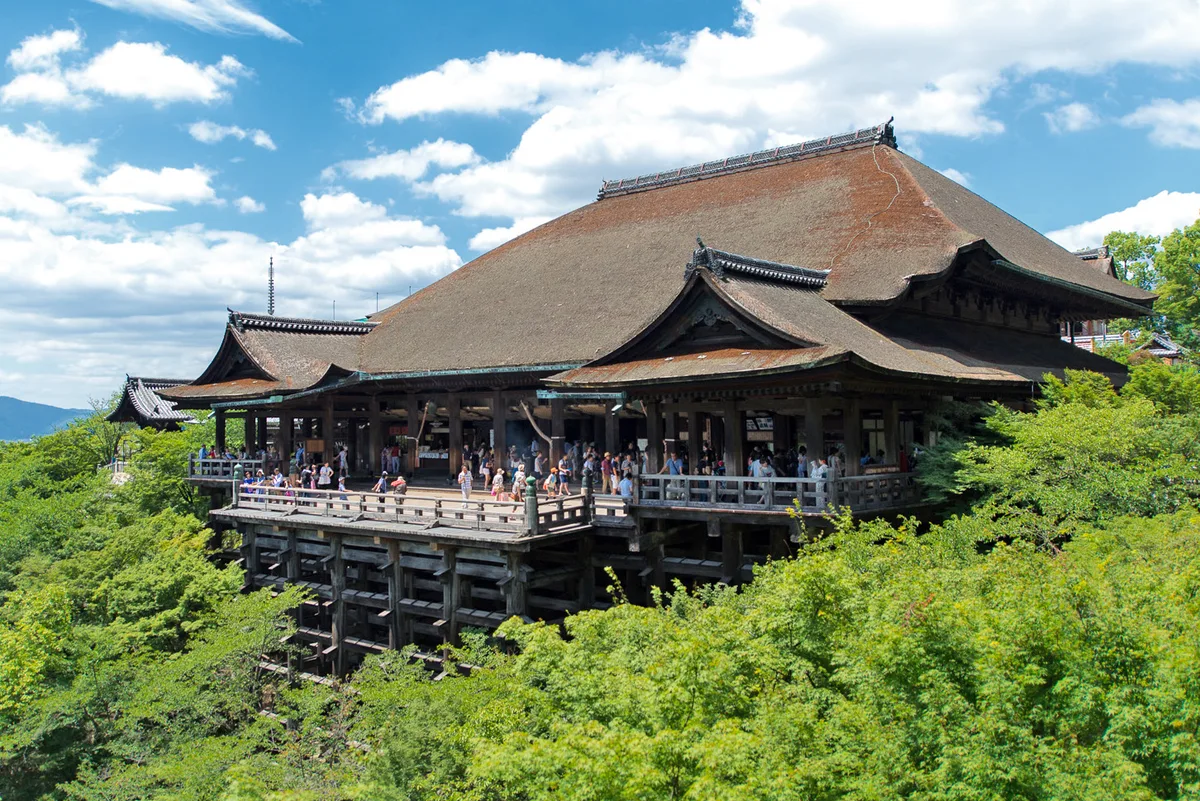
The main hall, Hondo, is the reason 72,000-plus reviewers keep this place at a 4.6 rating. It’s built out over the slope on a lattice of wooden pillars, no nails involved, and the veranda beyond it juts out over the hillside with nothing but treetops and, on a clear day, the Kyoto skyline beneath you.
The veranda everyone photographs
This is the shot you’ve seen: the dark wooden stage suspended above a ravine of maple and cherry trees. In spring the canopy below turns pink; in autumn it’s a wash of orange and red visible from the platform itself. The joinery holding it up is centuries old in design even though the current hall dates to a 1633 rebuild after fire, one of many at this site.
Standing on the veranda, look across to Okunoin and the smaller pagoda-topped halls scattered on the opposite slope. Most visitors shuffle to the rail, take the photo, and move on to the path down toward the waterfall. Give it a minute longer than that; the crowd behind you will not.
Otowa Waterfall and its three streams
Below the main hall, a short path leads down to Otowa-no-taki, the spring for which the temple and the whole mountain are named (“Kiyomizu” means pure water). Three separate streams pour from a wooden channel into a pool.
Tradition holds each stream grants a different fortune: longevity, success in studies, or a good love life. Drink from only one, using the metal cups on long poles provided at the site; drinking from all three is considered greedy and voids the luck. The line here moves quickly but forms fast once tour groups arrive mid-morning.
Timing it around the crowds
Kiyomizu-dera is open 6am to 6pm every day, and that early opening matters more here than at almost any other Kyoto temple. Measured foot traffic shows the calmest window is 7am to 9am, on weekdays and weekends alike.
By 10am the lanes below the Niomon gate start to clog, and the temple stays busy through to about 5pm on weekends. If you can only visit once, arrive at or near 6am; you’ll have the veranda close to yourself before the tour buses reach Higashiyama.
Because this is one of the most visited temples in Japan, “off-peak” here still means other visitors around you, just not the shoulder-to-shoulder crush of midday. Don’t expect solitude, expect breathing room.

Jishu Shrine and the blind walk
Tucked just behind the main hall, Jishu Shrine is dedicated to Okuninushi, a deity associated with love and matchmaking. Two stones sit about eighteen meters apart in the shrine’s courtyard.
The custom: close your eyes and walk from one stone to the other. Reach it without veering off course and, tradition says, your love life is set; if someone helps guide you, it still counts, though supposedly the path to romance won’t be as smooth. It’s a quick, low-effort stop on the way back from the main hall, and usually far less crowded than the veranda itself.
Reaching the temple through Higashiyama
Kiyomizu-dera has no train station directly at its gate; you walk up. From Kiyomizu-Gojo Station on the Keihan Line, it’s roughly a 20-minute uphill walk through the Higashiyama preservation district. Alternatively, city buses (100 or 206) run to the Gojo-zaka or Kiyomizu-michi stops, leaving a 10-minute walk up Chawan-zaka.
There’s no car park at the temple itself, and the surrounding streets are narrow and pedestrian-heavy, so most visitors arrive on foot or by bus. Wear shoes you don’t mind walking uphill in for fifteen to twenty minutes on paved but sloped lanes; wheelchairs and strollers will find some sections of the older stone steps difficult.
What to do with the rest of the hill
Once you’re up here, it’s worth extending the visit rather than turning straight back down. The pagoda at Koyasu-no-To, a short walk from the main complex, is associated with safe childbirth, and the path around it loops past smaller halls most people skip entirely.
On the way down, Sannenzaka and Ninenzaka, the two stepped lanes just below Kiyomizu-zaka, are worth slowing down for. Their wooden facades and tiled roofs are largely preserved Edo-period townscape, and they connect toward Kodaiji and Gion if you want to keep walking rather than heading straight back to the station.
Practical notes before you climb up
A few things make the visit smoother, especially given how many people move through this site daily:
- Go early: 7am–9am is the calmest window on any day of the week.
- Avoid 10am–5pm on weekends if you want space on the veranda.
- Wear flat, grippy shoes; the lanes and temple steps are steep and often uneven stone.
- Bring small cash for the waterfall cups area and nearby shops; many small vendors on Chawan-zaka don’t take cards.
- Check official hours before visiting, since seasonal night illuminations in spring and autumn can extend evening access beyond the standard 6pm close.
Kiyomizu-dera earns its popularity honestly: the wooden veranda, the waterfall ritual, and the walk up through Higashiyama are all doing real work, not just photogenic staging. Go early, and go slow on the way back down.
Frequently asked questions
What time should I arrive at Kiyomizu-dera to avoid crowds?
Aim for 7am–9am; that's the quietest window on both weekdays and weekends. The temple opens at 6am daily, and things get busy from 10am through 5pm, especially on weekends.
How do I get to Kiyomizu-dera?
Walk about 20 minutes uphill from Kiyomizu-Gojo Station on the Keihan Line, or take city bus 100 or 206 to the Kiyomizu-michi or Gojo-zaka stop, then walk 10 minutes up Chawan-zaka. There's no direct train station or car park at the temple.
How long should I plan to spend there?
Budget about 90 minutes for the main temple grounds, including the veranda, Otowa Waterfall and Jishu Shrine. Add another hour if you walk up through the Higashiyama lanes and continue on to Sannenzaka and Ninenzaka afterward.
What's the significance of Otowa Waterfall?
Its three streams are said to grant longevity, success in studies, or a good love life. Drink from only one stream using the provided metal cups; taking water from all three is considered greedy.
Is Kiyomizu-dera worth visiting if I only have one day in Kyoto?
Yes, but go right at 6am opening if your schedule allows only one visit. Combine it with a walk down through Sannenzaka and Ninenzaka toward Kodaiji or Gion to make the most of the Higashiyama area in one trip.
Plan your trip to Kyoto
Some links above are affiliate links — if you book through them, Wander Atlas earns a small commission at no extra cost to you. It's how we keep every guide free.