Seven arts before dinner
Gion Corner works like a tasting menu. Japanese performing traditions usually need a whole afternoon and some background knowledge. Here they arrive as a series of short segments, one after another, in about an hour.
The programme covers the classical arts that Kyoto is known for:
- Kyomai, the Kyoto-style dance performed by a maiko (apprentice geiko)
- Sado, the tea ceremony
- Kado, flower arrangement in the ikebana tradition
- Koto, the long zither with thirteen strings
- Gagaku, ancient court music
- Kyogen, comic theatre that grew up alongside Noh
- Bunraku, puppet theatre in which each puppet is worked by several handlers in view of the audience
Nobody would call this a secret. The show is built for international visitors, and the audience fills up with them every night. Take it for what it is: an honest primer that helps you understand the rest of Kyoto.
Finding the hall on Hanamikoji
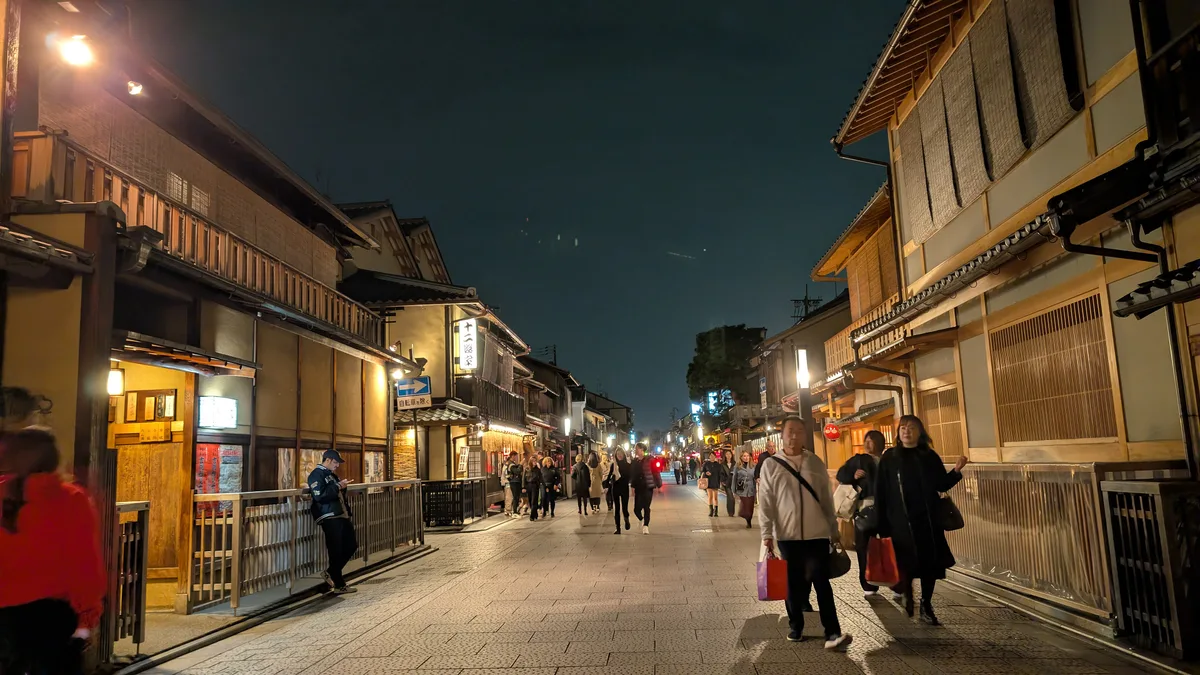
The theatre is inside Yasaka Hall, at 570-2 Gionmachi Minamigawa in Higashiyama Ward. It stands on the southern stretch of Hanamikoji, the stone-paved street lined with wooden machiya townhouses and teahouses behind bamboo blinds. The Gion Kobu Kaburenjo, where the geiko hold their spring dances, is right beside it.
From Gion-Shijo Station on the Keihan Main Line, walk east along Shijo-dori and turn right onto Hanamikoji. From Kyoto-Kawaramachi on the Hankyu Line, cross the Kamo River on the Shijo Bridge first. Either way, allow about 10 minutes on foot.
Keep walking south and the street ends at the gates of Kennin-ji, Kyoto’s oldest Zen temple. Go east along Shijo-dori instead and you reach Yasaka Shrine.

What the hour actually feels like
The pace is brisk. No segment lasts long enough to drag, and that makes it a gentle first night of theatre for jet-lagged visitors and for children. Printed guides and multilingual commentary explain each art before it starts, so you’re never guessing.
The maiko dance is the part most people come for. In Kyoto, seeing a maiko perform usually means an expensive private banquet with a proper introduction, so this is one of the few open ways in. Bunraku surprises a lot of people. After a few minutes the black-clad puppeteers seem to vanish, and you end up watching only the puppet.
Be realistic about depth, though. Each art gets a taster, not a full performance. If kyogen or the tea ceremony catches you, go and find a dedicated performance or tea room later in your trip.
Walking Hanamikoji at showtime
The street outside is part of the evening, so it pays to arrive the way the neighbourhood expects.
- Book online beforehand. Tickets and current show times are on Gion Corner’s official website. Don’t count on getting a seat at the door in peak seasons.
- Arrive when doors open at 5:30. The hall is open 5:30 to 8:00 PM every day, and arriving early usually gets you a better view of the small stage.
- Leave maiko in the street alone. Geiko and maiko walking along Hanamikoji are on their way to work. Don’t block their path, touch their kimono or crowd them for photos.
- Stay out of private lanes. Signs in Gion ban photography in the narrow side alleys, which are privately owned, and the district has fined people who ignore them.
- Ask before filming inside. Photography rules can change between segments, so follow what the staff announce at the start.
Most of the teahouses along the street don’t take walk-ins. Look at the lanterns and noren curtains from outside.
Building an evening around it
Gion Corner is closed during the day, so plan your afternoon to finish in Gion. You could spend the late afternoon at Kennin-ji, looking at its twin-dragon ceiling and raked gravel gardens. Then walk north up Hanamikoji just as the lanterns come on.
After the show you’re already where Kyoto eats at night. Shirakawa Minami-dori, the willow-lined canal street north of Shijo-dori, is lovely after dark. Pontocho, the narrow alley of restaurants beside the Kamo River, is a short walk west across Shijo Bridge.
If you’re in Kyoto in April, look up the geiko dance season at the Kaburenjo next door. It’s a longer, fuller performance of the dance you see in brief at Gion Corner.
Frequently asked questions
How do I get to Gion Corner?
Take the Keihan Main Line to Gion-Shijo Station, or the Hankyu Line to Kyoto-Kawaramachi. Walk east on Shijo-dori, then turn south onto Hanamikoji. The theatre is in Yasaka Hall, at 570-2 Gionmachi Minamigawa, about 10 minutes on foot.
What time is Gion Corner open?
The hall is open daily from 5:30 to 8:00 PM, including weekends. Individual show times can change, so check the official website before you go.
How long is the Gion Corner show?
It takes about an hour. Seven arts are covered in short segments: maiko dance, tea ceremony, ikebana, koto, gagaku, kyogen and bunraku.
Do I need to book in advance?
It's strongly recommended, especially in the spring and autumn peak seasons. The official Gion Corner website sells tickets and posts current prices.
What is there to do near Gion Corner?
Kennin-ji temple sits at the southern end of Hanamikoji. Yasaka Shrine is at the eastern end of Shijo-dori. The Shirakawa canal and Pontocho alley are both within easy walking distance for dinner after the show.
Plan your trip to Kyoto
Some links above are affiliate links — if you book through them, Wander Atlas earns a small commission at no extra cost to you. It's how we keep every guide free.