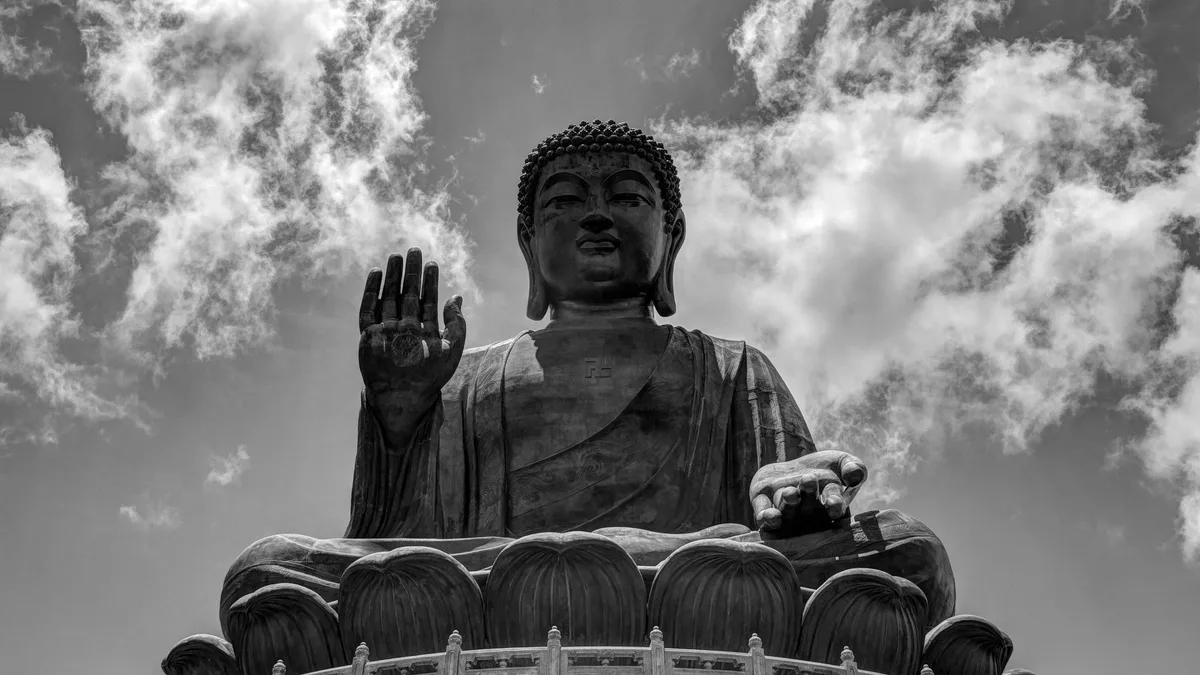
Lantau Island is Hong Kong’s largest outlying island, and its highest-profile landmark sits on a plateau 500 metres up: the Tian Tan Buddha, known to almost everyone simply as the Big Buddha. Cast in bronze and seated on a lotus throne, it faces north toward mainland China, visible from the South China Sea on a clear day.
Getting up to Ngong Ping
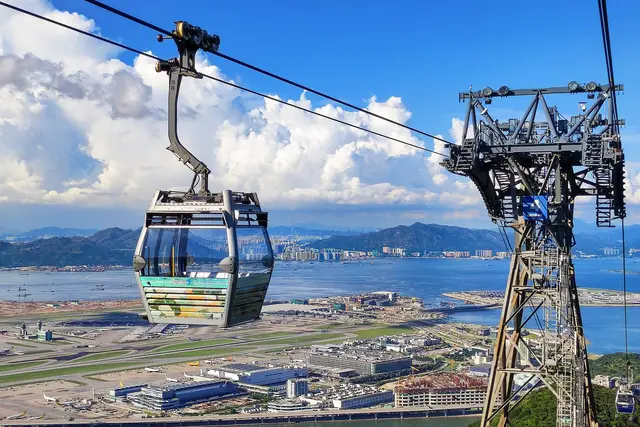
Most visitors start from Tung Chung MTR station on the Tung Chung Line. From there, the Ngong Ping 360 cable car swings over reservoirs and mountain ridges for about 25 minutes, with glass-bottomed “Crystal Cabin” cars available at extra cost.
If you’d rather skip the cable car, bus 23 runs from Tung Chung town centre up the mountain road, and buses 2 and 21 connect from other parts of the island. Both routes end at Ngong Ping Village, a short walk from the statue itself.
Climbing to the statue
From the village, the Buddha is unmistakable, rising above the treeline at the top of a long staircase. There is a long run of steps to the base, arranged in a straight, steady climb rather than switchbacks, so pace yourself if it’s humid.
Entry to the platform around the statue is free. Inside the base is a small museum housing a relic said to be a fragment of the Buddha’s remains, with exhibits on Buddhist teaching and the statue’s history.
- Wear shoes with grip; the steps can be slick after rain
- Bring water, especially between spring and early autumn
- Allow 20-30 minutes for the climb and platform, more for photos

Po Lin Monastery below
At the foot of the staircase sits Po Lin Monastery, an active Buddhist site founded in the early 1900s and rebuilt over subsequent decades. Its courtyards, incense burners and vegetarian dining hall are worth exploring before or after the climb.
The monastery’s vegetarian meal hall serves set menus at set sitting times; tickets are sometimes sold as part of cable car packages, so check when booking if you want to eat there. Even a short walk through the temple halls gives useful context for the statue above.
Finding a quieter moment
The Big Buddha draws steady visitor numbers, but it isn’t yet on the radar of every Hong Kong itinerary, and there’s real room to have a calmer visit here than the big-name city sights. Arriving soon after the cable car and bus services start for the day usually means fewer people on the steps and better light for photos.
Weekday mornings tend to be calmer than weekend afternoons, when tour groups from the harbour cruise ports often arrive in clusters. Cloud cover rolls in and out at this altitude, so a visit that starts grey can clear within an hour; it’s worth lingering rather than turning back at the first overcast view.
Ngong Ping Village and beyond
Ngong Ping Village, the cluster of shops and restaurants around the cable car terminal, is built for visitors and easy to treat as a quick stop before or after the statue. It’s a reasonable place for a coffee or a set lunch, though it leans toward tourist pricing rather than local bargains.
Wisdom Path, a set of wooden steles arranged in a figure-eight inscribed with the Heart Sutra, is a 20-30 minute walk from the village and rarely crowded. Combined with the monastery and statue, it rounds out a half-day trip without needing to rush.
Practical notes for the visit
Check the current cable car and bus schedules before you go, since services can be adjusted for weather or maintenance. High winds occasionally suspend the cable car, in which case the bus becomes the only way up.
Dress modestly if you plan to enter monastery halls, covering shoulders and knees as a courtesy. Photography is generally fine around the statue and courtyards, though flash and tripods may be restricted inside the museum and temple interiors.
Frequently asked questions
How do you get to the Big Buddha on Lantau Island?
Take the MTR to Tung Chung station, then either ride the Ngong Ping 360 cable car (about 25 minutes) or catch bus 23 up the mountain road to Ngong Ping Village, a short walk from the statue.
Is there an entrance fee for the Big Buddha?
No, standing on the platform around the statue is free. There may be a small charge to enter the museum inside the base; the cable car and any monastery meal tickets are separate costs.
How long should I spend at the Big Buddha and Po Lin Monastery?
Plan for half a day if you're combining the statue, the 268-step climb, the monastery grounds and Ngong Ping Village. Add extra time for the Wisdom Path walk nearby.
When is the best time to visit to avoid crowds?
Weekday mornings, soon after the cable car and buses start running, tend to be quieter than weekend afternoons, when tour groups often arrive in larger numbers.
What else is near the Big Buddha on Lantau?
Po Lin Monastery sits right at the base of the steps, Ngong Ping Village has shops and food by the cable car terminal, and the Wisdom Path is a 20-30 minute walk away.
Plan your trip to Lantau Island
Hong Kong eSIM & staying connected →
Some links above are affiliate links — if you book through them, Wander Atlas earns a small commission at no extra cost to you. It's how we keep every guide free.
Related guides
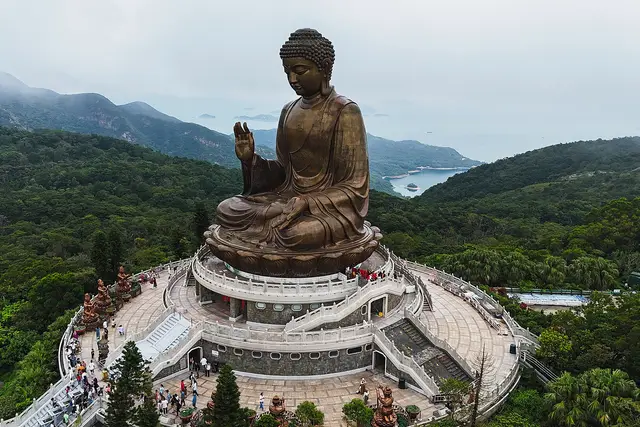 attraction
 Tian Tan Buddha: Lantau Island Travel Guide (4.6★)
 attraction
 Lantau South Country Park: Lantau Island Travel Guide (4.3★)
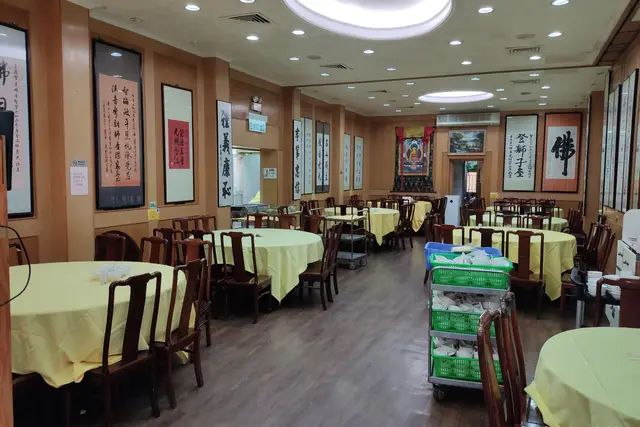 restaurant
 Po Lin Monastery Restaurant: Where to Eat in Lantau Island
 hidden gem
 Ngong Ping Village: Lantau Island Travel Guide (4.3★)
This spot is Day 2 of our Hong Kong 3-day itinerary
This spot is Day 3 of our Hong Kong 5-day itinerary