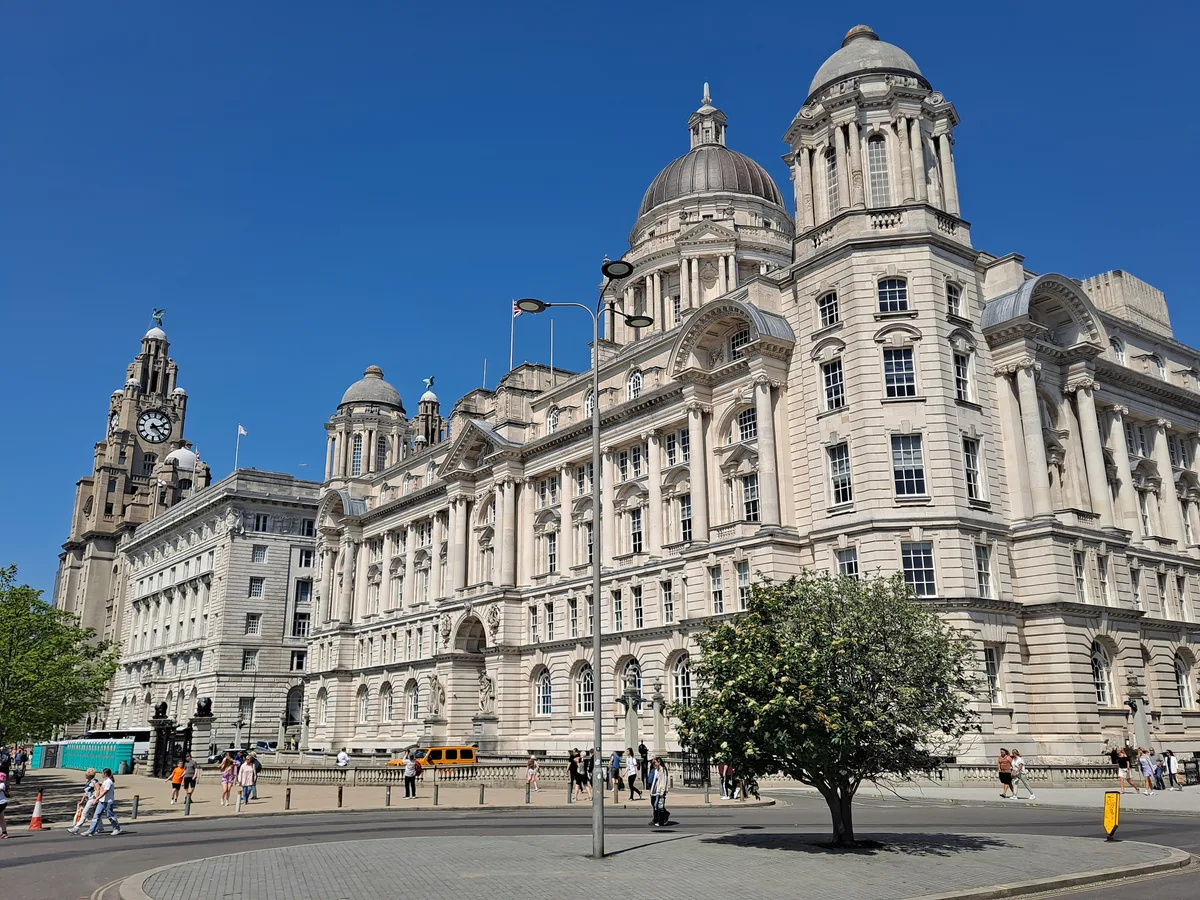
Three buildings, one skyline
Stand on the granite of Pier Head and look inland. Three Edwardian office blocks sit shoulder to shoulder along the Mersey, each built by a different company to impress anyone arriving by ship. Together they are the Three Graces, and they still make the picture most people mean when they say “Liverpool”.
All three went up between 1903 and 1917, when this was one of the busiest ports in the world. Each one is listed, and the Royal Liver Building is Grade I. From 2004 to 2021 they formed the centrepiece of the Liverpool Maritime Mercantile City World Heritage Site, until UNESCO removed the status over waterfront development.
Telling the Graces apart
The order runs north to south. Once you know it, you won’t mix them up.
- Royal Liver Building (completed 1911): the tallest, with two clock towers each topped by a copper bird. It was built for the Royal Liver Assurance company and was among the earliest large reinforced-concrete buildings in Britain.
- Cunard Building (completed 1917): the boxy middle sibling, styled like an Italian palazzo and faced in pale Portland stone. It was the head office of the Cunard shipping line, and passengers once booked their crossings here.
- Port of Liverpool Building (completed 1907): the domed one, the oldest of the three. It housed the Mersey Docks and Harbour Board, which ran the docks.
They share a plaza but never quite match. That mismatch is the point. Three rival companies were each trying to outdo the others.
Bella, Bertie and the clocks
Look up at the Liver Building’s towers. Two Liver Birds perch there, a mythical cormorant-like creature that has been the city’s symbol for centuries. Locally they’re known as Bella and Bertie.
One faces out to sea and the other faces the city. The story usually told is that one watches over returning sailors while the other keeps an eye on the city. A darker legend says that if the birds ever fly away, Liverpool will cease to exist.
Below them are the clock faces, and they are bigger than Big Ben’s. Each dial is about 25 feet across. That makes them some of the largest clock faces in Britain. The clocks were set going in 1911 at the moment of George V’s coronation.

The view from the river
To see the Graces as the builders meant them to be seen, you need to be on the water. The Mersey Ferries terminal sits right at Pier Head, a low, angular building next to the canal link.
The ferry crosses to Seacombe and Woodside on the Wirral side. On the way back the three buildings line up across the bow. It’s the same arrival every transatlantic passenger once had.
If you’d rather stay on land, the Seacombe promenade looks straight back across the river. Late afternoon is a good time to try it, because the sun moves round to the west and lights the stone facades.
Getting to Pier Head
Merseyrail is the easiest way in.
- James Street (Wirral line) is the closest station, a few minutes’ walk downhill to the river.
- Moorfields (Northern and Wirral lines) is a short walk away through the business district along Water Street.
- Liverpool Lime Street, the main-line station, is around 20 minutes on foot through the city centre.
The official address is Water St, L3 1DD, which brings you to the Liver Building’s landward side. Walk straight through toward the river and the whole frontage opens up at Pier Head.
Reading the frontage on foot
These are working office buildings, not museums. Treat the outside as the attraction and you’ll get the most from it.
- Don’t count on getting inside. Interior access depends on the tenants and on any tours running. The Royal Liver Building has offered tower tours to the clock and bird level in recent years, so check its official site for current dates and booking before you go.
- Walk the whole length first. Start at the Port of Liverpool Building’s dome and head north. From that angle the three overlap in perspective.
- Find the memorials. The Memorial to the Heroes of the Marine Engine Room stands near the Liver Building. It was first meant to honour the Titanic’s engineers. The Cunard War Memorial stands in front of the Cunard Building.
- Step back for photos. The best wide shot comes from the river railings or the far side of the canal link, not from the plaza right under the towers.
Despite their fame, the Graces themselves rarely feel crammed. Most visitors pass straight through on the way to the Albert Dock. Stay a few minutes longer than they do and the plaza often feels open around you. There’s no ticket, no gate and no opening hours for the outside, so early morning and evening are both good times to come.
Where the waterfront goes next
The Graces sit at one end of a waterfront you can walk in an afternoon. A few things are close by:
- The Beatles statue at Pier Head: four bronze figures mid-stride, with the Liver Building behind them. It’s the photo almost everyone takes.
- Museum of Liverpool: the white, angular building just south of the Graces. It covers the city’s story, docks included.
- Royal Albert Dock: a few minutes further south. It has the brick warehouses, Tate Liverpool and the Merseyside Maritime Museum, which fills in the shipping history behind these offices.
Allow 30–45 minutes for the Graces on their own. Add a ferry crossing and the neighbouring museums, and it easily fills a day.
Frequently asked questions
What are the Three Graces in Liverpool?
They are three early-1900s buildings at Pier Head. The Royal Liver Building (1911) is the one with the Liver Birds and clock towers. The Cunard Building (1917) was the shipping line's head office. The domed Port of Liverpool Building (1907) housed the Mersey Docks and Harbour Board.
How do I get to the Three Graces?
Take Merseyrail to James Street (Wirral line), a few minutes' walk from the waterfront. Moorfields is also close. From Liverpool Lime Street it's around a 20-minute walk.
Can you go inside the Royal Liver Building?
The buildings are mainly working offices. The Royal Liver Building has offered tower tours up to clock and Liver Bird level in recent years, so check its official site for current availability and booking.
Where is the best view of the Three Graces?
From the river. Take a Mersey Ferry from the Pier Head terminal, or look back across the water from the Seacombe promenade on the Wirral side.
How long should I spend there?
Allow 30–45 minutes to walk the frontage and see the memorials. Add a ferry crossing, the Museum of Liverpool and the Royal Albert Dock next door and it can fill most of a day.
Plan your trip to Liverpool
United Kingdom eSIM & staying connected →
Some links above are affiliate links — if you book through them, Wander Atlas earns a small commission at no extra cost to you. It's how we keep every guide free.
Related guides
 attraction
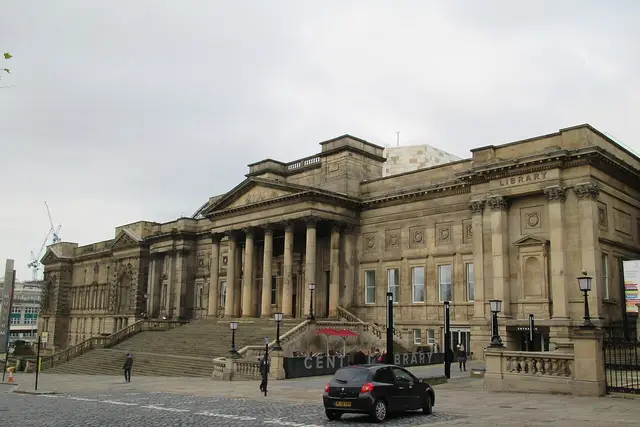
World Museum: Liverpool Travel Guide (4.6★)
 attraction
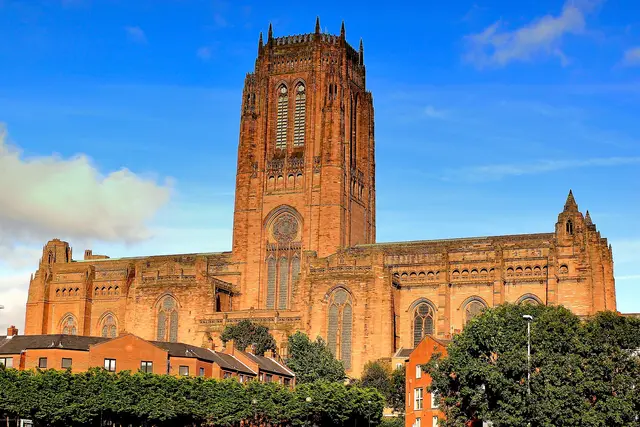
Liverpool Cathedral: Travel Guide (4.8★)
 attraction
Newsham Park & Garden: Liverpool Travel Guide (4.4★)
 hidden gem