Under the whale in Hintze Hall
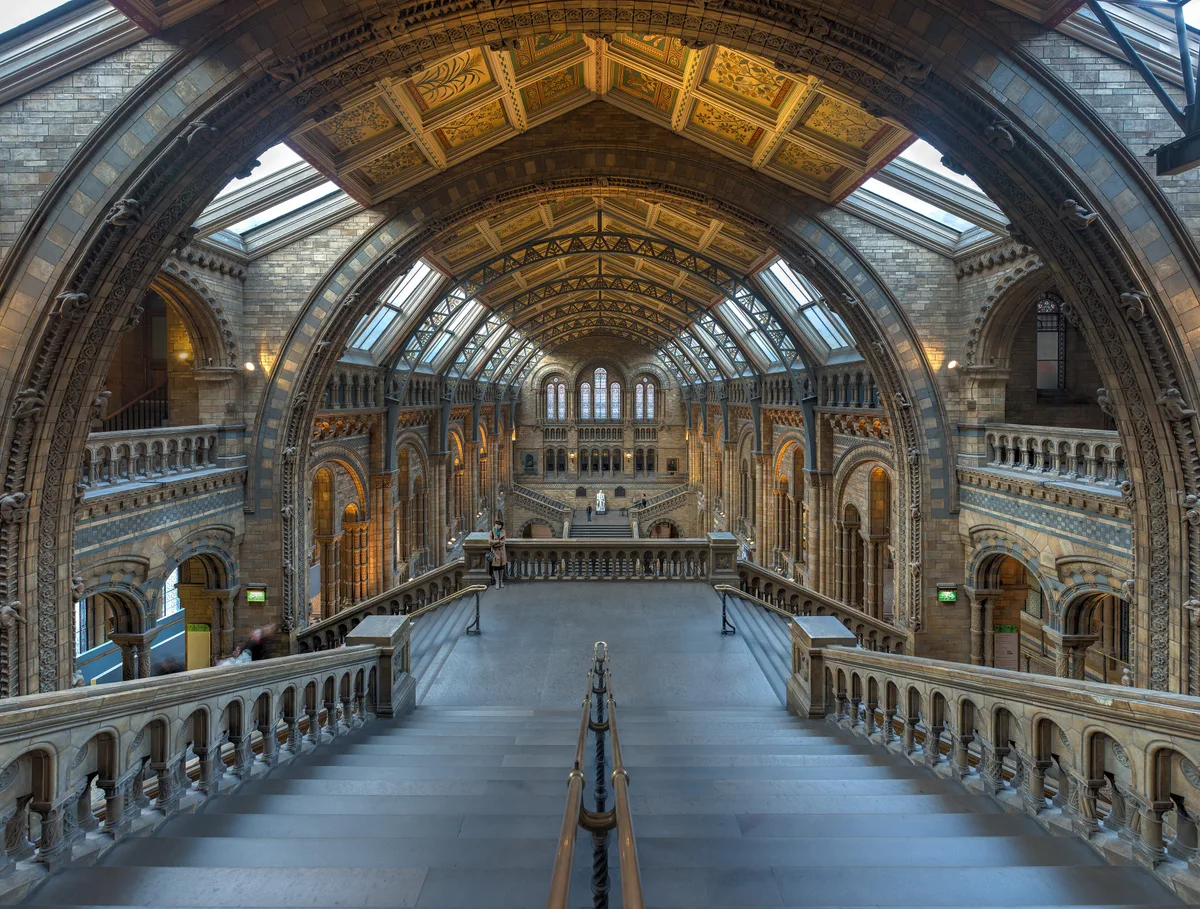
A blue whale hangs over the entrance hall. Hope, a 25-metre skeleton, is suspended from the ceiling of Hintze Hall, and the Cromwell Road doors open straight beneath her. Alfred Waterhouse’s building opened in 1881. Its outside walls and the columns in the hall are covered in terracotta tiles moulded with animals, plants and fossils.
Look up at the ceiling panels, which are painted with botanical specimens. A broad stone staircase climbs to a statue of Charles Darwin on the first landing. Most visitors walk under the arches without noticing what is carved on them. It is worth slowing down.
The galleries to prioritise
You can’t see everything in a single visit. Most first-timers pick from these:
- Dinosaurs (Blue Zone): a raised walkway runs past skeletons and ends at the animatronic T. rex. It is the busiest room in the building.
- Earth Galleries (Red Zone): an escalator carries you up through a huge metal globe. Past it are the volcanoes and earthquakes displays.
- Mammals: a full-size model of a blue whale sits among the older displays.
- Darwin Centre (Orange Zone): an eight-storey concrete “cocoon” that holds part of the research collection. Some of the labs have viewing windows.
- Wildlife Photographer of the Year: this temporary exhibition is ticketed. Check dates and prices on the official site.
Allow three to four hours for the highlights. Families who stay for the hands-on displays often spend most of the day here.

Beating the crowds on Cromwell Road
This is one of London’s most visited museums, so timing makes a big difference. The quietest hour is 10am to 11am, on weekdays and at weekends. That is the hour right after opening. Go straight to Dinosaurs before the queue on the walkway builds up.
Try not to arrive on a weekend between 12pm and 4pm. Those are the busiest hours, with queues at the entrances and crowds around the T. rex. The museum is open 10:00am to 5:50pm every day of the week. Late afternoon on a weekday is a reasonable second choice. Note that the last part of the day is cut short by the 5:50pm closing.
- Book a free timed slot on the museum’s website, especially for weekends and school holidays. Visitors with a booking usually get in faster than those who walk up.
- Pick your door: there are two entrances. The Cromwell Road entrance opens into Hintze Hall. The Exhibition Road entrance leads to the Earth Galleries escalator, and its queue is often shorter.
- Bags go through security at both doors. Bring a small bag and you’ll get through faster.
- Donations are welcome at boxes and contactless points around the halls, though admission is free.
- Ticketed exhibitions are priced separately. The current price is on the official site and at the desks inside.
Getting there and what’s next door
Take the Tube to South Kensington, which is on the District, Circle and Piccadilly lines. Follow the signs for the museums into the pedestrian subway. This tiled tunnel runs underground for about five minutes and comes up near the Exhibition Road entrance. You stay off the street the whole way, which helps on a wet day. The postal address is Cromwell Rd, London SW7 5BD.
The Science Museum is the next building along Exhibition Road. The Victoria and Albert Museum is across Exhibition Road, facing Cromwell Road. Both offer free general admission, so you can visit two in one day: dinosaurs in the morning, then the V&A’s courtyard café. Hyde Park and the Royal Albert Hall are a ten-minute walk north up Exhibition Road.
Frequently asked questions
When is the quietest time to visit the Natural History Museum?
Between 10am and 11am, on both weekdays and weekends. That is the first hour after opening. Avoid weekends from 12pm to 4pm, which are the busiest hours.
What are the opening hours?
10:00am to 5:50pm, seven days a week.
Do I need to book?
General admission is free. Booking a free timed slot on the official website is recommended, especially at weekends and in school holidays. Ticketed exhibitions such as Wildlife Photographer of the Year are booked and priced separately. The current price is on the official site.
What's the nearest Tube station?
South Kensington, on the District, Circle and Piccadilly lines. A signed pedestrian subway runs from the station to the Exhibition Road entrance.
How long should I spend there?
Allow three to four hours for Hintze Hall, the Dinosaurs gallery, the Earth Galleries and Mammals. Families often stay most of the day. The Science Museum and the V&A are next door if you have time left.
Plan your trip to London
Some links above are affiliate links — if you book through them, Wander Atlas earns a small commission at no extra cost to you. It's how we keep every guide free.