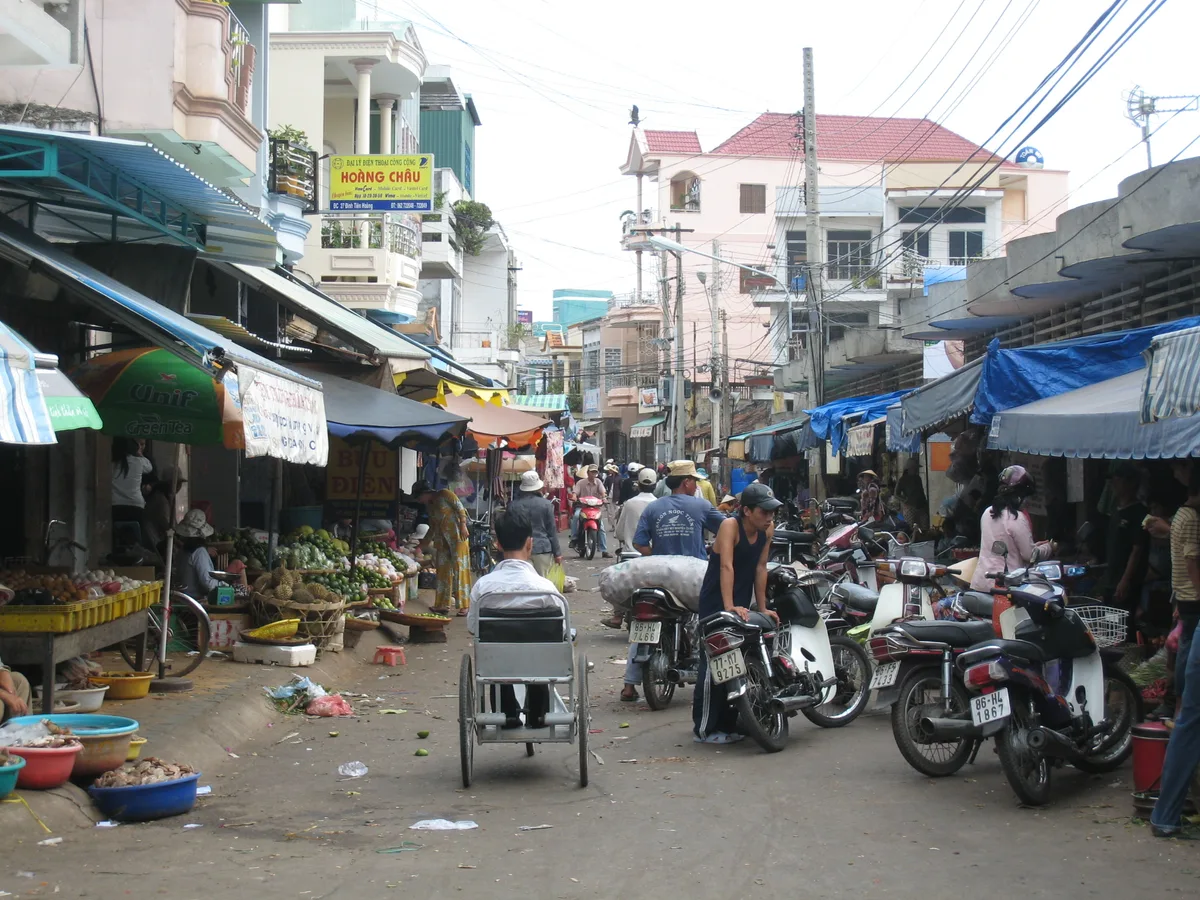
A working market, not a beach bazaar
Phan Thiết Market sells to the city first. The resort stalls along Mui Ne’s coast road stock sarongs and shell necklaces. This one stocks the things Phan Thiết households actually buy: fish on ice, bundles of herbs, dried shrimp by the kilo, plastic basins, aluminium pots and bolts of cloth.
It sits on Lý Thường Kiệt in the city centre, close to the Cà Ty River. It’s well known and well reviewed, so don’t expect to have it to yourself. What you do get is a morning seeing how the fishing town behind the resorts feeds itself.
Getting there from the resort strip
The market is about 20 km west of the Mui Ne beach strip, and the drive takes roughly half an hour.
- Grab or a metered taxi: the simplest option. Put in “Chợ Phan Thiết” or the Lý Thường Kiệt address.
- Motorbike: follow the coast road west into town. Parking attendants around the market hand you a paper ticket, so keep it for when you collect the bike.
- Local bus: buses run between the resort strip and Phan Thiết along the coast road. Ask your hotel for the current route and stop, because services change.
On the way in you pass the Po Shanu Cham towers on the hill above the road. They make an easy stop on the same trip.
Timing around the 5:30am start
The gates open at 5:30am every day of the week and close at 6pm, with the same hours on Sundays. Like most Vietnamese markets, the fresh-food sections do most of their trade early. Fishing boats land their catch at dawn, and the best of it is sold before the heat builds.
The busiest time is weekends from 8am to 12pm. That’s when aisles already narrow with baskets fill with shoppers and motorbikes pile up outside. If you can only come on a Saturday or Sunday, get there before 8am or come after lunch.
By mid-afternoon the wet market is mostly hosed down. The dry-goods and clothing stalls keep trading until closing.
Fish sauce, dried squid and dragon fruit
This coast is famous for three products, and all three are sold here.
Nước mắm (fish sauce). Phan Thiết has made fish sauce for generations, and it’s one of the best-known names in the Vietnamese fish sauce trade. Stalls sell it in bottles and plastic jugs, usually labelled by protein strength (“độ đạm”). A higher number means a richer, more concentrated sauce.
Dried seafood. Look for the stalls stacked with flattened dried squid (mực khô), dried shrimp (tôm khô), small dried fish and jars of mắm ruốc, a pungent fermented shrimp paste. Sellers will usually let you smell before you buy.
Dragon fruit (thanh long). The province around Phan Thiết grows a large share of Vietnam’s dragon fruit. You’ll see the magenta, scaly fruit piled by the crate, both white-fleshed and red-fleshed varieties. Ask for a cut sample if you’re unsure which you prefer.
Before you pack fish sauce: several Vietnamese airlines restrict or ban fish sauce in luggage. Check with your carrier before buying a jug to take home.
Eating a market breakfast
Most Vietnamese markets have a cluster of food stalls with low plastic stools, and this one is no exception. Breakfast here costs a fraction of what the resorts charge, and the dishes are local rather than international.
Dishes to look out for around the market and nearby streets:
- Bánh căn: small rice-flour cakes cooked in clay moulds, often with quail egg or seafood, dipped in fish sauce. It’s a south-central coast specialty.
- Bánh xèo: crisp turmeric pancakes wrapped in greens.
- Gỏi cá mai: a raw-fish salad cured in lime. It’s a Phan Thiết signature, usually eaten with rice paper and herbs.
- Bánh hỏi: fine woven rice-noodle sheets, often served with grilled meat.
Point at what the stool next to you is eating if you can’t read the board. The cook will understand.
Moving through the aisles
A few habits make the visit smoother:
- Carry cash in small notes. Vietnamese đồng is what most vendors take. Big notes early in the morning can leave a stall without change.
- Bargain where it’s normal. Clothing, souvenirs and dried goods are open to a polite counter-offer. Fruit and vegetables sold by weight usually have a going rate, so haggling hard there comes across as rude.
- Ask before photographing. Vendors are working, not posing. A raised camera and a nod usually gets an answer either way.
- Watch your footing. The wet section floors stay slick from melting ice and hosing down. Wear shoes with grip, not beach flip-flops.
- Learn two phrases. “Bao nhiêu?” (how much?) and “Cảm ơn” (thank you) are enough to get you through most transactions.
Keep your phone and wallet in a front pocket in the tighter aisles. A crowded weekend morning is when that matters most.
Pairing it with central Phan Thiết
An hour or two covers the market, and the streets nearby are worth another hour.
- Phan Thiết Water Tower: the city’s landmark, a tiered tower beside the Cà Ty River built in the late 1920s and early 1930s. It’s a short walk from the market.
- Dục Thanh School: the school where Hồ Chí Minh taught in 1910, now kept alongside a museum about his time in the city.
- The Cà Ty River: fishing boats moor along its banks, and the riverside makes a short walk after shopping.
Put it together and you have a half-day loop: market breakfast, the water tower and river, then Dục Thanh. Head back towards Mui Ne before the afternoon heat, and stop at the Po Shanu towers on the way.
Frequently asked questions
How far is Phan Thiết Market from Mui Ne?
It's in central Phan Thiết on Lý Thường Kiệt street, about 20 km west of the Mui Ne beach strip. That's roughly 30 minutes by Grab, taxi or motorbike along the coast road.
What are the opening hours?
Every day from 5:30am to 6pm, weekends included. The fresh-food sections trade most in the early morning. Dry goods and clothing keep going until closing.
When is the market most crowded?
Weekends from 8am to 12pm are the busiest hours. On a Saturday or Sunday, arrive before 8am or come in the afternoon.
What should I buy there?
The local specialties: Phan Thiết fish sauce (nước mắm), dried squid and shrimp, mắm ruốc shrimp paste and dragon fruit. Check your airline's rules before packing fish sauce, because several carriers restrict it.
What's nearby?
The Phan Thiết Water Tower on the Cà Ty River is a short walk away, and Dục Thanh School and its museum are close by. The Po Shanu Cham towers are on the road back to Mui Ne.
Plan your trip to Mui Ne
Some links above are affiliate links — if you book through them, Wander Atlas earns a small commission at no extra cost to you. It's how we keep every guide free.