The square every trip to Nazca passes through
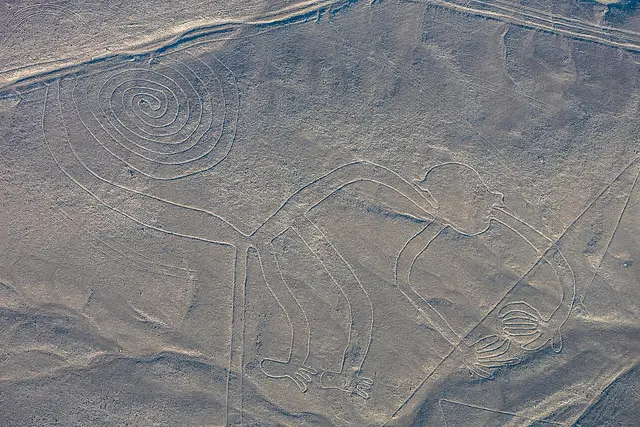
Nobody comes to Nazca for the plaza. They come for the lines scratched into the desert. Still, most visitors end up crossing this square more than once, because Nazca is a small town and the Plaza de Armas sits at its centre.
Like the main square of nearly every Peruvian town, it’s laid out as a formal park: paved paths, planted beds and benches under whatever shade there is. The streets around its edges hold the town’s agencies, restaurants and hostels. It’s the reference point locals give when you ask for directions, and the place tour drivers suggest when they need somewhere to pick you up.
Reading the plaza on an ordinary day
It’s a working square, so don’t expect a museum. Through the day you’ll see residents cutting across on errands, schoolchildren, families on the benches and visitors waiting for their flight time. Agency staff often work the surrounding streets offering overflights and desert tours. A polite “no, gracias” is enough if you’ve already booked.
The plaza is consistently well rated, and the reviews mostly praise it for exactly this: an easy, well-kept place to sit down in a town that otherwise feels like desert and highway. Allow 20–40 minutes if you just want to walk the paths, sit for a while and photograph the square. Stay longer if you’re people-watching in the evening.
The 7am window
This is the one time of day you get the square almost to yourself. Our foot-traffic data shows the plaza is quietest between 7am and 8am, on weekdays and weekends alike. That works well with how Nazca runs, because Nazca Lines overflights are usually booked for the morning.
If your pickup is early, cross the square on your way out. At that hour you’ll find low sun on the paths, empty benches and none of the agency touts who appear later. It’s the best time for photos without people in them.
Weekends are different. From 10am to 3pm and again from 4pm to 11pm, the plaza is at its busiest. If you want a quiet seat, skip those hours on a Saturday or Sunday.

Getting there and finding your bearings
The plaza is at plus code 53C7+X5F in the La Cultura area of Nazca, and it’s walkable from most of the hostels and hotels in the centre. Long-distance buses from Lima and Ica stop in town, usually within a short walk or a quick mototaxi ride of the square. Lima is roughly seven hours north by road on the Panamericana Sur.
Getting around town is simple:
- On foot: the compact centre is easy to walk, and the plaza is the natural anchor point.
- By mototaxi: the three-wheelers are everywhere. Agree the fare before you get in.
- By taxi: for the airfield or anything outside town, ask your hotel to book a known driver.
The square is open to the public around the clock, with no gate and no ticket. Because it’s open at night, it’s lit and used well into the evening.
Using the plaza as your base for the lines
Most Nazca trips are a shuffle between town and desert, and the plaza is where you start each leg. Nearby sights to plan around:
- María Reiche Neuhaus Aerodrome: small-plane flights over the Nazca Lines leave from this airfield just south of town.
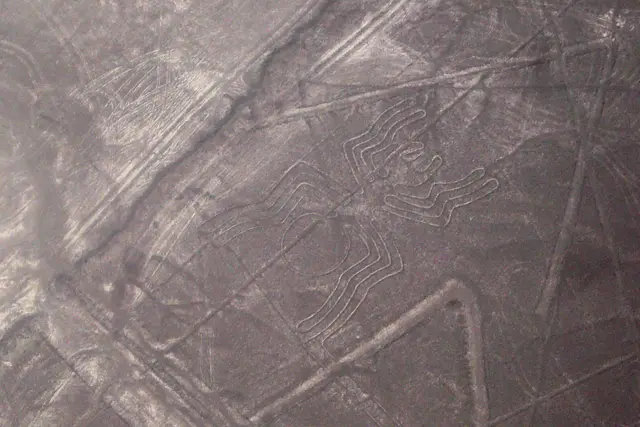
- Mirador on the Panamericana Sur: the roadside observation tower north of town. It shows a few figures, including the Hands and the Tree, without flying.
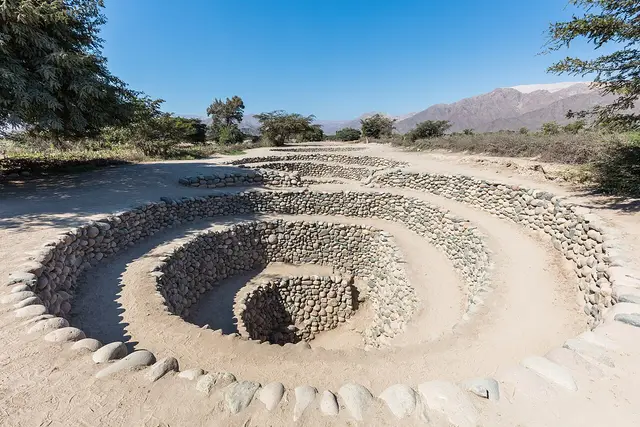
- Cantalloc aqueducts: the spiralling stone puquios built by the Nasca culture, a short drive from the centre.
- Chauchilla Cemetery: the open-air burial site in the desert south of town, usually visited on a half-day tour.
- Museo Antonini: the archaeological museum in town, focused on the Nasca culture. It’s an easy walk from the square.
A sensible rhythm is a morning flight or tour, a midday retreat to the centre when the desert sun is fiercest, and an afternoon trip to the aqueducts or cemetery. That puts you back on the plaza in the evening.
Sitting it out like a Nasqueño
Treat the square as somewhere to slow down, not to tick off. Some habits that will help:
- Look for a shaded bench in the middle of the day. Nazca is coastal desert and the midday sun is strong, so shade is the only real way to rest here.
- Carry small soles. Mototaxis, snack sellers and the shops around the square work mostly in cash, and change for big notes can be scarce.
- Compare tour offers here, but book with care. Before handing over money for a flight, ask about the operator’s safety record and the aircraft. Your hostel’s recommendation is a good place to start.
- Dress for church if you go in. The religious buildings in Peruvian town centres are working places of worship, so cover your shoulders and keep your voice down during services.
- Greet people. A “buenos días” or “buenas tardes” before asking anything goes a long way in a small town.
On weekend evenings the plaza turns into the town’s living room. Families walk the paths and the restaurant terraces around the edges fill up. Go out after dark if you want to see Nazca as a town rather than a launch pad for flights.
When to go, briefly
Nazca is dry all year, so rain almost never changes the plan. The plaza is pleasant whenever you’re in town. For calm and good photos, come early, between 7am and 8am. For atmosphere, come on a weekend evening, accepting that the square is busiest from 4pm to 11pm. Avoid the middle of the day if you can, unless you’ve found a bench in the shade.
Frequently asked questions
When is the quietest time to visit Plaza de Armas de Nasca?
It's quietest between 7am and 8am, both on weekdays and at weekends. On weekends, the busiest times are 10am–3pm and 4pm–11pm.
Is the plaza open at night?
Yes. It's a public square that's currently listed as open 24 hours, with no gate or ticket. It stays busy into the evening, especially at weekends.
How long should I spend at the plaza?
20–40 minutes is enough to walk the paths and take photos. Many visitors come back several times, because it's the central meeting point between Nazca Lines excursions.
How do I get from the plaza to the Nazca Lines?
Overflights leave from María Reiche Neuhaus Aerodrome just south of town, and the roadside Mirador is north of town on the Panamericana Sur. Take a taxi booked through your hotel, or use a tour pickup arranged from the centre.
What else is near the plaza?
Museo Antonini, the Nasca culture museum, is within walking distance. The Cantalloc aqueducts and Chauchilla Cemetery are short drives out of town and are often combined on one tour.
Plan your trip to Nazca
Peru eSIM & staying connected →
Some links above are affiliate links — if you book through them, Wander Atlas earns a small commission at no extra cost to you. It's how we keep every guide free.