Why go
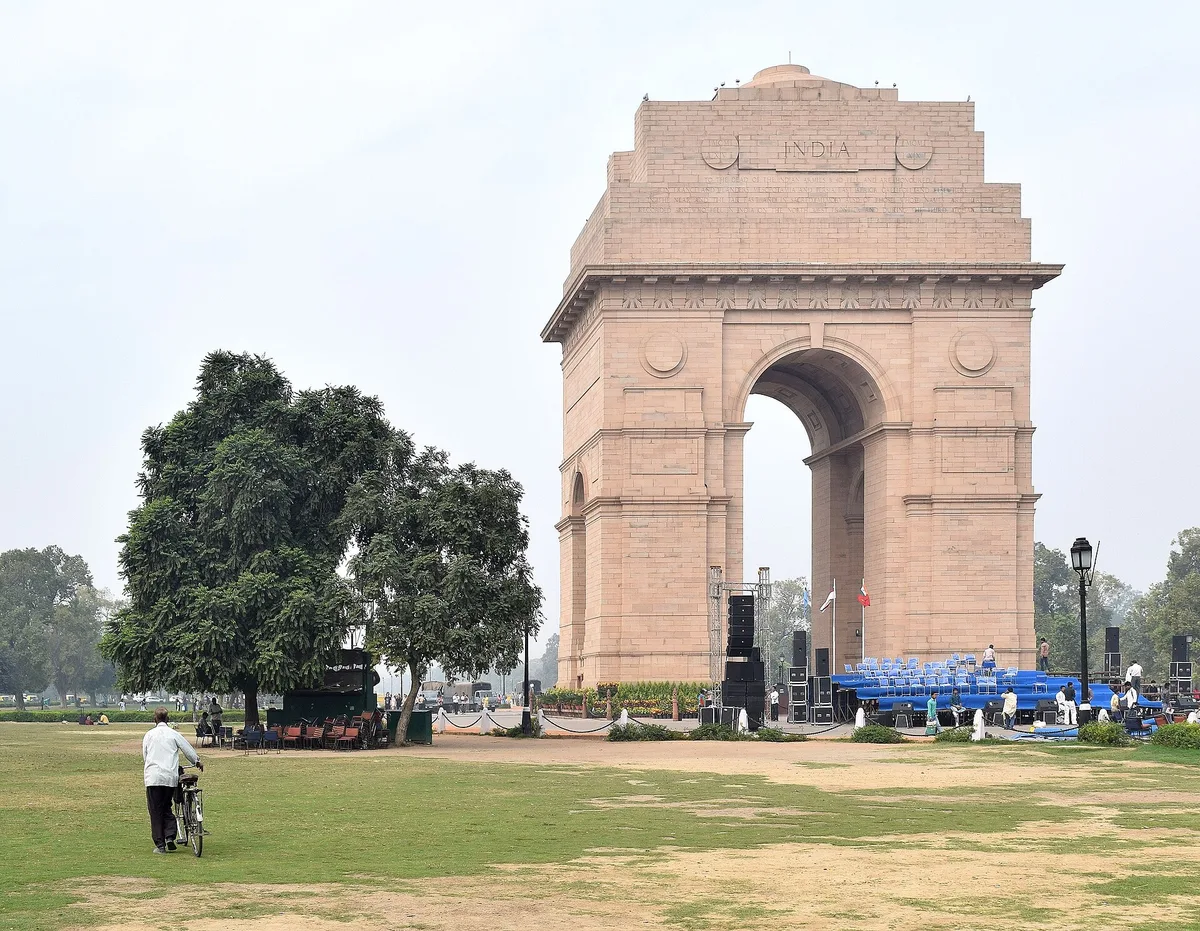
You see it long before you reach it, a honey-coloured arch rising out of the haze at the end of a dead-straight avenue, framed by lawns and reflecting pools. India Gate was designed by Edwin Lutyens and completed in 1931, and it does exactly what a war memorial should do: it makes you stop walking and just look. The names of roughly 13,000 British Indian Army soldiers killed in the First World War and the Third Anglo-Afghan War are carved into the stone.
Beneath the arch burns the Amar Jawan Jyoti flame, and the whole structure sits at the eastern end of Kartavya Path (formerly Rajpath), New Delhi’s ceremonial boulevard that leads all the way to Rashtrapati Bhavan.
Getting there
The nearest metro station is Central Secretariat on the Yellow and Violet Lines, about a 15–20 minute walk, or you can take an auto-rickshaw the rest of the way for a few rupees. Closer still is Khan Market or Pragati Maidan on the Blue Line, each roughly 2 km away, followed by a short auto or e-rickshaw ride. Given Delhi traffic and the sheer size of the surrounding lawns, most visitors find a cab or auto-rickshaw dropped right at the roundabout the least hassle, especially in the evening when the area is closed to private cars for pedestrian access.
What to see and do
Walk the length of the arch first, reading the regimental names cut into the sandstone, then step back onto the lawns for the classic postcard view with the canopy, the sandstone pavilion nearby that once held a statue of King George V, visible across the way. At night the whole monument is floodlit and the pools in front of it catch the reflection, which is when most of the photography happens.
Families spread out on the grass with kulfi and roasted corn from the vendors that line the perimeter; it’s as much a public park ritual as a monument visit. On Republic Day in January, the surrounding boulevard becomes the parade route for India’s biggest annual military and cultural procession, so expect road closures and heavy security if you’re in Delhi that week.

When to go
Delhi’s climate makes timing matter more than usual. October through March brings cooler, clearer days and is the most comfortable stretch for standing around outdoors. April through June gets brutally hot by midday, so a sunrise or after-dark visit is far more bearable than a noon one. Whatever the season, the golden hour just before and after sunset is when the light on the sandstone is best and the fountains and floodlights switch on, turning the whole approach into a slow-moving crowd of families and photographers.
How to visit like a local
India Gate is one of Delhi’s most visited landmarks, so don’t expect solitude. The smart move is timing, not searching for a quiet corner that doesn’t exist. Weekend evenings, especially Saturday and Sunday after 6pm, draw the thickest crowds; if you want space to actually see the carved names and take a clean photo, go on a weekday morning instead, when the lawns are still being watered and the vendors are just setting up.
There’s no entry fee and no ticket counter, you simply walk onto the lawns from Kartavya Path, so be wary of anyone approaching you claiming to sell tickets or offer a “guided entry.” Vendors selling snacks, balloons, and photo services work the perimeter and expect cash in small denominations; haggle lightly and gently for anything beyond food. Wear shoes you can walk in, since the boulevard and lawns are far larger than they look in photos, and there’s little shade before evening.
Security checks are common near the flame and canopy area, particularly around Republic Day, so keep bags light and be patient with barricades. If you want the monument almost to yourself, an early weekday morning before the heat and crowds arrive is genuinely your best window.
Nearby to combine
Because Kartavya Path runs in a straight line, it’s easy to pair India Gate with a walk toward Rashtrapati Bhavan and the North and South Block secretariat buildings, or head the other direction to the National War Memorial, a more recent memorial to post-independence Indian soldiers, just a short walk away. Khan Market, a few minutes off, is a good spot for a sit-down meal afterward.
Frequently asked questions
How do I get to India Gate by metro?
Take the Yellow or Violet Line to Central Secretariat station, then walk about 15–20 minutes or grab a short auto-rickshaw ride. Khan Market and Pragati Maidan on the Blue Line are alternatives about 2 km away.
Is there an entry fee for India Gate?
No, it's a public monument with free access at all times — be cautious of anyone offering to sell you tickets.
How long should I spend there?
Most visitors spend 45 minutes to an hour walking the arch and lawns; add extra time if you plan to picnic on the grass or walk toward the National War Memorial nearby.
When is the best time to visit to avoid crowds?
Weekday mornings are noticeably quieter than weekend evenings, which is when families and photographers pack the lawns for the sunset floodlighting.
What's the best time of year to go?
October to March offers cooler, more comfortable weather for standing outdoors; if visiting April to June, aim for early morning or after sunset to avoid the midday heat.
Plan your trip to New Delhi
India eSIM & staying connected →
Some links above are affiliate links — if you book through them, Wander Atlas earns a small commission at no extra cost to you. It's how we keep every guide free.
Related guides
 attraction
 National Museum: New Delhi Travel Guide (4.6★)
 attraction
 Lodhi Garden: New Delhi Travel Guide (4.5★)
 attraction
 Safdarjung Tomb, Delhi: New Delhi Travel Guide (4.4★)
 attraction