
Six stones at the top of the stairs
The steps end and the wall begins. Six slabs of pink stone stand side by side, each taller than a person. Thin filler strips of rock are slotted into the gaps between them so tightly that no mortar was needed.
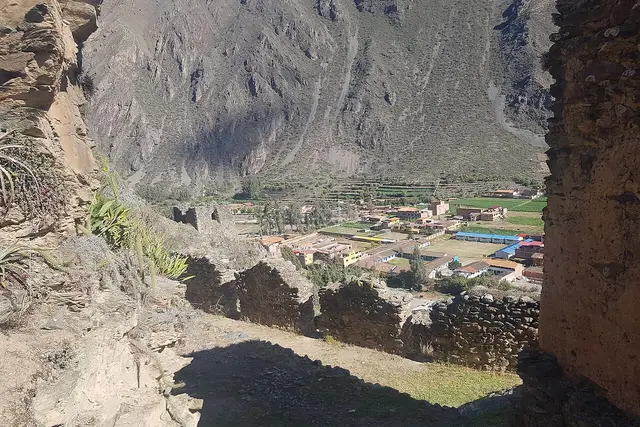
This is the Templo del sol, the Temple of the Sun, at the summit of the Ollantaytambo archaeological complex. It looks down over the town’s stone streets and the Urubamba River. Most visitors photograph the terraces from below. The temple is the reason to keep climbing.
Pink stone hauled from across the river
The monoliths are the temple’s signature. They are usually described as pink granite, though geologists tend to call the stone rhyolite. It came from the Kachiqhata quarry on the mountainside across the Urubamba valley. You can see the quarry slope from the temple itself.
Moving blocks this size down a mountain, across a river and up a hillside is the puzzle that brings people here. Abandoned stones still lie along the route. Locals and guides call these the “tired stones”, blocks that never reached the top.
Look closely at the monolith faces. Faint raised shapes are carved into the surface, worn down over five centuries. Many guides read one as a stepped cross, the chakana.
The whole complex is usually linked to the Inca ruler Pachacuti in the 15th century. Much of the temple was never finished. Loose, half-dressed blocks are scattered across the platform, and they show how the building was put together better than any finished wall could.
The climb, terrace by terrace
Getting to the temple means climbing the broad agricultural terraces that rise straight up from the entrance. The stone stairs are steep and uneven, with no handrails on most stretches. Plan on 20–30 minutes up at a steady pace. Allow two to three hours for the whole site.
Ollantaytambo sits at roughly 2,800 metres, so breathlessness is normal even for fit walkers. Things worth having with you:
- Water, since nothing is sold on the terraces
- Sun protection, as the upper platforms have almost no shade
- A light layer for the wind at the top
- Shoes with grip for the polished stone steps
The terraces also mark a turning point in Peruvian history. In 1537, Manco Inca’s forces held off a Spanish attack from these slopes, one of the few Inca victories of the conquest. Partly flooding the plain below helped them win.
The solstice windows
The temple and the structures around it were laid out with the sun in mind. Openings in the stonework are aligned to where the sun stands at the solstices. The June solstice is the one most closely tied to Inca ceremony, and it falls near Cusco’s Inti Raymi festival.
You don’t need to come on the solstice to understand it. Stand at the top in the morning and follow how the light moves across the valley and onto the facing peaks. Then look back at how the walls are angled. Ask a guide to show you which openings line up with which horizon point.
Getting in before the tour buses
Day tours from Cusco usually pass through Ollantaytambo as one stop in a long loop of the Sacred Valley. That tends to push them onto the terraces later in the morning and into the afternoon. If you’re sleeping in town, being at the gate at the current 8:00 AM opening is the simplest way to have the monoliths largely to yourself.
How entry works:
- Tickets: Ollantaytambo is included in the Boleto Turístico del Cusco, the combined tourist ticket for Cusco and Sacred Valley sites. Check current prices and which circuits include it at the ticket office or the official site.
- Hours: right now the site is listed as open 8:00 AM to 5:00 PM. Archaeological sites here change hours with the season and on some holidays, so confirm on the day.
- Guides: licensed guides usually wait near the entrance. Agree on the fee and the length of the tour before you start walking.
- On the stones: don’t climb on the walls or the loose blocks, and stick to the marked paths. Staff will call you back if you step over the ropes.
Near closing time, leave yourself enough daylight for the descent. The steps feel steeper going down.
Reaching Ollantaytambo
The town sits at the western end of the Sacred Valley, about two hours by road from Cusco. Shared vans and colectivos run there from Cusco and via Urubamba. Many people fit the town in on the way to Machu Picchu.
Ollantaytambo station is the main departure point for PeruRail and Inca Rail trains to Aguas Calientes. That makes the ruins an easy stop the afternoon before an early train, or the morning after one. The archaeological site entrance is a few minutes’ walk from the Plaza de Armas. Cross the small square by the river and you’ll find the ticket gate at the foot of the terraces.
Below and opposite the temple
At the base of the terraces, look for the stone water channels and fountains often called the Baño de la Ñusta. Water still runs through Inca-cut channels there.
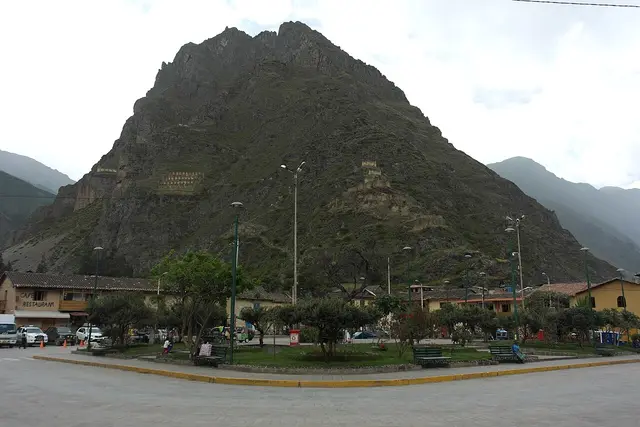
Across the town, the Pinkuylluna hillside holds stone storehouses built into the slope. Its trail gives you the view back toward the Templo del sol, and it’s the best place to take in the whole scale of the terraces.
Then walk the old town itself. Ollantaytambo keeps much of its Inca street grid, with narrow lanes, water channels along the paths and stone doorways still in use. After the climb, the plaza’s cafés are an easy place to sit down.
Frequently asked questions
What are the opening hours of the Templo del sol in Ollantaytambo?
At the moment the archaeological site is listed as open 8:00 AM to 5:00 PM. Archaeological sites in the Cusco region change hours through the year and on some holidays, so check the official site or ask at the gate before you go.
How long does it take to visit the Temple of the Sun?
Allow two to three hours for the whole site. The climb up the terraces to the temple takes about 20–30 minutes at a steady pace, and the altitude of roughly 2,800 metres slows most people down.
Do I need a special ticket?
Ollantaytambo is included in the Boleto Turístico del Cusco, the combined tourist ticket for Cusco and Sacred Valley sites. Current prices and circuit options are posted at the ticket office and on the official site.
When is the best time to visit?
Early morning, right at the current 8:00 AM opening, usually beats the day tours from Cusco and gives you morning light over the valley. If you want to tie your visit to the solstice alignments, Inca ceremony was most closely linked to the June solstice.
What else is nearby?
You can see the Kachiqhata quarry, where the pink stone came from, across the river. The Pinkuylluna storehouses are on the opposite hillside, and the Inca street grid of Ollantaytambo town is a short walk away. Ollantaytambo station has trains to Aguas Calientes for Machu Picchu.
Plan your trip to Ollantaytambo
Peru eSIM & staying connected →
Some links above are affiliate links — if you book through them, Wander Atlas earns a small commission at no extra cost to you. It's how we keep every guide free.
Related guides
 attraction
Sitio arqueológico Pinkuylluna: Ollantaytambo Travel Guide
 hidden gem
Plaza de Armas de Ollantaytambo: Travel Guide (4.7★)
 attraction
The Temple of the Sun: Aguas Calientes Travel Guide
 attraction