A triangle at the end of Elgin Street
Most visitors cross it on the way to Parliament Hill. Confederation Square is the wedge of granite and traffic where Elgin Street meets Wellington, and most people treat it as an intersection. Stand still for ten minutes and it becomes the city’s ceremonial centre.
The National War Memorial rises from the middle on a tall grey granite arch. Bronze figures push through the arch from below: soldiers, nurses, airmen and a gun crew hauling a field piece. Winged figures of Peace and Freedom stand on top. The memorial’s formal name is The Response, and King George VI unveiled it in 1939.
The Tomb and the sentries
Set into the ground in front of the arch is the Tomb of the Unknown Soldier. It holds a Canadian soldier from the First World War whose remains were brought home from near Vimy Ridge in France. It’s a low, dark sarcophagus with a bronze helmet, sword and branches on the lid. People walk right past it without looking down.
In the warmer months, from spring until Remembrance Day, Ceremonial Sentries stand guard at the Tomb during the day. They wear full dress uniform and change over on a fixed routine. Check the Canadian Armed Forces Ceremonial Guard schedule before you go if you want to see a change of sentries.
What sits around the edges
Turn in a slow circle and the square explains how Ottawa is laid out. Planner Jacques Gréber designed it in the late 1930s to tie the government district to the canal and the east side of downtown.
- Château Laurier: the copper-roofed railway hotel to the northeast, beside the canal
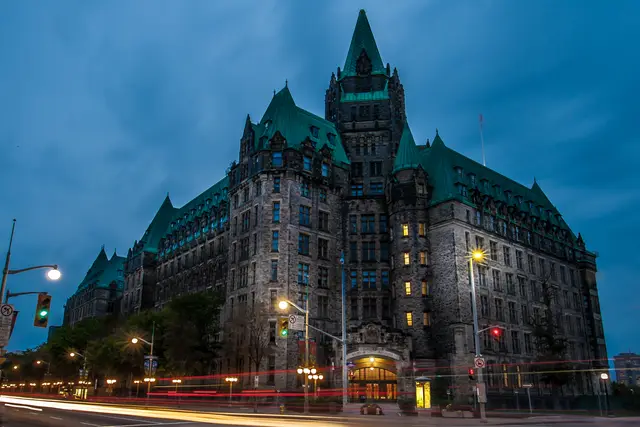
- Former Central Post Office: the stone building on the north side, facing the memorial
- National Arts Centre: the concrete-and-glass complex along the southeast edge, on Elgin
- Rideau Canal: the stretch running beneath the square, with the Ottawa Locks dropping down to the Ottawa River just north
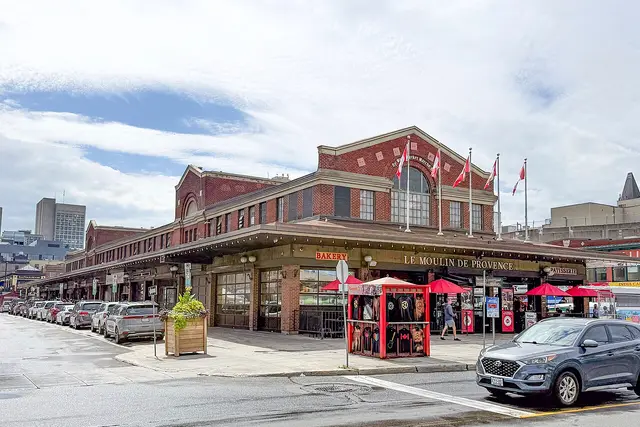
- Sparks Street: the pedestrian street starting a block west
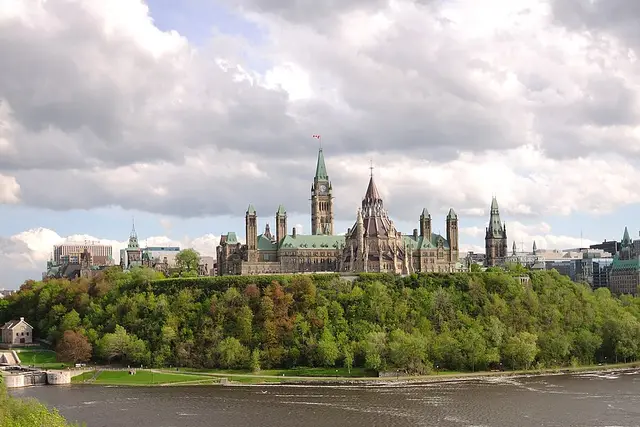
- Parliament Hill: a few minutes west along Wellington Street
Take the stairs down toward the canal and you’ll find the Valiants Memorial. It’s a ring of busts and statues of Canadian military figures from across the country’s history, and plenty of people who cross the square never see it.
Manners at the memorial
This is a working memorial, and Ottawa treats it as one. A few habits will keep you on the right side of things.
- Don’t sit, stand or lean on the Tomb, and keep bags and coffee cups off it.
- Give the sentries room. Don’t talk to them, step into their line or pose right beside them while they’re on duty.
- Keep your voice down and keep music off on the memorial platform, even when the square is quiet.
- If a wreath-laying or a ceremony starts, stand back and wait. Most locals stop walking until it’s over.
On 11 November the square fills for the national Remembrance Day ceremony. Once the official part ends, a tradition takes over: people line up to pin their red poppies on the Tomb. If you’re in Ottawa that week, joining that line is one of the most moving things you can do in the capital. Arrive early, because the streets around the square close.
Getting there and getting around
The square is easy to reach and you’ll almost certainly walk it. On the O-Train Line 1 (Confederation Line), Parliament and Rideau stations are both a few minutes’ walk away. From Rideau station, head west along Rideau Street and cross the Plaza Bridge over the canal.
The address is 53 Elgin St, but you’ll never need it. Head for the war memorial and you’re there. Traffic loops right around the memorial, so cross at the signals rather than cutting across the roadway.
Fitting it into a day
Because the square is open around the clock, it suits whatever gap your day leaves. Early morning means few people and long light on the granite. In the evening, the memorial is lit and the Château Laurier glows behind it.
A walk that works well: start at the square, go down the Ottawa Locks to the river, climb back up past the Château Laurier, and cross into the ByWard Market. Or go west along Wellington to Parliament Hill and come back along Sparks Street. Either loop takes a relaxed couple of hours, with this square as the place where the city’s streets meet.
Frequently asked questions
Where exactly is Confederation Square in Ottawa?
It's in downtown Ottawa where Elgin Street meets Wellington Street, a few minutes' walk east of Parliament Hill. The National War Memorial stands at its centre, with the Château Laurier, the National Arts Centre and the Rideau Canal around its edges.
How do I get there by public transit?
Take the O-Train Line 1 (Confederation Line) to Parliament or Rideau station. Both are a few minutes away on foot. From Rideau, walk west along Rideau Street and over the Plaza Bridge.
Can I visit at night?
Yes. It's a public square that's open 24 hours, and the memorial is lit after dark. Ceremonial Sentries only stand guard during the day in the warmer months, so if you want to see them, come in daylight.
How long should I spend there?
Allow 30–45 minutes to see the War Memorial, the Tomb of the Unknown Soldier and the Valiants Memorial below the square. Add more time if you continue on foot to the Ottawa Locks, the ByWard Market or Parliament Hill.
What happens on Remembrance Day?
On 11 November the square hosts the national Remembrance Day ceremony. When the ceremony ends, people line up to place their poppies on the Tomb of the Unknown Soldier. Arrive early, because the surrounding streets close and the crowds get big.
Plan your trip to Ottawa
Canada eSIM & staying connected →
Some links above are affiliate links — if you book through them, Wander Atlas earns a small commission at no extra cost to you. It's how we keep every guide free.