
Stand on the bridge beside the Château Laurier and look down. Eight stone lock chambers drop in a staircase to the Ottawa River, each sealed by heavy timber gates. Behind you, the canal runs south through the city as a long, straight channel lined with grass banks and paths.
This is the northern end of a waterway that runs 202 km to Kingston on Lake Ontario. It was built between 1826 and 1832 under Lieutenant-Colonel John By, and it became a UNESCO World Heritage Site in 2007. Unusually for a canal of that age, it still works the way it was designed to.
The flight of eight at the Ottawa Locks
The staircase of locks is where most visits should begin. From spring to autumn, Parks Canada staff open and close the gates by walking hand-cranked winches around in circles. No motors are involved, and the method has barely changed since the 1830s.
A boat going through the full flight takes well over an hour. That gives you plenty of time to watch one chamber fill and the next drain as a cabin cruiser or kayak drops toward the river.
The paths on both sides of the locks get you close enough to see the water level change. Afterward, these spots are a short walk away:
- Bytown Museum: in the old Commissariat building right beside the locks, Ottawa’s oldest surviving stone building, dating from 1827. It tells the story of the canal’s construction and the town that grew around it.
- Parliament Hill: directly above the west side of the locks.
- Major’s Hill Park: on the east side, with views back over the locks and river.
Walking or cycling south to Dows Lake
The downtown stretch runs about 8 km from the locks to Dows Lake. Paved multi-use paths follow both banks, so you can walk down one side and back up the other.
Heading south, you pass under several bridges:
- The Corktown Footbridge, a pedestrian crossing near the University of Ottawa.
- The Pretoria Bridge, a lift bridge that still rises for taller boats.
- Then the Glebe neighbourhood and Lansdowne Park, good places to stop for food before the canal widens.
Dows Lake is the wide basin at the southern end of the city stretch. In May, Commissioners Park on its shore is one of the main sites of the Canadian Tulip Festival. Beyond the lake, the canal continues to the Hartwells and Hogs Back locks. That section feels far more suburban and is much quieter than downtown.

Skateway season: the canal frozen solid
In winter the canal changes completely. When the ice is thick enough, the National Capital Commission opens the Rideau Canal Skateway, a 7.8 km stretch from downtown to Dows Lake. It is often called the world’s largest naturally frozen skating rink.
The season depends entirely on the weather. It usually falls somewhere between January and early March, but some winters it opens late or closes early. Check the NCC’s Skateway status page on the day you plan to go, because sections close whenever the ice isn’t safe.
Skating on it is free, and there are rest areas, heated huts and skate rental along the route. In February, Winterlude brings ice sculptures and events to the canal and nearby parks. That’s also when you’ll find the longest queues for BeaverTails, the fried pastry sold from stands on the ice.
Sharing the ice and the paths
Plenty of Ottawans skate the canal to work in winter and cycle its banks in summer. That makes the canal a commuter route as much as a sight, and how you move along it matters.
- On the Skateway, keep right and pass on the left, just like on a road. If you need to stop, step to the edge instead of halting in the middle.
- On the paths, cyclists move fast on weekday mornings and evenings. Walk on the side signed for pedestrians, and don’t stand three abreast to take photos.
- At the locks, stay behind the railings and out of the staff’s way while they turn the winches. Boaters waiting for the gates are happy to chat between chambers.
- Bring your own skates if you have them. Rental huts can have queues on Winterlude weekends.
For a quieter visit, avoid the downtown Skateway on February weekends. Instead, try the paths south of Dows Lake toward Hartwells Locks, where you can walk a long way without meeting many people.
Getting there on the O-Train
Ottawa’s light rail, the O-Train Line 1 (Confederation Line), stops close to the northern end. Rideau station comes up near the Château Laurier and Rideau Centre, a few minutes on foot from the top of the locks. Parliament station is just as close from the west side.
To start at the southern end instead, Dows Lake is easiest by bus, bike or taxi. Many people walk or cycle one way along the canal and take transit back. In summer, Ottawa’s bike-share system makes the one-way trip simple.
When to go, and how long to stay
Navigation season, when the locks operate, generally runs from mid-May to mid-October. Lock hours change through the season, so Parks Canada’s official site has the current schedule. The Skateway follows its own weather-dependent calendar, posted by the NCC.
Shoulder months are the in-between times. In late October through December, and again in March and April, the water is low or the ice is thin. The paths stay open, but there’s less to watch.
Allow about an hour for the locks and the Bytown Museum. Add two to three hours to walk the full downtown stretch to Dows Lake. Skating the whole Skateway and back takes a confident skater around two hours, with stops.
Frequently asked questions
When can I skate on the Rideau Canal?
The Rideau Canal Skateway opens when the ice is thick enough, usually somewhere between January and early March. The dates change every winter, so check the National Capital Commission's Skateway status page on the day you go.
How do I get to the Rideau Canal by public transit?
Take the O-Train Line 1 (Confederation Line) to Rideau or Parliament station. Both are a few minutes' walk from the Ottawa Locks, the flight of eight locks at the canal's northern end beside the Château Laurier and Parliament Hill.
When are the locks working?
The navigation season usually runs from mid-May to mid-October. During that time, Parks Canada staff operate the locks by hand. Daily hours shift through the season, so check the Parks Canada site for the current schedule.
How long should I spend at the Rideau Canal?
Allow about an hour for the Ottawa Locks and the Bytown Museum beside them. Walking or cycling the full downtown stretch to Dows Lake adds two to three hours.
What is near the Rideau Canal in downtown Ottawa?
Parliament Hill, Major's Hill Park, the Château Laurier and the Bytown Museum are all at the locks. Further south you'll find the Glebe, Lansdowne Park, and Dows Lake with Commissioners Park, a main venue of the Canadian Tulip Festival in May.
Plan your trip to Ottawa
Canada eSIM & staying connected →
Some links above are affiliate links — if you book through them, Wander Atlas earns a small commission at no extra cost to you. It's how we keep every guide free.
Related guides
 attraction
Parliament Hill: Ottawa Travel Guide (4.7★)
 attraction
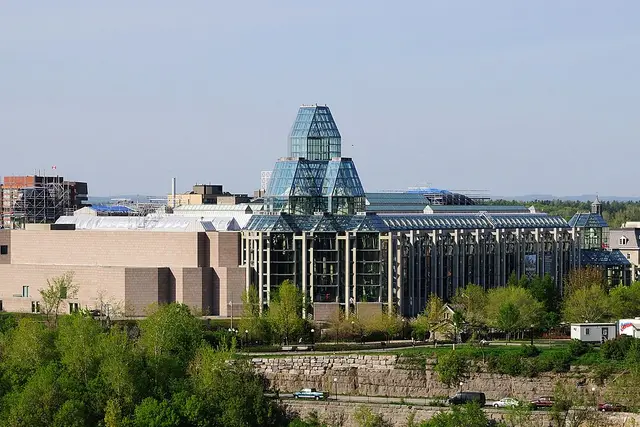
National Gallery of Canada: Ottawa Travel Guide (4.7★)
 attraction
Kondiaronk Belvedere: Montreal Travel Guide (4.8★)
 attraction