Why Hierapolis, not just Pamukkale
Most people come for the postcard shot, bare feet on blinding-white calcium terraces, turquoise pools stepping down the hillside. But the terraces are only the ground floor. Climb the travertine and you walk straight into Hierapolis, a Greco-Roman spa city the Attalid kings of Pergamon founded in the 2nd century BC precisely because of the mineral hot springs beneath it.
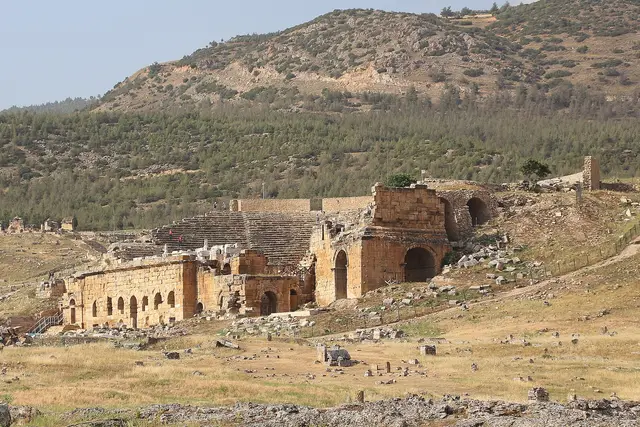
Rome later expanded it into a full resort town with a 12,000-seat theatre, a colonnaded main street, baths, temples, and one of the largest necropolises in Asia Minor (over 1,200 tombs strung along the road. It’s a UNESCO World Heritage Site (inscribed jointly with Pamukkale in 1988), and with a 4.8-star reputation from roughly 17,000 visitor reviews, it’s very much on the map) not a quiet find, so plan around the crowds rather than expecting to avoid them entirely.
Getting there and what the ticket covers
Hierapolis-Pamukkale sits about 20km north of Denizli city, which has an airport (DNZ) with regular domestic flights from Istanbul. From Denizli’s otogar (bus station), dolmuş minibuses run to Pamukkale village roughly every half hour during the day. If you’re coming from Izmir, Selçuk, or the coast, the site is a common stop on Ephesus-Pamukkale multi-day tour circuits, or reachable by intercity bus to Denizli followed by the dolmuş.
There are two main entrances (the north (Hierapolis) gate near the theatre and museum, and the south gate closer to the main travertine terrace climb), and it’s worth knowing both exist, because arriving at the quieter north gate and walking downhill through the ruins to the terraces avoids some of the bottleneck at the main entrance.

What to see once you’re inside
Start at the Antique Pool (Cleopatra’s Pool), where fluted marble columns, toppled by an ancient earthquake, lie submerged in warm, bubbling mineral water; swimming here costs an extra fee beyond the general admission. Walk up to the Theatre, remarkably intact, with a carved stage building showing reliefs of Apollo and Artemis. Don’t skip the Plutonium (Ploutonion), a small cave opening once considered a gateway to the underworld: ancient sources describe priests entering and surviving toxic gas that killed animals almost instantly, carbon dioxide still vents from the ground here, so it’s fenced and viewed from a short distance.
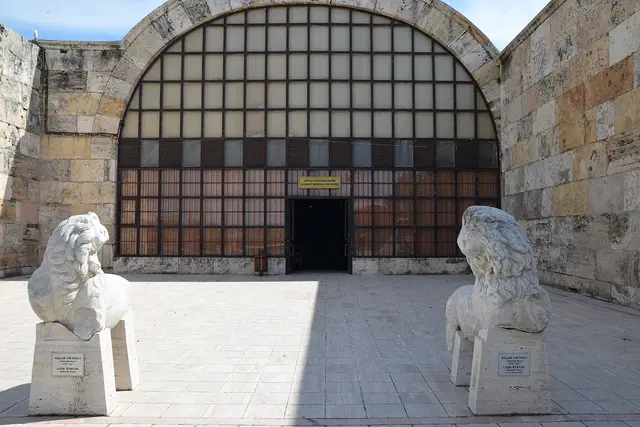
The Necropolis, stretching along the northern approach, is one of the most extensive ancient cemeteries anywhere, with tumulus mounds, sarcophagi, and house-shaped tombs lining a stretch of road you can walk for a good 20–30 minutes. Finish at the Hierapolis Archaeology Museum, housed in the old Roman baths, which holds sarcophagi reliefs, statuary, and finds from the site, a shaded, air-conditioned break after hours on white limestone.
When to go
Because this is an open, largely shadeless plateau, midday sun between roughly 11am and 3pm is genuinely hard on the terraces, both for the crowds and the heat radiating off the white travertine. Spring (April–May) and early autumn (September–October) give warm days without peak summer heat. If you’re set on summer, structure your visit around opening time or the final hours before closing, when light is softer and tour groups have mostly moved through.
Winter is uncrowded and the terraces with a light dusting of snow are a genuinely different sight, though the water may be cooler.
How to visit like a local
Wear a swimsuit under your clothes and carry a bag to hold shoes, you must go barefoot on the travertine terraces to protect the mineral crust, and the walk can take 15–20 minutes over wet, occasionally slippery limestone. Because this is a very-visited site rather than an under-the-radar one, the real local knowledge is about timing, not secrecy: locals and guides alike aim for the first hour after opening or the last two hours of daylight to dodge the main coach-tour surge.
Bring cash in Turkish lira for small extras like the Antique Pool swim and museum entry, though card payment is increasingly accepted at ticket counters. Pack water and sun protection. There’s little shade between the terraces and the theatre. The most common visitor mistake is treating Pamukkale as a 45-minute photo stop and skipping Hierapolis proper; give the ruins real time, since the theatre, necropolis, and Plutonium are as significant as the terraces themselves.
Frequently asked questions
How do I get to Hierapolis and Pamukkale without a tour?
Fly or bus to Denizli, then take a dolmuş minibus (runs roughly every 30 minutes) 20km north to Pamukkale village, where the site's north and south gates are both walkable from the village center.
Is one ticket enough for both the terraces and the ruins?
Yes — the travertine terraces and the Hierapolis archaeological site are covered by a single admission ticket; swimming in the Antique Pool (Cleopatra's Pool) usually costs extra.
How long should I spend there?
Plan three to four hours minimum: about an hour on the terraces, an hour at the theatre and Plutonium, and the remainder for the necropolis and museum.
When is it least crowded?
Right at opening (around 8am) or in the final two hours before closing are calmest; midday, especially in summer, brings both peak heat and peak tour-bus traffic.
Do I need to take my shoes off?
Yes, walking on the white travertine terraces barefoot is required to protect the mineral surface, so bring a bag to carry your shoes and a swimsuit if you plan to wade in the pools.
Plan your trip to Pamukkale
Turkey eSIM & staying connected →
Some links above are affiliate links — if you book through them, Wander Atlas earns a small commission at no extra cost to you. It's how we keep every guide free.