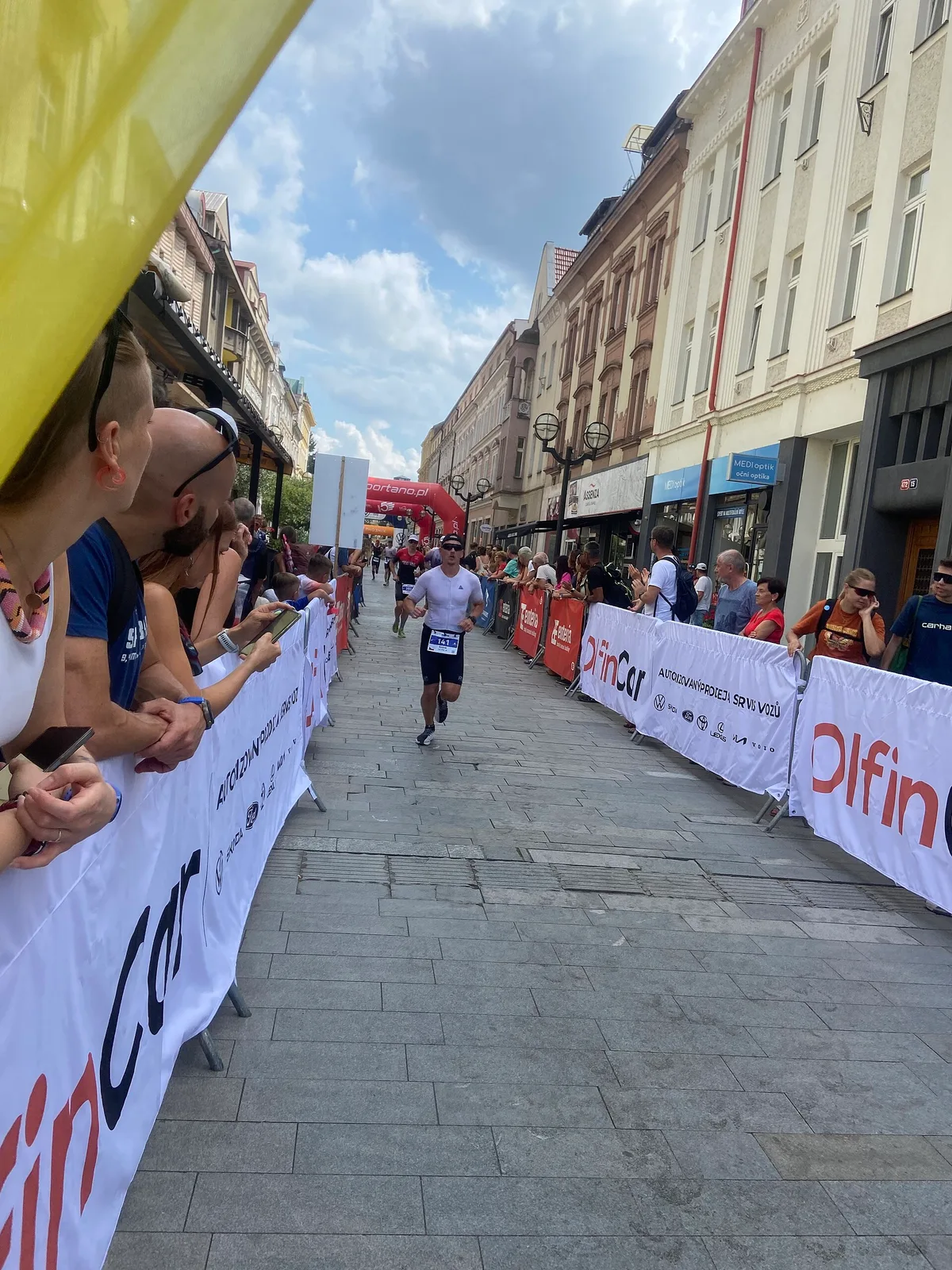
Seventy point three is the number to start with. That is the race distance in miles: a 1.9 km swim, a 90 km bike leg and a 21.1 km half-marathon, all in one morning. In mid-November 2026, Puerto Princesa City puts that distance on Palawan’s roads and coastline, and athletes from around the region fly in for it.
The swim water is the tropical sea of Palawan, not a cold northern lake. The run comes late in the morning, under equatorial sun. That combination shapes almost everything about how this race goes.
What the 70.3 format means here
Every Ironman 70.3 follows the same three legs, done back to back with the clock running throughout. Between legs you change gear in transition areas, where bikes hang on long metal racks in numbered rows.
- Swim: 1.9 km in open water
- Bike: 90 km on closed or controlled roads
- Run: 21.1 km, the half-marathon that finishes the day
The finish is the same at every Ironman race: a carpeted chute, an announcer reading out names, and a medal at the end. The exact swim start, transition sites and finish line belong to the organiser’s course maps, which are published on the official Ironman event page for Puerto Princesa.
Dates and registration
This edition takes place in mid-November 2026 in Puerto Princesa City. Ironman lists the race date, athlete guide and entry link on its official site, ironman.com, under the 70.3 Puerto Princesa event page.
A triathlon doesn’t sell tickets the way a concert does. Athletes enter through registration, and the fee is shown on the Ironman entry page. Ironman 70.3 races also carry qualifying slots for the 70.3 World Championship, and the athlete information lists how they are allocated.
Racing in Palawan heat
November falls in the shift between Palawan’s wet and dry seasons. You can expect heat and high humidity, plus the chance of a passing shower. For a field mostly used to cooler races, the run is where the day is decided.
Athletes who come from cooler climates usually arrive several days early to adjust. At Ironman races in Southeast Asia, aid stations tend to hand out ice, water and sponges, and you will see runners pushing ice down their tri-suits between stations. Spectators deal with the same sun. Umbrellas, hats and a refillable bottle are what you will see along the barriers.
Tricycles, closures and race-morning roads
Puerto Princesa runs on tricycles. These are motorbikes with covered sidecars, and they are the usual way to get around town for short hops. On race morning, closures for the bike and run courses change which streets they can use.
Ironman 70.3 races generally start around dawn. Athletes therefore usually stay close to the start or transition so they can walk or take a short ride before the roads shut. Spectators tend to choose one stretch of the run course and stay there. The run often uses loops, so a single spot lets you see the same athlete more than once.
Watching like a regular at the barriers
Spectating at a triathlon is mostly free and informal. People stand on public roadsides, and the run course is the easiest place to watch. Here is what experienced supporters usually do:
- Track the athlete: the official Ironman Tracker app shows live split times, so you know when your runner is coming
- Cheer by name: race numbers and often first names are printed on the bibs, and Filipino crowds use them freely
- Stay off the course: running alongside an athlete or handing them food can get them penalised under Ironman rules
- Head to the finish late: the chute is liveliest while the middle of the field comes through, not when the leaders arrive
Supporters in Puerto Princesa usually pay cash for tricycle rides and at small eateries, so carrying small peso notes saves time. Larger hotels and restaurants take cards. Tipping isn’t required, but rounding up for good service is common.
Getting to Puerto Princesa
Most athletes fly into Puerto Princesa International Airport (PPS), which has frequent domestic flights from Manila and Cebu. The airport sits close to the city centre, and tricycles and vans wait outside.
Bike boxes are what make this trip complicated. Triathletes usually check their airline’s sports-equipment allowance, since domestic carriers handle oversized bags differently. Racers often rebuild their bikes at the hotel and do a short spin on local roads before racking.
Most visitors stay in the city proper, around Rizal Avenue and the Baywalk along Puerto Princesa Bay. This keeps everyone close to the race logistics and to restaurants.
Before and after race week
Many athletes add recovery days to the trip, because Palawan is the reason this race attracts travellers in the first place.
- Puerto Princesa Subterranean River National Park: a UNESCO World Heritage Site, roughly two hours north by road at Sabang. Entry permits are handled through the city’s tourism system, and day tours include transport.
- Honda Bay: island-hopping boats leave from a wharf north of the city, stopping at sandbars and snorkelling spots.
- Plaza Cuartel and the Immaculate Conception Cathedral: a short walk apart in the old centre, and easy for an afternoon after the race.
- Baywalk: the waterfront promenade where locals gather in the evening, with grilled-food stalls nearby.
A long boat day straight after 113 km of racing is hard on tired legs. Athletes usually keep the day after the race light and save the Underground River trip for a day later.
Frequently asked questions
When is Ironman 70.3 Puerto Princesa in 2026?
It takes place in mid-November 2026 in Puerto Princesa City, Palawan. The exact race date and athlete schedule are on the event page at ironman.com.
How do I get tickets or register?
There are no spectator tickets in the usual sense. Athletes register through the official Ironman entry system on ironman.com, where the entry fee is shown. Spectators usually watch for free from public roadsides along the course.
What distances does the race cover?
It is a standard Ironman 70.3: a 1.9 km open-water swim, a 90 km bike and a 21.1 km run, totalling about 113 km (70.3 miles).
How do I get to Puerto Princesa?
Fly into Puerto Princesa International Airport (PPS), which has frequent domestic flights from Manila and Cebu. The airport is close to the city centre, and tricycles are the usual way to get around town.
What is there to do nearby after the race?
The Puerto Princesa Subterranean River, a UNESCO site about two hours north at Sabang, is the main day trip. Honda Bay island hopping, Plaza Cuartel and the Baywalk are all closer to the city.
Plan your trip to Puerto Princesa
Philippines eSIM & staying connected →
Some links above are affiliate links — if you book through them, Wander Atlas earns a small commission at no extra cost to you. It's how we keep every guide free.
Related guides
 attraction
Immaculate Conception Cathedral: Puerto Princesa Travel Guide
 attraction
Luli Island: Puerto Princesa Travel Guide (4.3★)
 event
Higantes Festival: Dates, Tickets & Venue (Angono)
 event