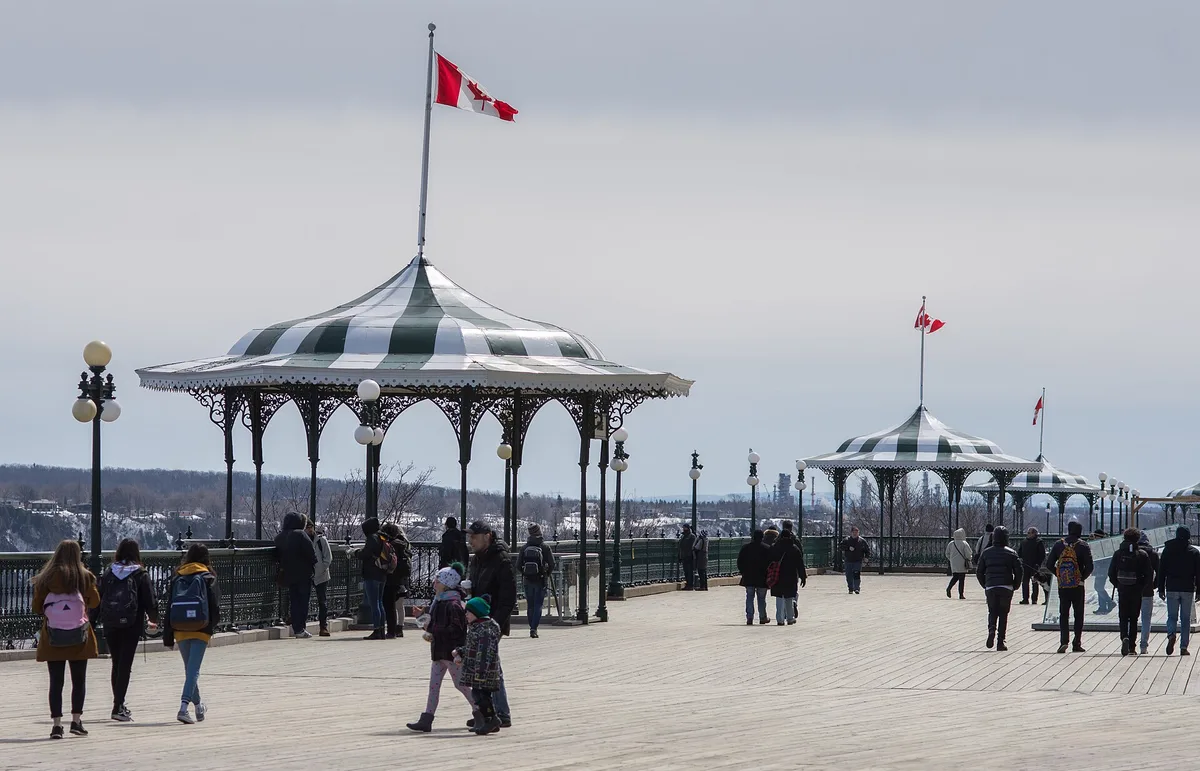
Planks above a cliff
Under your feet are boards, not stone. Dufferin Terrace is a broad wooden promenade on the edge of Cap Diamant, with a railing between you and a sheer drop to the rooftops of Lower Town. Behind you rises the copper-roofed bulk of the Château Frontenac. In front of you is the St. Lawrence, narrowing here on its way to the Atlantic.
The terrace dates to the mid-1800s and is named for Lord Dufferin, a Governor General of Canada. Its green-and-white kiosks with their pointed roofs come from that Victorian era of strolling for the view. Everyone still comes for the same thing.
What you’re looking at
Stand at the railing and the river does most of the talking. Look across and slightly right for these landmarks:
- Lévis, the town on the south shore, with the ferry crossing back and forth below you
- Île d’Orléans, the low green island downstream to the east
- Petit-Champlain and Place Royale, the steep roofs and chimneys of Lower Town directly beneath the cliff
- The Old Port, with its docks and the occasional cruise ship moored alongside
At the northern end, a statue of Samuel de Champlain marks the founder of Quebec, beside Place d’Armes. Beneath the boardwalk sit the excavated remains of the Château Saint-Louis, the old governors’ residence. Parks Canada protects them as the Saint-Louis Forts and Châteaux National Historic Site, and you can look down on some foundations through openings in the deck.
Getting onto the terrace
There is no metro in Quebec City, so you arrive on foot in the end. From Upper Town, walk to Place d’Armes beside the Château Frontenac and the terrace begins right there. From the Lower Town streets around Petit-Champlain, you have two ways up:
- The Old Quebec Funicular, which rises up the cliff face and lets you out at the north end of the terrace
- The Breakneck Stairs (Escalier Casse-Cou) plus the streets above, if your legs are willing
Check the funicular’s current fare and hours at its lower station or official site before you count on it.

Following the boardwalk south
Walk away from the Château and the crowd thins out. At the southern end, wooden stairs climb into the Governors’ Promenade. This is a cliffside walkway that clings to the rock below the Citadel and leads on toward the Plains of Abraham. It has a lot of steps, but the river views are the best on the route.
In winter the terrace changes. A long toboggan slide is set up near the Château end, and riders sit on wooden toboggans that race down a run of ice. The season and running times depend on conditions, so confirm them before you go.
Timing a visit without the crush
This is a well-known landmark, not a quiet corner, and the forecast is clear about when to stay away. Try not to show up on a weekend between 12pm and 10pm. That’s when it is usually at its busiest, with tour groups, buskers and the funicular queue all competing for the same planks.
Because the terrace is currently listed as open 24 hours, you have options outside that window. A weekend morning before noon is the obvious pick. Weekdays are generally easier too, though the forecast gives no specific quiet hours for them. After dark the Château is floodlit and the lights of Lévis come on across the water.
Doing the terrace the Québécois way
French is the everyday language here. A “Bonjour” before you ask a question changes the tone of any exchange, even if you switch to English right after. Signs, menus at nearby cafés and the funicular booth all lead with French.
Street performers work the terrace in the warmer months, especially near the Château. If you stop and watch a full act, it’s normal to drop something in the hat. Keep the walkway clear when you stop for photos, as the boardwalk is a through-route between Upper and Lower Town.
Pair the terrace with what surrounds it rather than treating it as a single photo stop:
- Ride the funicular down, wander Rue du Petit-Champlain, then walk back up
- Peek into the Château Frontenac lobby next door
- Continue along the Governors’ Promenade to the Plains of Abraham for a longer walk
Bring a layer even in summer. The terrace faces straight onto the river from a high cliff, and it is exposed to whatever wind is coming up the valley. In winter, sturdy boots matter, because the wooden boards can be icy.
Frequently asked questions
When is the quietest time to visit Dufferin Terrace?
The forecast gives no specific quiet window, but it does flag weekends from 12pm to 10pm as the busiest period. Go on a weekend morning before noon, or on a weekday, for more room at the railing.
How do I get from Lower Town up to Dufferin Terrace?
Take the Old Quebec Funicular from the Petit-Champlain area. It lets you out at the north end of the terrace. You can also climb the Breakneck Stairs (Escalier Casse-Cou) and walk up the streets above.
How long should I spend on Dufferin Terrace?
Allow 30–60 minutes for the boardwalk itself. Add an hour or more if you continue south along the Governors' Promenade toward the Plains of Abraham.
Is Dufferin Terrace open at night?
It's currently listed as open 24 hours. In the evening the Château Frontenac is floodlit and you can see the lights of Lévis across the river.
What is there to do on Dufferin Terrace in winter?
A toboggan slide is set up near the Château Frontenac end, with wooden toboggans running down an icy track. The dates depend on conditions, so check before you go, and wear boots with good grip for the icy boards.
Plan your trip to Quebec City
Canada eSIM & staying connected →
Some links above are affiliate links — if you book through them, Wander Atlas earns a small commission at no extra cost to you. It's how we keep every guide free.
Related guides
 attraction
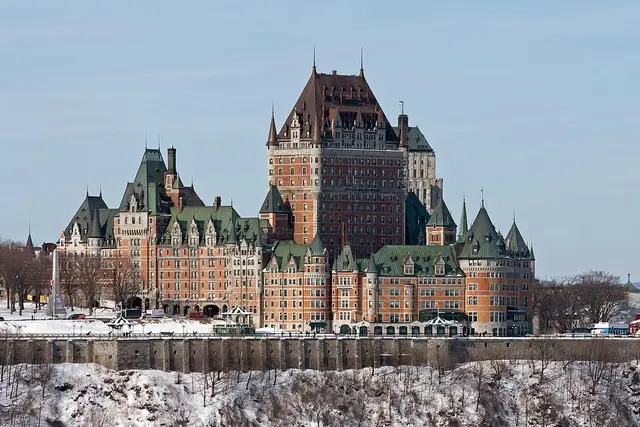
Fairmont Le Château Frontenac: Quebec City Travel Guide
 attraction
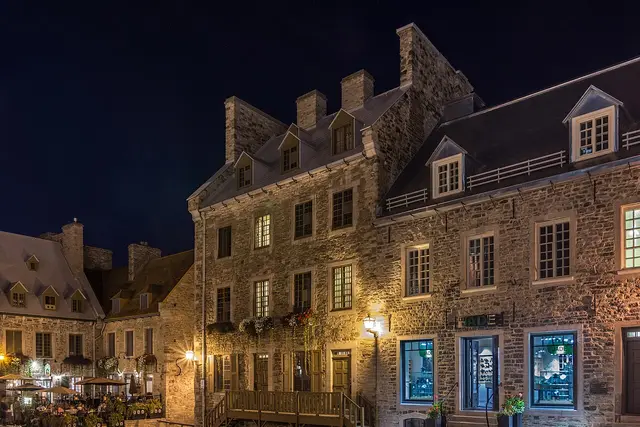
Place Royale: Quebec City Travel Guide (4.7★)
 attraction
Notre-Dame de Québec Basilica-Cathedral: Quebec City Travel Guide
 attraction