
Ten days of Bonhomme
The 73rd Carnaval de Québec runs February 5–14, 2027. It is one of the largest winter festivals in the world. For ten days, Quebec City’s coldest stretch of the year becomes its busiest.
At the centre is Bonhomme Carnaval, a tall snowman in a red tuque with a woven ceinture fléchée (arrow sash) around his waist. He has fronted the festival since the modern carnival began in 1955. You see him at parades, at his ice palace and on every poster in town.
Where it happens: the Plains and the Parliament
Most of the carnival takes place on the Upper Town plateau, just outside the stone walls of Old Quebec. The outdoor grounds are on and around the Plains of Abraham. The Ice Palace usually stands near the Parliament Building on Grande Allée.
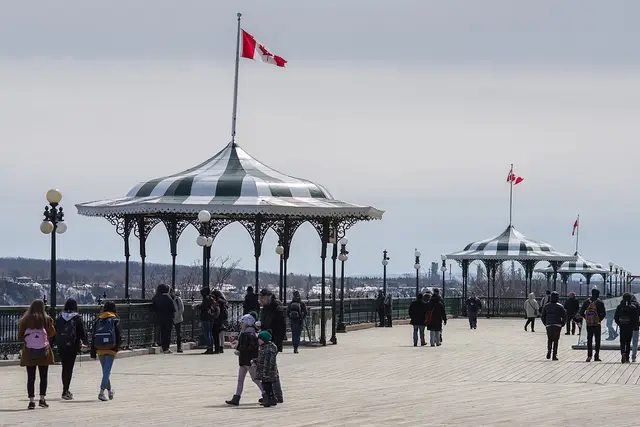
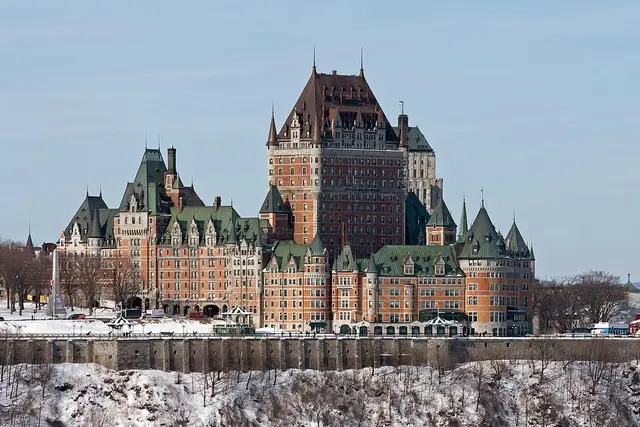
From inside the walls, you walk out through Porte Saint-Louis and along Grande Allée. Château Frontenac and the Dufferin Terrace are about fifteen minutes behind you.
The evening parades, the ice canoe race on the St. Lawrence and the snow sculptures spread the action beyond the main grounds. Expect to see:
- Night parades: floats, brass bands and Bonhomme on top, with crowds lining the streets.
- Ice canoe race: teams drag and paddle canoes across the half-frozen river between Quebec City and Lévis.
- Snow and ice sculptures: carved blocks you can walk around and photograph after dark under coloured lights.
- Snow bath: a long-running stunt where people in swimsuits roll in the snow.
Out-of-town visitors usually arrive through Jean Lesage International Airport or the Gare du Palais train station in Lower Town. From the station, there is a steep climb up to the Plains.
Tickets: the effigy on your coat
Carnival tickets aren’t paper. The pass is the Bonhomme effigy, a small plastic figure of the mascot that clips onto your jacket. It lets you into the paid sites for the whole festival, and staff check that it’s visible as you walk in.
The Carnaval de Québec organisation publishes the dates, site maps, programme and where to buy effigies on its official website. The price appears there too, and this guide doesn’t quote one. Some outdoor events, including the parades along public streets, are open to everyone, effigy or not.
Effigy out, layers on
People here wear the effigy on the outside of their coat, usually on the chest or the zip pull. Volunteers glance at it rather than scanning a code, so a pass buried in a pocket slows the gate down. Many locals keep effigies from past years.
Daytime temperatures in February often fall below minus fifteen Celsius, and the wind across the Plains makes it feel colder. Regulars dress like this:
- Thermal base layers under a down coat
- Insulated, waterproof boots with grip, because Grande Allée and the Old Quebec slopes ice over
- A tuque, a neck gaiter and mittens rather than gloves
- Hand warmers, sold in pharmacies all over town
The festival drink is caribou, a sweet mix of red wine, spirits and maple syrup. It’s traditionally sipped from a hollow plastic cane shaped like Bonhomme’s. Order in French with a “Bonjour” first. Staff switch to English easily, and card payment is standard at the food stands and in Old Quebec restaurants.
Most visitors spend two or three days. They pair one evening parade with daytime visits to the sculptures and the Ice Palace, then warm up in the cafés along Rue Saint-Jean.
Frequently asked questions
When is the Quebec Winter Carnival 2027?
The 73rd Carnaval de Québec runs from February 5 to 14, 2027 in Quebec City.
Where is the carnival held?
The main sites are on the Upper Town plateau around the Plains of Abraham, with the Ice Palace usually near the Parliament Building on Grande Allée. Both are a short walk from Old Quebec through Porte Saint-Louis. Parades and the ice canoe race on the St. Lawrence take place elsewhere in the city.
What is the Bonhomme effigy?
It's the carnival's admission pass: a small plastic figure of Bonhomme that clips to your coat and gets you into the paid sites for the whole festival. The official Carnaval de Québec website lists where to buy it and the current price.
How long do visitors usually spend at the carnival?
Most spend two or three days. They see one evening parade, visit the ice sculptures and the Ice Palace in daylight, and fit in time for Old Quebec.
How cold is it, and what do people wear?
February temperatures often drop below minus fifteen Celsius, and wind chill on the Plains makes it feel colder. Regulars wear thermal layers, a down coat, insulated boots with grip, a tuque, a neck gaiter and mittens.
Plan your trip to Quebec City
Canada eSIM & staying connected →
Some links above are affiliate links — if you book through them, Wander Atlas earns a small commission at no extra cost to you. It's how we keep every guide free.
Related guides
 attraction
Dufferin Terrace: Quebec City Travel Guide (4.8★)
 attraction
Fairmont Le Château Frontenac: Quebec City Travel Guide
 attraction
Joan of Arc Garden: Quebec City Travel Guide (4.7★)
 restaurant