A boulevard turned into a canvas
Gwanghwamun Square is wide, flat and open to the sky. For three weeks each winter it becomes Seoul Light Gwanghwamun (서울라이트 광화문), a media art exhibition built from light and music installations.
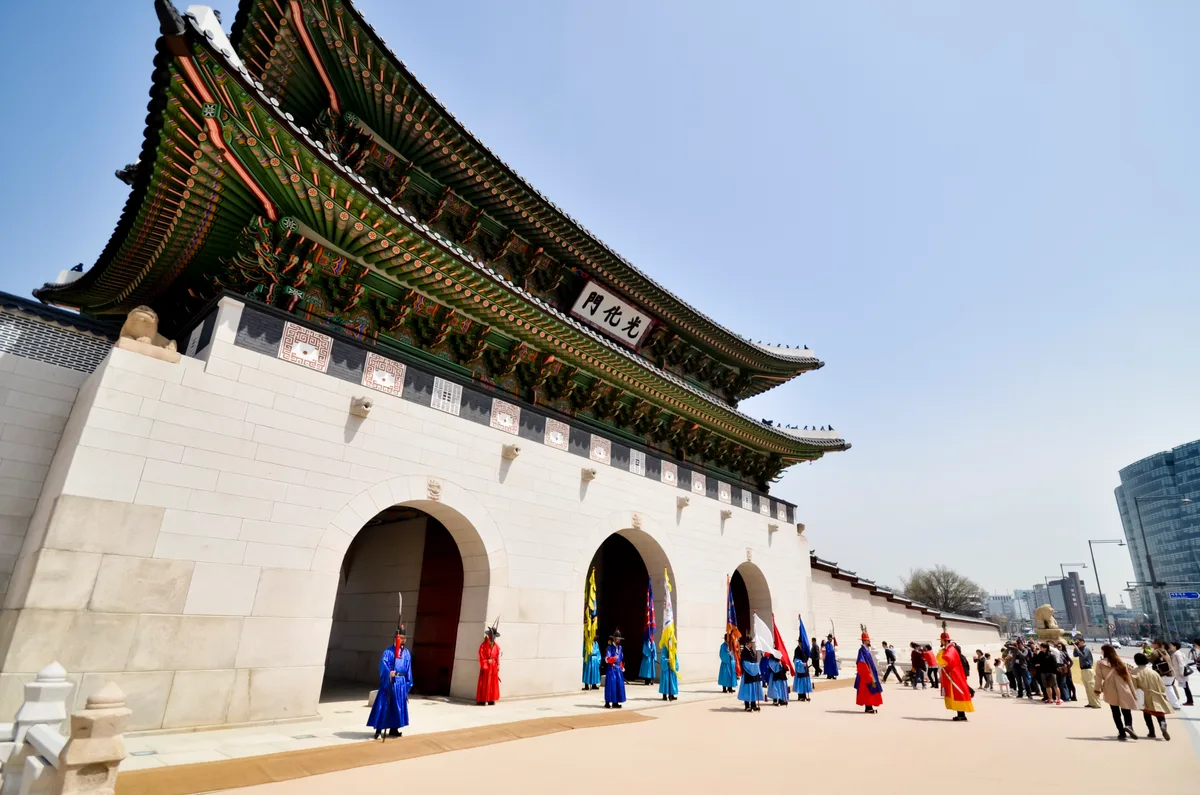
The setting does a lot of the work. At the north end, the stone gate of Gwanghwamun and the roofs of Gyeongbokgung Palace sit against the dark slope of Bugaksan. The two bronze statues, King Sejong seated and Admiral Yi Sun-sin standing, run down the middle. After dark, the installations light up the ground between them.
Dates, tickets and admission
This edition runs from December 11, 2026 to January 3, 2027. Those dates take in Christmas, the last week of the year and the first days of January.
The exhibition is held outdoors on a public square. Earlier editions were free to walk through, with no gate at the edge of the square. The organiser publishes the dates, programme and any ticketed elements on its official Seoul Light pages. This guide prints no times or prices, because none were given to us.
Getting to Gwanghwamun Square
The subway is the easy way in. Driving into Jongno in December is slow, and parking near the square is scarce.
- Gwanghwamun Station (Line 5): exits 2 and 9 come up close to the square. The underground passage, called Haechi Madang, leads out near the Sejong statue.
- Gyeongbokgung Station (Line 3): exits on the palace side work well for the north end, by the gate.
- City Hall Station (Lines 1 and 2): a walk of about ten minutes up Sejong-daero, past Deoksugung and Seoul Plaza.
- Jonggak Station (Line 1): the best choice if you are combining the square with the Bosingak bell pavilion or Cheonggyecheon.
A T-money card works on every subway line and bus, and most convenience stores sell and top it up. For walking directions, Naver Map and KakaoMap are more accurate in Korea than Google Maps.
After dark in December
Timing is the thing to get right here. In mid-December Seoul’s sun sets a little after 5pm, so the square is dark by the time many offices let out. A light exhibition needs darkness, and in December you get a lot of it.
The cold is the other half. Seoul winters are dry and often below freezing after sunset. Wind also comes down Sejong-daero from the mountains behind the palace, and the square has little to block it.
Visitors usually come dressed for standing still rather than walking:
- a long padded coat, the kind many Seoulites wear all winter
- gloves that still let you use a phone screen
- hand warmers (핫팩, hat-paek) from any convenience store
- a hat, since the square is open on every side
Most people spend 45 minutes to an hour on the installations themselves. Weeknights are usually calmer than Friday and Saturday evenings, simply because fewer people are off work.
What surrounds the square
The square sits at the centre of Joseon-era Seoul, and the exhibition is easy to fit into a longer evening.
- Gyeongbokgung Palace and Gwanghwamun gate: the gate is lit at night and closes the view to the north. The palace’s opening hours change through the year and are posted on its official site.
- The King Sejong statue: the museum beneath it, The Story of King Sejong, covers Hangeul, the Korean alphabet he created.
- The Admiral Yi Sun-sin statue: it stands above the fountain, with a small turtle-ship model at its base.
- Sejong Center for the Performing Arts: it lines the west side of the square, and its winter concerts often fill the steps out front.
- Cheonggyecheon: the restored stream starts at Cheonggye Plaza, just southeast of the square. A walk along its lower path gets you out of the wind.
For dinner, the lanes of Seochon, west of the palace, and the alleys around Jonggak have plenty of small Korean restaurants. They are a useful warm stop between rounds outside.
Moving through the crowd on the square
Gwanghwamun Square has its own etiquette.
Photos come first for a lot of visitors. People line up loosely in front of the best-placed installations, take a few frames and move on. Taking your turn and stepping aside once you are done keeps things moving. Tripods tend to annoy people in tight spots.
The square is also Seoul’s main place for public gatherings. Rallies and marches are common, especially on Saturdays, and they can close off parts of Sejong-daero and slow the exits at Gwanghwamun Station. On those days, regulars often use Gyeongbokgung or Jonggak station instead.
You never tip in Korea, in cafés or restaurants. Cards and phone payments work almost everywhere around the square, including the street-food carts at many winter events. A little cash still helps at the smallest stalls.
Christmas, New Year’s Eve and the Bosingak bell
This edition runs over Seoul’s two biggest winter nights, and the square changes on both.
Christmas Eve and Christmas Day are public holidays in Korea, and couples treat them as date nights. Expect the square, Cheonggyecheon and Myeongdong to be at their fullest.
New Year’s Eve has its own tradition close by. Just after midnight, the bronze bell at Bosingak pavilion in Jongno is struck 33 times to mark the new year. Bosingak is a short walk east of the square, next to Jonggak Station. Large crowds gather along Jong-ro for it, and roads close around the pavilion that night.
For subway users, Seoul often extends some services on New Year’s Eve, and Seoul Metro posts the details each year. The first days of January, after the holiday rush, are usually the most relaxed time to see the exhibition before it ends on January 3, 2027.
Frequently asked questions
When is Seoul Light Gwanghwamun 2026?
It runs from December 11, 2026 to January 3, 2027 at Gwanghwamun Square in Jongno, central Seoul. That period covers Christmas, New Year's Eve and the first days of January.
Do you need tickets for Seoul Light Gwanghwamun?
The exhibition is held outdoors on a public square, and earlier editions were free to walk through. The organiser publishes the programme and any ticketed elements on its official Seoul Light pages. This guide names no prices.
What is the nearest subway station?
Gwanghwamun Station on Line 5. Exits 2 and 9 and the underground Haechi Madang passage come out right by the square. Gyeongbokgung Station (Line 3) serves the north end near the palace gate, and City Hall Station (Lines 1 and 2) is about a ten-minute walk south.
How long should I spend there, and what time is best?
Most visitors spend 45 minutes to an hour on the installations. December sunsets come a little after 5pm, so the light works are at their best from early evening. Weeknights are usually calmer than weekends and the Christmas and New Year's Eve holidays.
What else is nearby?
Gyeongbokgung Palace and Gwanghwamun gate are at the north end of the square. The King Sejong and Admiral Yi Sun-sin statues, Sejong Center and the start of Cheonggyecheon stream are all on or next to it. Bosingak bell pavilion, where the New Year's bell is rung, is a short walk east near Jonggak Station.
Plan your trip to Seoul
South Korea eSIM & staying connected →
Some links above are affiliate links — if you book through them, Wander Atlas earns a small commission at no extra cost to you. It's how we keep every guide free.