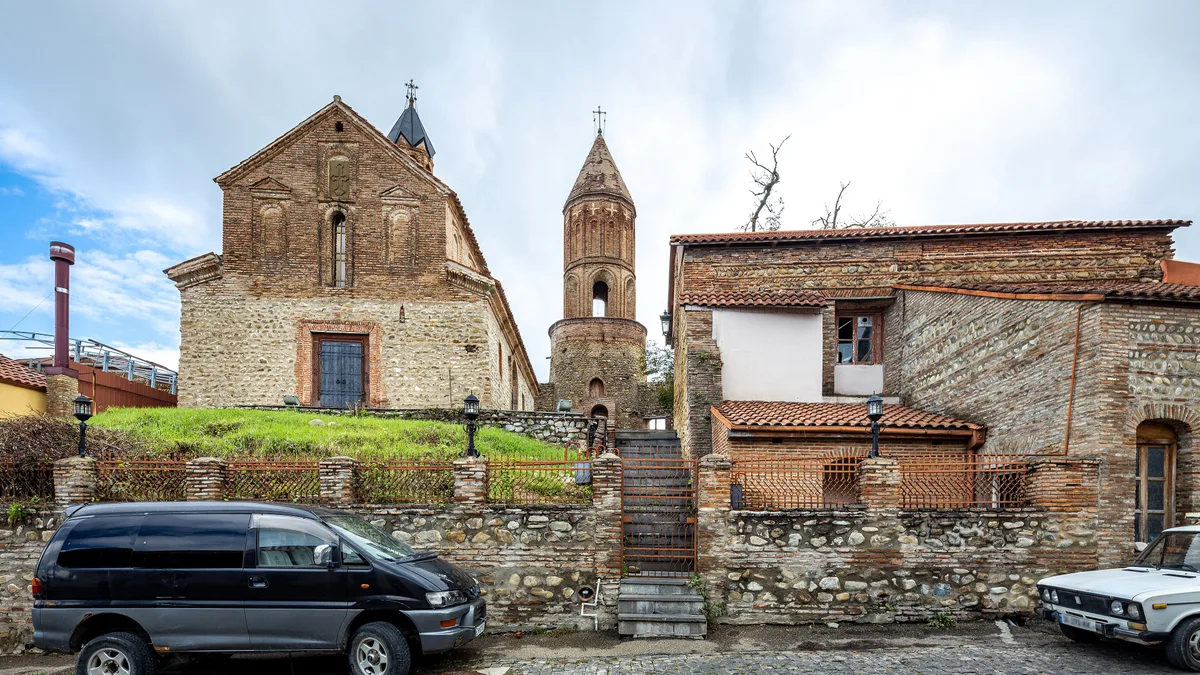
A basilica in a town of towers
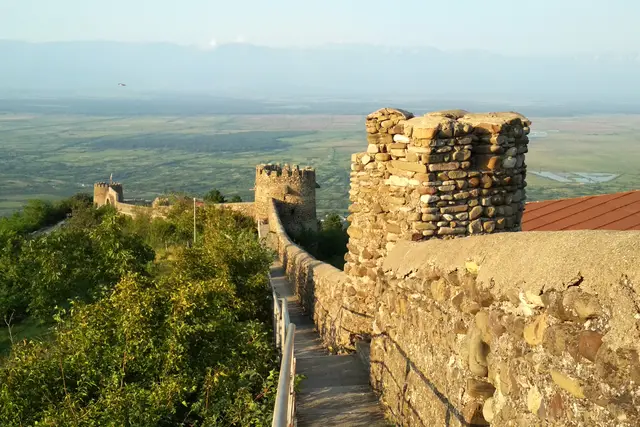
Sighnaghi is built for looking out. King Erekle II ringed this Kakhetian hilltop with defensive walls in the 18th century, and their towers still frame views across the Alazani Valley to the Greater Caucasus. Most visitors come for that panorama, the wine and the town’s “City of Love” wedding trade.
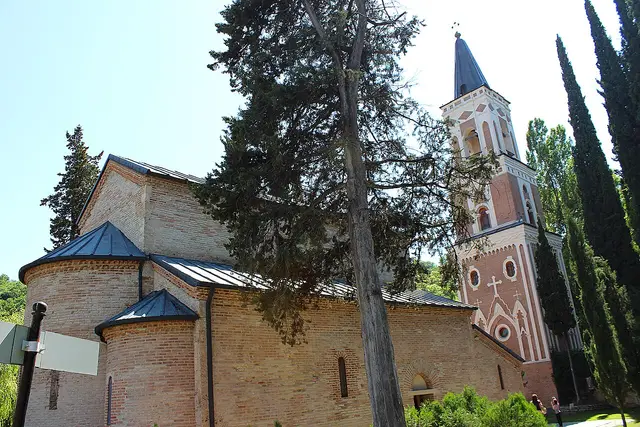
The St. George basilica is the quieter counterpoint. It is a working Georgian Orthodox church, and it is dedicated to the saint Georgians treat as their national patron. Many visitors pass it on the way to the walls or to Bodbe, so you’ll often find it calm.
Inside the nave
A basilica is a long, single hall, and that shape sets the mood. You step from bright Kakhetian daylight into a narrower, dimmer space. The eye is pulled straight down the nave toward the iconostasis, the screen of icons that separates the altar from the congregation.
Expect the standard furnishings of a Georgian Orthodox church rather than a museum display:
- Icons of saints, often with St. George himself given pride of place
- A candle stand where worshippers leave thin beeswax tapers
- Open floor in place of pews, because Orthodox worshippers stand through the liturgy
- Low, warm light from candles and small windows
Nobody gives a guided tour here. You walk in, stand quietly, look, and leave. Twenty to thirty minutes covers it comfortably, longer if you catch a service.
Getting up the hill
Sighnaghi sits roughly two hours’ drive east of Tbilisi. Shared minibuses (marshrutkas) to Sighnaghi leave from the Samgori bus station area, next to Samgori metro station on Tbilisi’s Line 1. Many travellers instead book a driver or join a Kakheti wine tour, which usually stops in town.
The church’s address is simply “Sighnaghi”, so search its name on your map app rather than relying on a street. The old town is compact but steep. Its cobbled lanes climb sharply between the main square and the walls, so pick shoes with grip over sandals.
Covering up and lighting a candle
The rules are those of any active Georgian church, and they are taken seriously. Get them right and you’ll be welcome.
- Women: cover your hair with a scarf and wear a skirt below the knee. Bring your own scarf rather than counting on loaners being available at the door.
- Men: long trousers, no hats indoors.
- Everyone: shoulders covered, phones silent, voices low.
If you want to light a candle, buy one where they are sold inside and place it on the stand. Locals often cross themselves on entering and kiss the icons; you don’t need to copy this, but don’t step in front of someone doing it.
During a service, don’t photograph worshippers or the priest. Stand toward the back and keep clear of the central aisle. If in doubt, ask with a gesture before raising your camera. The church’s Georgian name is Tsminda Giorgi (წმინდა გიორგი), which helps when asking directions.
Timing your visit
The hours change across the week. At the moment the church opens 10am–4:30pm Monday to Friday. Saturday runs later, until 5:30pm, and Sunday opens earlier at 9am and closes at 5pm.
Sunday morning is when you’re most likely to hear the liturgy, with its unaccompanied chanting. That is the most atmospheric time to come, and also when you should be most discreet. On weekdays, arriving soon after 10am puts you ahead of the day-trip tours from Tbilisi, which tend to reach town later in the morning.
Church hours shift through the year and can change around religious holidays, so check again before a long drive. St. George’s feast day, Giorgoba, falls on 23 November (with another in May). Expect more worshippers then and a more festive feel.
The walk down to Bodbe
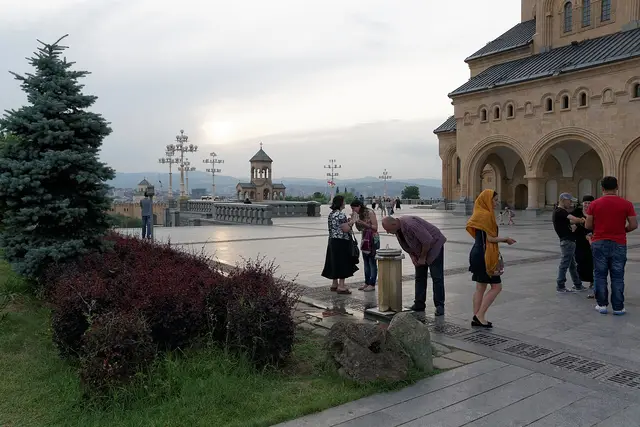
Bodbe Monastery is the big-ticket church of the area and the natural partner for this visit. It lies about 2 km outside the old town and is revered as the burial place of St. Nino, who brought Christianity to Georgia. It is far busier than St. George’s.
Seeing both shows you two very different churches. St. George’s is a town parish woven into Sighnaghi’s lanes. Bodbe is a pilgrimage site with gardens and a long stair down to St. Nino’s spring.
The road between them is walkable, mostly downhill on the way out, so many people walk there and take a taxi back up. Do St. George’s first, while you’re still in the old town and before Bodbe’s crowds build.
Making a day of Sighnaghi
The church takes half an hour; the town deserves the rest of the day. Within easy walking distance you’ll find:
- The town walls: sections are open to walk, with towers looking over the Alazani Valley. On clear days, the Caucasus peaks line the horizon.
- The Sighnaghi Museum: a regional museum near the centre with archaeology and a collection of Niko Pirosmani paintings.
- Wine cellars and tasting rooms: Kakheti is Georgia’s main wine region, famous for wine fermented in clay qvevri buried underground.
Stay overnight if you can. Once the day-trippers leave, the lanes empty out and the valley view from the walls is yours.
Frequently asked questions
What are the opening hours of Signagi St. George basilica?
Currently it opens 10am–4:30pm Monday to Friday, 10am–5:30pm on Saturday and 9am–5pm on Sunday. Church hours shift through the year and around religious holidays, so check before you travel.
How do I get to Sighnaghi from Tbilisi?
Sighnaghi is roughly a two-hour drive east of Tbilisi. Marshrutkas leave from the Samgori bus station area near Samgori metro (Line 1). Many visitors come by private driver or on a Kakheti wine tour instead.
What should I wear to visit the church?
Women should cover their hair and wear a skirt below the knee. Men should wear long trousers and remove hats. Everyone should cover their shoulders. Bring your own scarf rather than relying on loaners.
How long should I spend there?
About 20–30 minutes is enough for the church itself, longer if a service is underway. Combine it with the town walls and Bodbe Monastery for a full day.
What is nearby?
Bodbe Monastery, the burial place of St. Nino, lies about 2 km away and is walkable. In town you have the 18th-century walls with views over the Alazani Valley, the Sighnaghi Museum and plenty of wine tasting rooms.
Plan your trip to Sighnaghi
Georgia eSIM & staying connected →
Some links above are affiliate links — if you book through them, Wander Atlas earns a small commission at no extra cost to you. It's how we keep every guide free.